
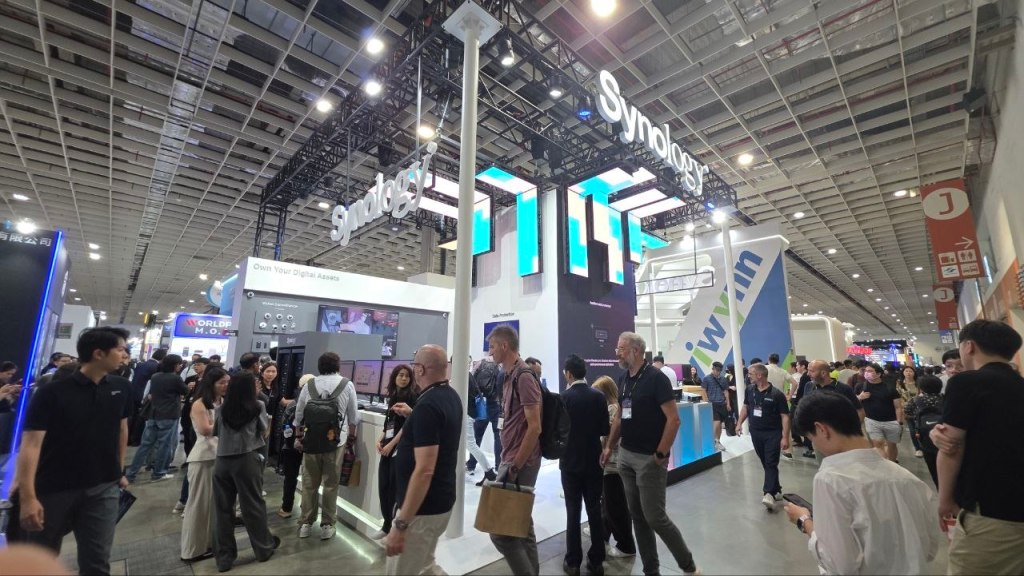
Synology has unveiled at Computex a next‑generation roadmap that turns its flagship DiskStation Manager (DSM) into an intelligent, on‑premises data engine built for private AI, fleet‑scale management and regulated‑grade security.
Moving far beyond its roots as a storage operating system, the upgraded platform enables enterprises to enjoy the productivity benefits of AI without surrendering data sovereignty to cloud providers.
“Enterprise AI adoption is no longer the challenge, data control is. The next generation of DSM leverages over two decades of expertise to create an AI-ready platform that keeps organisations firmly in control of their data,” said Philip Wong, Chairman and CEO of Synology.
The new DSM transforms existing business data, logs and system metrics into a private knowledge base that AI agents can act on internally.
Synology’s Office Suite AI Assistant offers an immediately deployable way to boost productivity, while GPU rack servers and dedicated AI appliances handle local inference so sensitive information never leaves the enterprise’s perimeter.
DSM Agent deepens automation by guiding administrators through system‑wide tasks and orchestrating tools into full agentic workflows, all governed by built‑in guardrails that give IT teams visibility into how AI interacts with corporate data.
For enterprises managing large, distributed deployments, Synology has introduced the Cluster Manager unified interface that brings multiple systems under one operational view. Storage services and applications are containerised into isolated workloads, enabling flexible workload migration, QoS enforcement, and consistent protection policies across entire fleets.
Active Insight’s new Mass Deployment feature further accelerates provisioning to cut the time required to bring new systems online across remote or multi‑site environments.
Security and compliance receive a significant boost as DSM expands its identity and access management with more granular role‑based access control, while a revamped Log Center consolidates operational and application logs into a single audit‑ready view with native export to industry‑standard observability platforms.
A built‑in secure element and ongoing FIPS 140‑3 certification efforts position the platform for use in highly regulated sectors where verifiable security assurance is mandatory.
Photo: Edward Lim

