
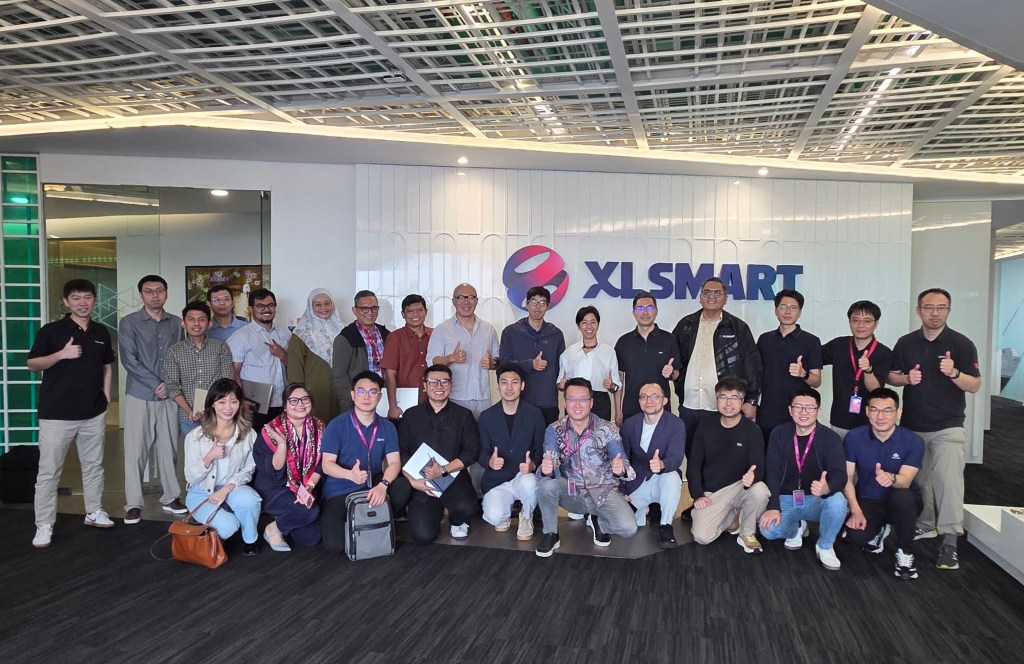
When XLSmart set out to modernise its digital backbone, it faced more than a routine technology upgrade. Indonesia’s third largest mobile telco was managing the aftermath of a major merger, operating across fragmented cloud environments, and trying to bring together hundreds of critical systems into one coherent platform.
Working with Tencent Cloud, XLSmart turned that challenge into a large-scale transformation story defined by speed, discipline and the practical use of AI.
The project began in late 2025, after XLSmart’s merger created a telecom business with a broader customer base and a far more complex technology estate.
More than 60 core applications and 1,200 microservices were spread across multiple cloud platforms, making unified operations difficult and slowing down modernisation efforts.
Rather than settling for a basic lift-and-shift migration, it picked a more ambitious route by embarking on a full architectural review to decide what should be retained, rebuilt, modified, or optimised. That choice made the project harder, but it also laid the foundation for a more resilient long-term platform.
Strategic partner
Tencent Cloud was chosen as the strategic cloud technology partner throughout the migration. Instead of treating AI as a narrow support tool, the teams integrated it into nearly every stage of the process, from service discovery and architecture design to environment deployment, migration cutover, and system monitoring. The approach allowed work that would normally take months to be compressed into weeks or even days, helping the teams maintain momentum under a tight timeline.
One of the biggest breakthroughs came in the resource discovery and architecture analysis phase, which is often the most time-consuming part of a migration.
Tencent Cloud developed more than 20 cloud migration “Skills” using CodeBuddy and WorkBuddy. These new capabilities automated tasks such as scanning cross-account environments, mapping legacy infrastructure to Tencent Cloud configurations, generating deployable design blueprints, and inferring application architectures from discovered assets.
Dramatic shift
The result was a dramatic shift in how engineers spent their time. Instead of manually tracking data in spreadsheets, they could focus on reviewing, validating, and refining the output.
The migration also included supporting tools for Terraform conversion, SDK adaptation, and automated cutover playbook generation, which helped unify the full lifecycle of the project into a single AI-driven pipeline.
Tencent Cloud delivered more than 20 core products, including databases, containers, security solutions, and intelligent advisory tools, while completing more than 200 feature developments to fit XLSmart’s overseas technology ecosystem and local usage needs. Mature capabilities such as Database Claw were introduced to improve database operations through agent-based functionality.
Stronger digital foundation
By the end of the project, the teams had successfully migrated 1,200 microservices, 1,100 APIs and 900 business interfaces with zero downtime, while securely transferring more than 15TB of core data assets.
The work was completed in 4.5 months even though many of the target applications required redesign or rebuilding, and the project involved coordination across more than 10 third-party vendors.
To strengthen resilience, Tencent Cloud also carried out deep security scanning and infrastructure hardening tailored to XLSmart’s mission-critical systems.
“This project is more than a cloud migration. It establishes a stronger digital foundation that enables XLSmart to innovate faster, improve operational resilience, and continuously enhance customer experience,” said Yessie D Yosetya, Director and Chief Information & Technology Officer of XLSmart.

