
It’s official! Samsung Electronics will be announcing the findings of its investigation report of the Galaxy Note 7 in a press conference in Seoul, South Korea, on January 23, 2017, 9am. UPDATE: The problem was […]
Author: entelechyasia
Entelechy Asia is passionate about technology -- from the home to the enterprise, and telecommunications. We deliver news, views and reviews from Asia from the perspectives of practitioners and followers.
The battery did it!
After months of investigation, it looks like the source of the Samsung Galaxy Note 7 problem has been found. It’s the battery, according to a Samsung insider. It seems that the result of the investigation is […]
Mercedes and NVIDIA to bring AI-powered car to market
 Many cars were on display at CES last week but perhaps one of the most significant announcements is the collaboration between Mercedes-Benz and NVIDIA to bring an NVIDIA AI-powered car to market.
NVIDIA founder and CEO Jen-Hsun Huang (right) and Mercedes-Benz Vice President of Digital Vehicle and Mobility Sajjad Khan (left) talked about this new development at the Mercedes Benz Inspiration talk.
“When our teams came together there was instant chemistry, and we share a common vision about how AI can change your driving experience, and make it more enjoyable. Mercedes-Benz and NVIDIA share a common vision of the AI car. At this point it is clear AI will revolutionise the future of automobiles,,” said Huang, who pointed out that the collaboration began three years ago.
Device market to remain flat till 2018
 While the economic looks to be getting better in some instances, worldwide shipment of PCs, tablets, ultramobiles and mobile phones are projected to remain flat in 2017.
According to Gartner, worldwide shipment for these devices are projected to total 2.3 billion in 2017, the same as 2016 estimates.
There were nearly seven billion phones, tablets and PCs in use in the world by the end of 2016. However, Gartner does not expect any growth in shipments of traditional devices until 2018, when a small increase in ultramobiles and mobile phone shipments is expected.
NVIDIA launches new Shield TV
 NVIDIA has unveiled at CES a new Shield TV media streamer, which like its predecessors will not be available in the Asia-Pacific region. However, a separate version of Shield, with custom software optimised for China, will be available later this year.
The new device is an Android open-platform media streamer that is claimed to deliver unmatched experiences in streaming, gaming and AI.
Sporting a sleek, new design and now shipping with both a remote and a game controller, the new Shield delivers rich visual experience with support for 4K HDR and three times the performance of other streamers.
End of Galaxy Note 7
It’s the final farewell for the Samsung Galaxy Note 7. Samsung Singapore implemented on December 28 an OTA update that completely restricted the smartphone from charging past zero percent. That’s tantamount to rendering the device […]
1 in 5 user interaction with smartphone will be via VPAs in 2019
 Advances in various technologies will drive users to interact with their smartphones in more intuitive ways, said Gartner. It expect that, by 2019, 20 percent of all user interactions with the smartphone will take place via virtual personal assistants (VPAs).
“The role of interactions will intensify through the growing popularity of VPAs among smartphone users and conversations made with smart machines,” said Annette Zimmermann, Research Director of Gartner.
Gartner’s annual mobile apps survey conducted in Q4 among 3,021 consumers across three countries (US, UK and China) found that 42 percent of respondents in the US and 32 percent in the UK used VPAs on their smartphones in the last three months. More than 37 percent of respondents (average across US and UK) used a VPA at least one or more times a day.
Pebble on the verge?
The Pebble Time may become a collector’s item if rumours of a Pebble takeover bid by Fitbit comes to pass. Fanning the reports is the utter silence in the Pebble campaign page on Kickstarter. The […]

SMU uses NVIDIA DGX-1 supercomputer for food recognition project
 Singapore is renowned as a food paradise. And with so many mouth-watering dishes to pick from, sometimes even locals have difficulty identifying a specific dish.
Singapore Management University (SMU) is working on a food artificial intelligence (AI) application that is calling on a supercomputer to help with recognising the local dishes to achieve smart food consumption and healthy lifestyle.
The project, developed as part of Singapore’s Smart Nation initiative, requires the analysis of a large number of food photos.
Xiaomi: No money from smartphones
Many of us may know Xiaomi as a leading China handphone maker with its unique business model of selling in batches online. In an interesting revelation to Reuters, Xiaomi Global Vice President declared that the […]

Cloud services in India to soar to US$1.3b in 2016
Cloud services are soaring in India with projected growth of 35.9 percent to hit US$1.3 billion this year, according to Gartner.
The highest growth will come from cloud system infrastructure services, which is expected to grow 45.5 percent in 2016, followed by platform as a service projected to grow 33.5 percent.
“The overall global public cloud market will mature, and its growth rate will slightly slow down from 17.2 percent in 2016 to a 15.2 percent increase in 2020. While Brexit and other growth challenges exist, some segments such as financial SaaS applications and the PaaS user markets will still see strong growth through 2020,” said Sid Nag, Research Director of Gartner.

Fuji Xerox Hong Kong announces Smart Device 2.0
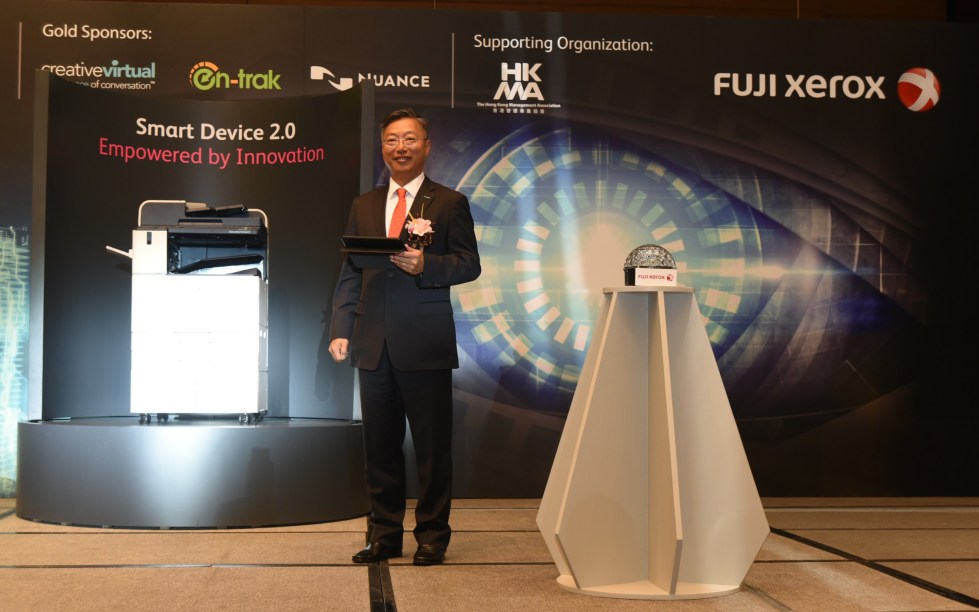
Fuji Xerox (Hong Kong) has launched Smart Device 2.0, a new document management smart device that lets businesses achieve smoother workflow as well as higher operational efficiency and productivity by 25 percent. It also helps companies address information technology challenges in a comprehensive manner.
Smart Work Gateway is a brand-new concept that swiftly interconnects cloud network, Smart Device 2.0 and user’s personal mobile device. Office employees can enjoy unprecedented convenience of connecting to their workplace anytime, anywhere. Work is no longer bounded by time or place.
“The all-new Smart Device 2.0, empowered by Smart Work Gateway, truly redefines the ‘smart workplace’ with user-centric and intuitive features, enabling enterprises to not only work smarter, but also build competitive edge and sustainable growth,” said Herbert Hui, Managing Director, Fuji Xerox (Hong Kong) (above).
As the next generation of Smart Device, the Smart Device 2.0 is analytics enabled, cloud enabled and business process enabled – all without the need for server support. Along with high scanning and printing speed, the redesigned multi-functional smart device features a brand-new Super EA-Eco Toner that delivers unrivaled print quality across large printing volumes, ensuring collateral produced will simultaneously achieve consistent quality, higher productivity and cost optimisation.
NVIDIA DGX SATURNV ranked most efficient supercomputer
 NVIDIA’s new DGX SATURNV supercomputer is ranked the world’s most efficient — and 28th fastest overall — on the latest Top500 list of supercomputers.
Powered by new Tesla P100 GPUs, it delivers 9.46 gigaflops/watt — a 42 percent improvement from the 6.67 gigaflops/watt delivered by the most efficient machine on the Top500 list released last June.
Compared with a supercomputer of similar performance, the Camphore 2 system, which is powered by Xeon Phi Knights Landing, SATURNV is 2.3x more energy efficient.hat efficiency is key to building machines capable of reaching exascale speeds — that’s 1 quintillion, or 1 billion billion, floating-point operations per second. Such a machine could help design efficient new combustion engines, model clean-burning fusion reactors, and achieve new breakthroughs in medical research.
Move aside content. Culture is king!
 In the age of the Internet, it is widely believed that content is king.
However, US strategist and serial entreprenuer Richard Nash (above) thinks otherwise. He believes that the 21st century will be about sorting demand and culture is king, not content.
At his keynote address at StoryDrive Asia, Nash said the book publishing industry should start modelling itself as a service, rather than a manufacturing business.
WhatsApp video call on the way
Last year, WhatsApp added voice to its messaging application. This year, it’s taking it one step further with video calls. WhatsApp video calling is on the way for more than one billion users on Android, […]
Worldwide services market to cross US$1 trillion mark by 2018
 Global IT services and business services revenues are expected to cross the US$1 trillion mark for the first time in 2018, according to IDC.
Worldwide services spending totals for 2016 are expected to stay within the US$900 billion range and by 2020 expected to near US$1.1 trillion.
With more than US$100 million worth of spending each this year, the largest services markets will be key horizontal business process outsourcing (BPO) and systems integration services, which will also generate the largest revenue pools over the 2016-2020 forecast period. Business Consulting Services is forecast to outpace both markets in terms of growth.
Inaugural StoryDrive Asia to focus on transmedia
 Singapore Book Publishers Association and Frankfurt Book Fair organiser Frankfurter Buchmesse GmbH are putting together the inaugural StoryDrive Asia, a symposium for angel investors, incubators and professionals in publishing, software and gaming, photography and filmmaking and digital media.
The focus is on transmedia, which is about storytelling across media. For example, The Assassin’s Creed is more than just a computer game. It’s also a novel, comic book as well as a movie that’s slated for release on December 21. That’s transmedia, which is gaining traction across the globe.
“It’s a very exciting moment for publishing in Asia, especially in Southeast Asia, where media are interrelating in new and fascinating ways, and local content is getting better and better. And even as transmedia trends take root, our industry and local stakeholders have realised the importance of promoting the reading habit in this new media environment. We believe the best way to capture these trends, and reinforce Singapore’s role as a hub for IP and the media industry, is to partner with Frankfurter Buchmesse GmbH for a new kind of event: StoryDrive Asia,” said Peter Schoppert, President, Singapore Book Publishers Association.
Alibaba Cloud rises 128% in Q3
Alibaba Cloud has outpaced cloud service provider leaders with growth of 128 percent to reach US$221 million in Q3. However, AWS increased its lead, accounting for 32.2 percent of total spend, followed by Microsoft Azure with 17.3 percent and Google Cloud with 7.6percent, according to Canalys. Both Microsoft (up 115.6 percent) and Google (up 79.6 percent) grew faster than Amazon.
Global cloud infrastructure services expenditure increased 53.1 percent year on year to reach US$10 billion for the first time in Q.

“Alibaba has established itself as the largest e-commerce business in China and is starting to dominate the provision of cloud infrastructure services in the country,” said Daniel Liu, Research Analyst of Canalys.
NVIDIA makes two masterstrokes with Microsoft Surface and Nintendo Switch

The Nintendo Switch and Microsoft Surface Studio are two of the exciting announcements in recent weeks. While one thrilled gamers, the other is set to transform the desktop.
What both have in common are NVIDIA GPUs.
The Nintendo Switch is powered by the NVIDIA Tegra, a high-efficiency scalable processor based on the same architecture as the world’s top-performing GeForce gaming graphics cards.
Smartphone shipment up 6% in Q3
 Three Chinese smartphone vendors — Huawei, Oppo and vivo — helped drive the global smartphone market in Q3. Together their shipment grew 60 percent while the overall global market just moved up six percent that quarter, according to Canalys.
The standout performer was Oppo, which had a stellar quarter, taking hold of the Chinese market from under the noses of its rivals. Its smart phone shipments grew around 40 percent sequentially and 140 percent year on year. Tough competition in China has affected Huawei’s global position, with it now looking increasingly unlikely that it will reach its annual shipment target of 140 million units.
Samsung continued to lead the market, but its issues with the Note 7 are starting to affect its business. It shipped just over 76 million units (excluding all Note 7s), down nine percent on the same quarter a year ago. In second place, Apple’s iPhone shipments also suffered an annual decline, falling five percent to just over 45 million units.
Fuji Xerox launches next-generation printers in Hong Kong
 Fuji Xerox (Hong Kong) has introduced three printers — DocuPrint CP315 dw and CM315 z colour printers and the DocuPrint P365 d monochrome laser printer.
Designed for small- to medium-sized enterprises (SMEs), they offer high-performance print technology, outstanding usability and flexibility, and features to reduce their impact on the environment.
“We are thrilled to introduce the DocuPrint C315 series and DocuPrint P365 d, which offer a host of new technology, productivity and cost-saving features for SMEs. Designed with the needs of SMEs in mind, the DocuPrint C315 series leverages Fuji Xerox’s award-winning CCSLED technology and includes a new Super-EA ECO toner to deliver unrivaled print quality in a small, stylish footprint. Meanwhile, with features that mimic those of large enterprise printers, DocuPrint P365 d provides the best of both worlds to ensure lower running costs and efficiency are prioritised,” said Lee Cheung, Director, Printer Channels, Fuji Xerox (Hong Kong) Limited.
Disappearing into thin Air
A noticeable absentee in Apple’s announcement last night was the MacBook Air. The thin ultraportable that awed the world when it made its debut in 2008 was not shown as the new line-up was revealed. […]
Gearing up for the next industrial revolution

By Edward Lim
It’s been a long time coming but the next industrial evolution, dubbed the Fourth Industrial Revolution is nearly, if not already here.
Each revolution since the first led by water and steam power used to mechanise production in 1784 has been driven by technology in various forms. The Second Industrial Revolution leveraged electric power for mass production while the Third Industrial Revolution used electronics and information technology to automate production.
The next revolution builds on an increasingly digital economy and the fusion of various technologies, including the Internet, which is shaping the way people live, work, play, and relate to one another.
Oppo tops China’s smartphone market

Move aside Huawei and Xiaomi because Oppo is now the leader in China’s smartphone market. And the number goes to vivo, another Chinese maker.
According to IDC, the China smartphone market grew 5.8 percent year-on-year and 3.6% quarter-on-quarter in Q3 with Oppo and vivo overtaking Huawei for the first time.
Oppo and vivo rose because the Chinese market has evolved beyond operator and online driven channels over to an offline structure that dovetails with Oppo and vivo’s strengths.
Smartwatch market drops 5.6% in Q3
 One of the hottest products recently is experiencing growing pains. Smartwatch shipment slid 51.6 percent to 2.7 million units in Q3 compared to the same period last year, according to IDC.
Although the decline is significant, it is worth noting that Q3 was the first time Apple’s Watch had widespread retail availability after a limited online launch. Meanwhile, the second generation Apple Watch was only available in the last two weeks of Q3.
“The sharp decline in smartwatch shipment volumes reflects the way platforms and vendors are realigning. Apple revealed a new look and feel to watchOS that did not arrive until the launch of the second generation watch at the end of September. Google’s decision to hold back Android Wear 2.0 has repercussions for its OEM partners as to whether to launch devices before or after the holidays. Samsung’s Gear S3, announced at IFA in September, has yet to be released. Collectively, this left vendors relying on older, aging devices to satisfy customers,” said Ramon Llamas, Research Manager of IDC’s Wearables team.
Samsung sets up airport customer service counter for return/exchange of Galaxy Note 7
With an increasing number of airlines banning the Samsung Galaxy Note 7 completely from their flights, Samsung has set up service counters at several airports for Note 7 customers to return and exchange their phones. These […]
Bye, bye Galaxy Note 7

The Galaxy Note 7 page on Samsung Singapore’s website says it all. It’s a dark day for Samsung.
Just two months after the Korean giant announced its newest Galaxy Note, the smartphone has gone into history, in possibly the shortest lived model. The company has discontinued production of the smartphone.
The Galaxy Note 7 had the features to take on the Apple iPhone 7 but somehow things didn’t work out properly. Exploding phones while charging led to recalls and even bans from airlines. Even newly-exchanged phones were reported to be facing the same problems.
CSIRO first in APAC to deploy NVIDIA DGX-1 supercomputers

Australia’s federal research agency Commonwealth Scientific and Industrial Research Organisation (CSIRO) has become the first in Asia-Pacific to deploy the NVIDIA DGX-1 deep learning supercomputers.
Installed in CSIRO’s Canberra data centre, the two supercomputers will expand the capability of Australian scientists and broaden the science impact possibilities for the nation.
The NVIDIA DGX-1 is the world’s first deep learning supercomputer to meet the computing demands of artificial intelligence. It enables researchers and data scientists to easily harness the power of GPU-accelerated computing to create a new class of computers that learn, see and perceive the world as humans do.
Global devices market continue to shrink for second year
Worldwide combined shipments for devices (PCs, tablets, ultramobiles and mobile phones) are expected to drop three percent in 2016, according to Gartner.
This will mark the second consecutive year of decline as the global devices market fell by 0.75 percent in 2015. And the immediate future remains bleak for this market.
“The global devices market is not on pace to return to single-digit growth soon,” said Ranjit Atwal, Research Director of Gartner.
SEA is Facebook’s fastest growing region for advertisers
Facebook now has more than four million active advertisers, with more than 70 percent coming from outside of the United States. The fastest-growing region is South East Asia, led by Vietnam, Indonesia and the Philippines. In terms […]
ZTE releases Pre5G massive MIMO solution
 ZTE has released its latest Pre5G massive multiple-input multiple-output (MIMO) 2.0 solution at the 2016 China International Information and Communication Exhibition held in Beijing.
This new version is aimed at the high-end marketplace to help operators in the existing developed market meet the dual challenge of surging traffic demand, combined with limits on spectrum resource. With this new-generation product, single-station spectrum efficiency can be greatly improved and existing 4G user terminals can also benefit from the ultra-speed broadband experience without the need to change their mobile phones.
This new-generation massive MIMO 2.0 product is smaller in size, with 16-stream spatial division multiplexing, multi-carrier aggregation, and support for smooth evolution. The product can be flexibly deployed with support for two deployment modes: distribution and integration, to meet different requirement scenarios.
NVIDIA unleashes palm-sized AI computer for autonomous vehicles
 NVIDIA has unveiled a palm-sized, energy-efficient artificial intelligence (AI) computer that car makers can use to power automated and autonomous vehicles for driving and mapping.
The new single-processor configuration of the NVIDIA DRIVE PX 2 AI computing platform for AutoCruise functions — which include highway automated driving and HD mapping — consumes just 10 watts of power and enables vehicles to use deep neural networks to process data from multiple cameras and sensors. It will be deployed by China’s Baidu as the in-vehicle car computer for its self-driving cloud-to-car system.
DRIVE PX 2 enables car makers and their tier 1 suppliers to accelerate production of automated and autonomous vehicles. A car using the small form-factor DRIVE PX 2 for AutoCruise can understand in real time what is happening around it, precisely locate itself on an HD map and plan a safe path forward.
Baidu and NVIDIA team up on self-driving car
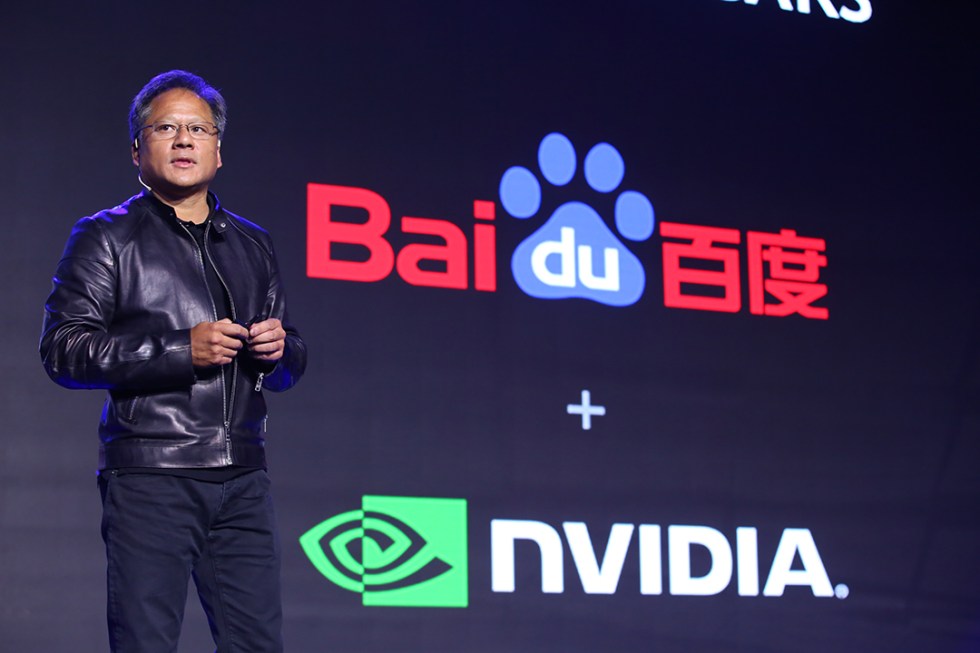
Baidu and NVIDIA are partnering to leverage artificial intelligence (AI) to create a cloud-to-car autonomous car platform for Chinese and global car makers. The partnership combines Baidu’s cloud platform and mapping technology with NVIDIA’s self-driving computing platform to develop solutions for HD maps, Level 3 autonomous vehicle control and automated parking.
Baidu CEO Robin Li and NVIDIA CEO Jen-Hsun Huang announced the collaboration at Baidu World Conference in Beijing yesterday.
“We’re going to bring together the technical capabilities and the expertise in AI and the scale of two world-class AI companies to build the self-driving car architecture from end-to-end, from top-to-bottom, from the cloud to the car,” said Huang .
Explosive start for Galaxy Note 7
UPDATE: It’s official. Samsung is recalling the Galaxy Note 7. Samsung’s Galaxy Note 7 smartphone has launched with a bang (literally). According to reports, some of these devices overheated and exploded while being charging — leading […]
360-degree camera demand to rise
 What was popularised by Google Earth is now easily available and affordable for consumers. That is the 360-degree camera, of course.
Demand for such cameras is expected to surge among prosumers and professionals. ABI Research expects professional grade cameras and mid-tier, prosumer 360-degree cameras to hit nearly two million shipments by 2021, with consumer 360-degree cameras to top four million by the same year.
“The most prominent force driving 360-degree video content and hardware is virtual reality (VR). And though VR has been experiencing a period of content starvation due to its novelty, small early install base, and the high cost of premium VR, support from major content platforms will lessen this for 360-degree video,” said Eric Abbruzzese, Senior Analyst of ABI Research.
NVIDIA brings GeForce 10-series GPUs to notebooks
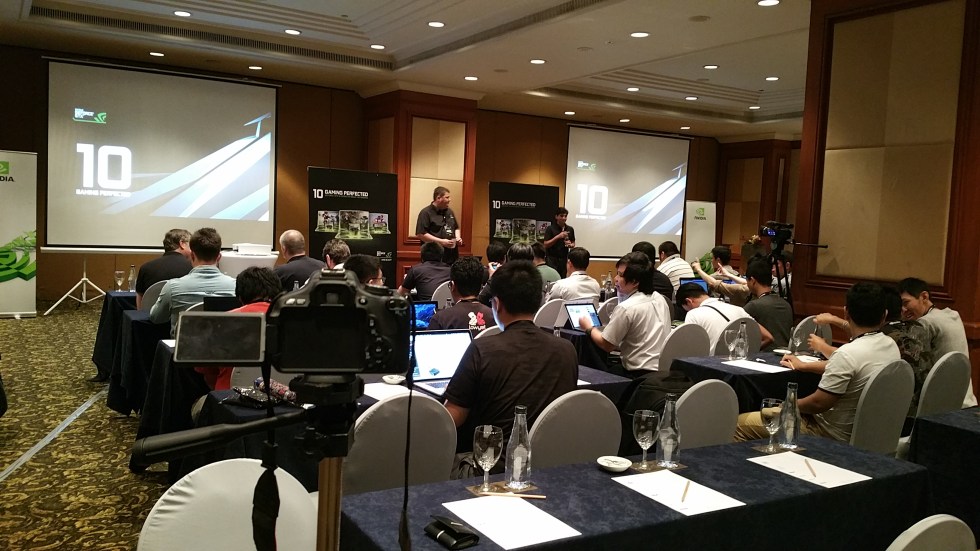
Hot on the heels of its recently-launched GeForce 10-series, NVIDIA has brought that same Pascal generation of GeForce power and performance to notebooks.
At an APAC Editors’ Day held in Bangkok, NVIDIA shared the capabilities that these notebook GPUs bring as well as gave the editors an opportunity to try out the virtual reality features on HTC Vive headsets.
The new GeForce GTX 1080, 1070 and 1060 GPUs for notebooks, providing gamers with a quantum leap forward in performance and power efficiency on the world’s fastest-growing gaming platform.
3D printing market to cross US$35b in 2020
3D printing continues to gain traction globally and the market is expected to more than double to reach US$35.4 billion in 2020, according to IDC.
While 3D printers and materials will represent nearly half the total worldwide revenues throughout the IDC forecast, software and related services will also experience significant growth.
Revenues for computer-aided design (CAD) software are forecast to triple over the five-year forecast period while the market for on-demand parts services will nearly match this growth. The gains in both software and on-demand parts printing are being driven by the rapidly expanding use of 3D printing for design prototyping and products that require a high degree of customization in non-traditional environments.
Samsung skips a note to jump to 7
The stars are aligned. Samsung’s stars, that is. The Korean mobile phone giant has launched the Galaxy Note 7, bringing the phablet numerically in line with the Galaxy S series. And just like the […]
Huawei guns for top smartphone spot
 Huawei continues to retain resilience in a crowded and competitive global economic environment, aiming to become the top global smartphone vendor in five years’ time, according to ABI Research.
Its successive year-on-year rises in smartphone shipments particularly impressive, as Huawei managed to achieve its high ranking without effectively breaking out of its home market. To become a global electronics brand, the company will need to gain a strong foothold in the US and western European markets, but runs the risk of falling victim to the same plights as its larger competitors.
“Ranking by volume as third largest global smartphone vendor, Huawei is attempting to expand its reach by creating its own chipsets and mobile operating system based on Android. It may succeed with chipsets, but many other competitors tried similar OS development tactics in the past to no avail. It will be tough for Huawei to achieve this goal, even with improved global brand strength and volume gains,” said David McQueen, Research Director of ABI Research.
Worldwide semiconductor spending to dip 0.7% in 2016
Worldwide semiconductor capital spending is expected to slide 0.7 percent in 2016, to US$64.3 billion, according to Gartner. This is up from the estimated 2 percent decline in Gartner’s previous quarterly forecast.
“Economic instability, inventory excess, weak demand for PC’s, tablets, and mobile products in the past three years has caused slow growth for the semiconductor industry. This slowdown in electronic product demand has driven semiconductor device manufacturers to be conservative in increasing production,” said David Christensen, Senior Research Analyst of Gartner.
“Looking ahead, it appears the second half of 2016 may see improved demand. However, following Brexit, semiconductor inventory levels may rise in the third and fourth quarters, which could lead to reduced production volumes,” he added.
Mastercard sports new logo
Mastercard has unveiled a new brand identity and logo to be aligned with its position as a forward-thinking, human-centred technology company. “To thrive in this new digital world where business moves faster than ever, we want […]
Enterprises driving AR market
 Pokemon Go is taking the world by storm with its use of augmented reality (AR). The craze has received widespread publicity across the world as hordes of people go around in search of Pokemon using their mobile devices.
AR is also set to leave footprint in the enterprise market. ABI Research forecasts that AR in enterprise will explode over the next five years, as the technology will add functionality to existing workforces that was not previously possible, with remote assistance to be the primary use case.
Combined with increased safety and efficiency, this will drive investors and project managers to explore AR with smart glasses applications in the healthcare, industry, and government market segments forecast to hit 27 million shipments by 2021.
NVIDIA springs Titan X surprise
 Just when we thought NVIDIA was done with the Pascal range of GPUs with the benchmark release of the GeForce GTX 1060 early this week, NVIDIA CEO Jen-Hsun Huang pulled off a major surprise with the announcement of the new NVIDIA Titan X at an artificial intelligence meeting in Stanford University.
The new NVIDIA Titan X, based on the new Pascal GPU architecture, is the biggest GPU ever built with a record-breaking 3,584 CUDA cores.
Here are the numbers that matter:
- 11 TFLOPS FP32
- 44 TOPS INT8 (new deep learning inferencing instruction)
- 12B transistors
- 3,584 CUDA cores at 1.53GHz (versus 3,072 cores at 1.08GHz in previous TITAN X)
- Up to 60 percent faster performance than previous TITAN X
- High performance engineering for maximum overclocking
- 12 GB of GDDR5X memory (480 GB/s)
Security software market up 3.7% in 2015
Worldwide security software revenue hit US$22.1 billion in 2015, a 3.7 percent increase in from 2014, according to Gartner.
Security information and event management (SIEM) remained the fastest-growing segment in 2015, with 15.8 percent growth, while consumer security software showed the sharpest decline at 5.9 percent year on year.
In 2015, the top five vendors together accounted for 37.6 percent of the security software revenue market share, down 3.1 percentage points from 2014. These vendors also displayed a collective decline of 4.2 percent in 2015, while the rest of the market (Others) grew strongly at 9.2 percent year on year.
7.5m cellular smartwatches to ship in 2016

Seven and a half million smartwatches with cellular connectivity will ship in 2016, rising to 53.6 million in 2020, according to Canalys. This represents a compound annual growth rate of 63 percent from 2016 to 2020.
In the short term, shipments are likely to be driven by a new Apple Watch with cellular connectivity. Samsung and LG have been very aggressive in bringing new cellular technologies to market, with smart watches such as the Gear S2 classic 3G/4G and the Watch Urbane 2nd Edition LTE, and will also play significant roles. Both the Tizen and Android Wear smart watch platforms already support cellular connectivity.
‘The phase 2 eSIM specification will enable more independent smart watches with a smoother user experience around cellular connectivity. Users will soon be able to easily choose among cellular providers and pay for monthly service. Many more smart watches with LTE and GPS/GNSS will also be released this year, thanks to the availability of new LTE Category 1 chipsets,” said Daniel Matte, Analyst of Canalys.
Worldwide IT spending to be flat in 2016
Worldwide IT spending is forecast to be flat in 2016, totaling US$3.41 trillion, according to Gartner, Inc. This is up from last quarter’s forecast of negative 0.5 percent growth. The change in the forecast is mainly due to currency fluctuations.
“The current Gartner Worldwide IT Spending Forecast assumes that the UK would not exit the European Union. With the UK’s exit, there will likely be an erosion in business confidence and price increases which will impact UK, Western Europe and worldwide IT spending,” said John-David Lovelock, Research Vice President of Gartner.
While the UK has embarked on a process to change, that change is yet to be defined. The “leave” vote will quickly affect IT spending in the UK and in Europe while other changes will take longer. Staff may be the largest immediate issue. The long-term uncertainty in work status will make the UK less attractive to new foreign workers. Retaining current non-UK staff and having less access to qualified new hires from abroad will impair UK IT Departments.
Global adoption of universal profile for RCS gathers momentum
 A global initiative to define a common, open and universal Rich Communications Services (RCS) profile has gained momentum with backing by 57 global operators and manufacturers.
They include operators AIS, Axiata Group, Beeline, Bell Mobility, China Mobile, China Telecom, China Unicom, Claro Brazil, Claro Colombia, Indosat Ooredoo, M1, Megafon, MTS, Optus, Personal Argentina, Personal Paraguay, Reliance Jio, Rogers Communications, Singtel, StarHub, Telcel Mexico, Tele2, Telefónica, Telkomsel, Telus, and T-Mobile US.
These operators are joined by handset manufacturers Alcatel, ASUS, General Mobile, HTC, Intex Technologies, Lava International Ltd., LG Electronics, Lenovo/Motorola, Samsung Electronics, and ZTE, as well as mobile OS providers Google and Microsoft.
China’s world’s fastest supercomputer built without US chips
China has continued its lead in the race for the world’s fastest supercomputer with the Sunway TaihuLight, whose Linpack mark of 93 petaflops outperforms the former TOP500 champ, Tianhe-2, by a factor of three. What’s more remarkable is […]
Philippines is fastest growing smartphone market in SEA
The Philippines smartphone market jumped 20 percent in Q1, according to IDC. With a projected annual growth of 25 percent this year, this makes the country the fastest growing smartphone market in Southeast Asia (SEA).
“While many of the more mature smartphone markets of the world already displayed signs of saturation, the Philippines smartphone market continues to enjoy robust growth owing to a relatively low smartphone penetration rate (30 percent in 2015), active local brand presence, and healthy consumer spending,” said Jerome Dominguez, Market Analyst for Mobile Devices of IDC Philippines.
Local vendors continue to dominate the Philippines smartphone market as they flood it with the most affordable smartphone options.
Pebble pitches Time Round in silver and gold
Pebble has introduced the new Pebble Time Round in polished gold or silver with a black bezel. Only 2,000 units of each model are available at US$199 each on Kickstarter. Backers can get one Pebble Time Round and […]
Wearables market to grow 29% in 2016
Worldwide shipment of wearable devices are expected to reach 101.9 million units by the end of 2016, representing 29.0 percent growth over 2015, according to IDC.
The market for wearable devices will experience a compound annual growth rate (CAGR) of 20.3 percent, culminating in 213.6 million units shipped in 2020.
“Unlike the smartphone, which consolidated multiple technologies into one device, the wearables market is a collection of disparate devices,” said Jitesh Ubrani, Senior Research Analyst of IDC Mobile Device Trackers.
NTT Com Asia names new C-team
Hong Kong-based NTT Com Asia, the East Asia headquarters of NTT Communications, has named Hideaki Ozaki as President and CEO, Theodoric Chan as Chief Commercial Officer and Taylor Man as Chief Technology Officer. The three […]
VR takes centre stage at Computex
 Virtual reality (VR) was the talk of the town at Computex in Taipei a couple of weeks ago.
At the NVIDIA Experience Centre in Grand Hyatt Taipei, a never-ending queue of people waited for the opportunity to check out VR demos powered by the newly-launched NVIDIA GeForce GTX 1080 GPUs.
In the halls — both at TWTC and Nangang — many exhibitors were up in force with their own flavours of VR. At one booth, a visitor put on a harness to try virtual parachuting while in several others, they checked out virtual Grand Prix racing and other demos.
Garmin boosts Vivosmart HR+ with GPS feature
Finally, Garmin has added the GPS feature to its Vivosmart range. You’d think that being a company renowned for its GPS technology that GPS would be a staple in most of its products in the […]
NVIDIA scores perfect 10 with new GPU!
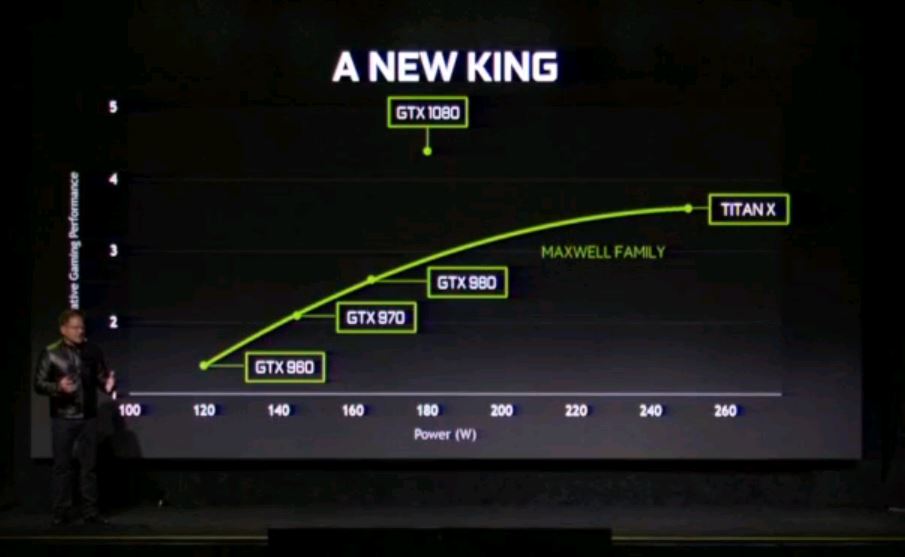 After weeks, if not months of rumours and false predictions, the announcement was finally made. NVIDIA finally revealed the much-awaited Pascal-based NVIDIA GeForce 1080.
What the rumours got correct was the new name of the card. What they missed was the launch date, which NVIDIA kept close to its hearts until CEO Jen-Hsun Huang made the announcement at a specially-gathered press event in Austin on Friday evening (Saturday morning Singapore time).
According to Huang, NVIDIA spent billions in research and development of Pascal and the new GPU.
India public cloud services to hit US$1.26b in 2016
The public cloud services market in India is projected to grow 30.4 percent in 2016 to hit US$1.26 billion, according to Gartner.
The highest growth will come from cloud system infrastructure services (infrastructure as a service [IaaS]), which is projected to grow 32.5 percent in 2016, with platform as a service (PaaS) projected to grow 31.7 percent.
“We are witnessing a shift from legacy IT services to cloud-based services. Cloud services are growing due to organizations pursuing a digital business strategy,” said Sid Nag, Research Director of Gartner.
Smartphone market in historic drop
It’s almost unthinkable but the smartphone market has dipped for the first time in its history.
According to Canalys, worldwide smartphone shipment fell from 324 million units in Q1 2015 to 321 million units in Q1 2016. The top two vendors both posted shipment declines, with Apple the worse hit.
Excluding Apple and Samsung, smartphone shipment grew five percent despite some of the big named international vendors outside the top five also faring badly. LG, Lenovo and TCL-Alcatel posted significant declines, while Sony plummeted by around 57 percent.

Computex introduces InnoVEX to showcase ICT and IoT innovators
 Computex will introduce InnoVEX, a platform to showcase infocomm technology (ICT) and Internet of Things (IoT) innovators. Around 170 startups from 17 countries have already signed up to showcase their latest innovative products and services.
At InnoVEX, along with out-of-the-box, open booths and networking spaces, a wide range of events designed to maximise innovative, technological, and investment exchanges to help startups succeed, including forums, demos, matchmaking, networking events, and pitch contests with a cash prize of US$30,000.
The show will be held at Taipei World Trade Center (TWTC) Exhibition Hall 3 from May 31 to June 2. Diverse activities such as keynote speech, forums, demo, pitch contest, and networking parties will be held throughout the show.
VR hardware to take off in 2016

Virtual reality (VR) is not new but it has had a few false starts in recent years. However, it looks like 2016 is going to be a great year for VR.
According to IDC, worldwide shipment of VR hardware will hit 9.6 million units in 2016. Led by key products from Samsung, Sony, HTC, and Oculus, the category should generate hardware revenue of about US$2.3 billion this year.
While VR will drive nearly all of the hardware volume in 2016, augmented reality (AR) hardware is forecast to ramp up over the next few years. The combined AR/VR device market will see hardware shipments surge past 110 million units in 2020.
Half of CEOs expects substantial digital transformation in their industries
Despite a slowing global economy, CEOs are still making business growth their top priority in 2016, according to a Gartner survey. After growth (54 percent), the second and third business priorities are customers (31 percent) and workforce (27 percent).
The Gartner CEO and senior business executive survey of 400 senior business leaders in user organisations worldwide was conducted in the fourth quarter of 2015, asking questions about 2016/2017. Most responding organisations were those with annual revenue of US$1 billion or more. The survey results show that while business conditions are challenging, CEOs remain confident enough to sanction strategic investments, particularly when it comes to digital business transformation.
“The big rise of explicit mentions of the word ‘customer’ was very noticeable in the results of this year’s survey, “CEOs seem to be concerned about improving customer service, relationship and satisfaction levels. At the same time, CEOs have become much more concerned about employee issues than a couple of years ago. The emphasis is as much on benefits, retention and training of mainstream staff. It is not constrained only to senior grade ‘talent’ issues,” said Mark Raskino, Vice President and Gartner Fellow.
 Entelechy Asia