
Category: Desktop

Tablet growth stagnates, notebook decline eases

CanalysWorldwide PC shipment hit 123.9 million units in Q2, representing year-on-year growth of 14 percent, according to Canalys. With no sequential growth, the positive effect that tablets have had on overall PC shipments is beginning to wear off.

Tablet shipment in Asia Pacific (including China) came in 8 percent below Q1 numbers, mainly due to a fall in shipment by Apple and Samsung.

Apple continued to lead the market with a 14 percent market share, though a 10 percent increase in Mac shipments could not make up for a decline in iPad sales, resulting in the company’s overall shipments declining by 5 percent.

APAC PC market matches Q2 expectations

IDCThe Asia/Pacific (excluding Japan) PC market grew two percent from last quarter and declined 10 percent year-on-year in Q2 to reach 24.3 million units, coming in marginally higher than IDC’s initial forecasts, according to the research firm’s preliminary results.

In India, shipments to an ongoing large education project came in earlier than expected, adding about 100,000 units to the commercial PC segment. Thailand’s coup d’état, on the other hand, resulted in a steep double-digit annual decline as channels were wary to take in shipments. Microsoft’s Bing programme is ramping up in the region’s emerging markets, with Malaysia being the first to come in strong this quarter.
“The ongoing economic slowness in the emerging markets sets the tone of the overall PC demand and inhibited the region’s year-on-year growth. There are pockets of optimism coming from mature markets such as ANZ, Singapore, and Hong Kong, where the smartphones and tablets near saturation. However, the region’s growth has been adversely impacted with the rise of large-screen smartphones in China and most ASEAN countries,” said Handoko Andi, Research Manager for Client Devices Research of IDC Asia/Pacific.

PC market on slow road to recovery

GartnerWorldwide combined shipment of devices (PCs, tablets, ultramobiles and mobile phones) are expected to reach 2.4 billion units in 2014, a 4.2 percent increase from 2013, according to Gartner.

After declining 9.5 percent in 2013, the global PC market (desktop, notebook and premium ultramobile) is on pace to contract only 2.9 percent in 2014.

“2014 will be marked by a relative revival of the global PC market. This year, we anticipate nearly 60 million professional PC replacements in mature markets,” said Ranjit Atwal, Research Director of Gartner.

More consumers buying 3D printers

Canalys3D printing has been all the rage this past year. And that’s now backed up by figures that show that this technology is gaining traction. According to Canalys, 26,800 3D printers were shipped worldwide in Q1.

What’s interesting is that while most were purchased by enterprises, 46 percent were bought by consumers, up from 43 percent last year.

“While enterprise engagement will continue to grow, it looks to be the consumer space that will drive shipments in the near future. We are already seeing significant numbers of early technology adopters and hobbyists investing in relatively cheap 3D printers. As prices continue to fall, the technology improves and use cases are tested, this trend is set to continue,” said Tim Shepherd, Senior Analyst of Canalys.

NVIDIA GPU accelerators powering ARM64 HPC systems

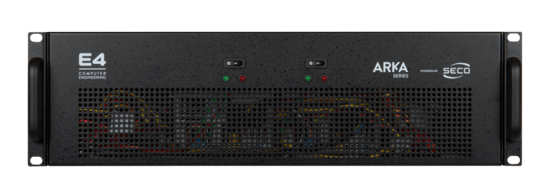
E4 EK003
The E4 EK003 dual-motherboard server appliance features two Tesla K20 GPU accelerators

Server vendors are leveraging the performance of NVIDIA graphics processor unit (GPU) accelerators for 64-bit ARM development systems for high performance computing (HPC).

ARM64 server processors were primarily designed for micro-servers and web servers because of their extreme energy efficiency. Coupled with GPU accelerators using the NVIDIA CUDA 6.5 parallel programming platform, they can now tackle HPC-class workloads.

GPUs provide ARM64 server vendors with the muscle to tackle HPC workloads, enabling them to build high-performance systems that maximise the ARM architecture’s power efficiency and system configurability.

Adobe Illustrator CC gets GPU acceleration

NVIDIANVIDIA has announced the first GPU-acceleration of Adobe Illustrator CC – enabling graphic artists to seamlessly interact with vector art at any resolution, and to smoothly pan and zoom significantly faster than previously possible. With this new feature powered by NVIDIA GPUs, Illustrator CC can now accelerate the entire canvas by up to 10-times faster than previously possible on Windows 7 or 8-based systems with compatible GPUs.

GPU acceleration in Illustrator CC specifically benefits the wide range of users working with 2D vector graphics, including graphic designers, illustrators and typographers creating media across web, print, mobile and more. While GPU acceleration is the norm in 3D content creation, those working in 2D have traditionally been restricted to driving all computing performance through the CPU. Now 2D artists and designers can experience fully interactive performance with even the most complex, high-resolution graphics.

This new Illustrator CC performance boost is based on an optimised NVIDIA technology called NV Path Rendering that is implemented as an extension to OpenGL, an open standard for graphics performance.

Simply amazing! 4K and G-SYNC make gaming a dream come true

NVIDIA Gamer's Day crowdIt’s Dragon Boat Festival, a public holiday in Taiwan but instead of choosing to run off for the holidays, hundreds of young gamers made a beeline to ATT where NVIDIA held the NVIDIA Gamer’s Day as a run up to Computex, which starts tomorrow.

From the moment the event kicked off at noon, there was no holding back the enthusiasm as the crowd checked out the latest and greatest in gaming technologies such as 4K monitors, G-SYNC, GameStream, ShadowPlay, SHIELD, GeForce GTX 700 series GPUs, and GeForce GTX 800M series-enabled notebooks. They took photos, touched, played with, and experienced the gaming devices first hand. Watch Dogs, AC4 Black Flag and Daylight were among the games on offer.

A team of five amateur gamers blew aside all the competition by winning six consecutive games to take home a whopping US$10,000.

NVIDIA clinches Computex Best Choice Awards for Tegra K1 and GRID

Best Choice AwardNVIDIA has done the double by snaring the Computex Best Choice Award for its NVIDIA GRID technology and the Golden Award for the NVIDIA Tegra K1 mobile processor.

This is the sixth year running that NVIDIA has picked up the award, marking the  longest winning streak of any international Computex exhibitor. More than 475 technology products from nearly 200 vendors competed for this year’s recognition.

Tegra K1 is a 192-core super chip, built on the NVIDIA Kepler architecture — the world’s most advanced and energy-efficient GPU. Tegra K1’s 192 fully programmable CUDA cores deliver the most advanced mobile graphics and performance, and its compute capabilities open up many new applications and experiences in fields such as computer vision, advanced imaging, speech recognition and video editing.

India PC market sluggish in Q1

IDCThe India PC market continued to slide in Q1, largely due to poor end-user demand, according to IDC. Overall PC shipment was 2.03 million units, representing a year-on-year drop of 25.2 percent over Q1 2013.

The Commercial PC segment accounted for 1.02 million units, showing a marginal increase of 4.1 percent sequentially over Q4 2013.

“The overall Commercial PC market showed first signs of improvement over the last 9-10 months as investment activities have improved in the banking and government verticals. Vendors are optimistic about the overall market sentiments and believe it will pick up gradually among other verticals too in the course of 2014,” said Kiran Kumar, Research Manager of Client Devices at IDC India.

PC shipment up 5% but tablet growth slows in Q1

Worldwide client PC shipment rose five percent year on year to hit 123.7 million units in Q1 , according to Canalys. Growth in tablet shipments slowed to 21 percent, yet at 50.8 million units they continue to outship notebooks. Tablets accounted for 41 percent of the market while notebooks had 38 percent.

Notebooks and desktops in China declined 13 percent and six percent respectively compared with the previous year.

In the tablet market, there was strong growth in the Middle East (100 percent) and Greater China (74 percent). The US market was adversely affected by a drop in Apple iPad shipment, which fell 40 percent. This was offset somewhat by 20 percent growth in China, Apple’s second largest market. Worldwide, iPad shipments in Q1 fell 16 percent year on year to 16.4 million and accounted for 80 percent of Apple’s total PC shipments. Despite this, Apple continued to lead the global PC market. Its share fell both sequentially and year on year from 20 to 17 percent, due chiefly to the increasingly competitive tablet market.

Huawei maintains dominance in mobile broadband modem market

abi researchEven as mobile broadband modems and hotspot router shipments fell 21 percent year-on-year to nearly 73 million units, Huawei continued to lead the market with nearly 61 percent share. Together with fellow China company ZTE, the pair shipped more than 85 percent of all mobile broadband modems, according to ABI Research.

The overall drop in the market could be attributed to the declining PC market. USB modem sticks and embedded modem modules led the two-year slide while mobile hotspot routers increased 32 percent.

As the computing marketing continues to evolve with more performance and choices than ever before, mobile broadband modems were not impervious to the transition.

APAC PC market dips for 8th consecutive quarter

IDCThe Asia/Pacific (excluding Japan) PC market declined eight percent sequentially and 11 percent year-on-year in 2014 Q1 to reach 23.8 million units, according to preliminary results from IDC.

Elections in some of the bigger markets contributed to the region’s overall decline. In India, an ongoing large education project was postponed due to the upcoming elections, shaving off about half a million units from the commercial PC segment. In Thailand, political unrest continued to have an adverse impact on the economy, while in Indonesia, government funds were diverted in the run-up to the elections, resulting in lower commercial spending in PCs there this quarter.

“However, as these markets stabilise after the elections, IDC expects commercial activity to resume in the second half as a result of pent-up demand,” said Handoko Andi, Research Manager for Client Devices of IDC Asia/Pacific. “On the consumer side, ongoing distractions from smartphones and tablets as well as cautious channel intake impacted most markets in the region, especially in Southeast Asia.”

Worldwide PC shipment dips 1.7% in Q1

GartnerGlobal PC shipment dipped 1.7 percent to 76.6 million units Q1, compared to the same period last year, according to  apreliminary results by Gartner.

“The end of XP support by Microsoft on April 8 has played a role in the easing decline of PC shipments,” said Mikako Kitagawa, Principal Analyst of Gartner. “All regions indicated a positive effect since the end of XP support stimulated the PC refresh of XP systems. Professional desktops, in particular, showed strength in the quarter. Among key countries, Japan was greatly affected by the end of XP support, registering a 35 percent year-over-year increase in PC shipments. The growth was also boosted by sales tax change. We expect the impact of XP migration worldwide to continue throughout 2014.”

“While the PC market remains weak, it is showing signs of improvement compared to last year. The PC professional market generally improved in regions such as EMEA. The US saw the gradual recovery of PC spending as the impact of tablets faded.” said Kitagawa.

NVIDIA releases new drivers, GeForce Experience and SHIELD software upgrade

NVIDIANVIDIA has released new drivers built on DirectX11 to offer enhanced performance, a version of GeForce Experience packed with new features, and an over-the-air (OTA) software upgrade for SHIELD.
The new 337.50 Beta driver delivers up to 71 percent faster gaming performance, including Call of Duty: Black Ops II (up 20 percent), Sleeping Dogs (31 percent), and Alien vs. PredatorTotal War: Rome 2, and Sniper Elite v2 (more than 40 percent).

Along with the new 337.50 Beta driver, GeForce Experience 2.0 now includes the ability to optimise more than 150 games. It brings two signature features to notebooks for the first time. Shadowplay, which allows gamers to capture their gaming exploits with little hit to frame rates, and share them on platforms such as live-streaming video service Twitch, and GameStream, which allows gamers to stream games and enjoy them on the go.

NVIDIA unleashes first Maxwell-based GPU

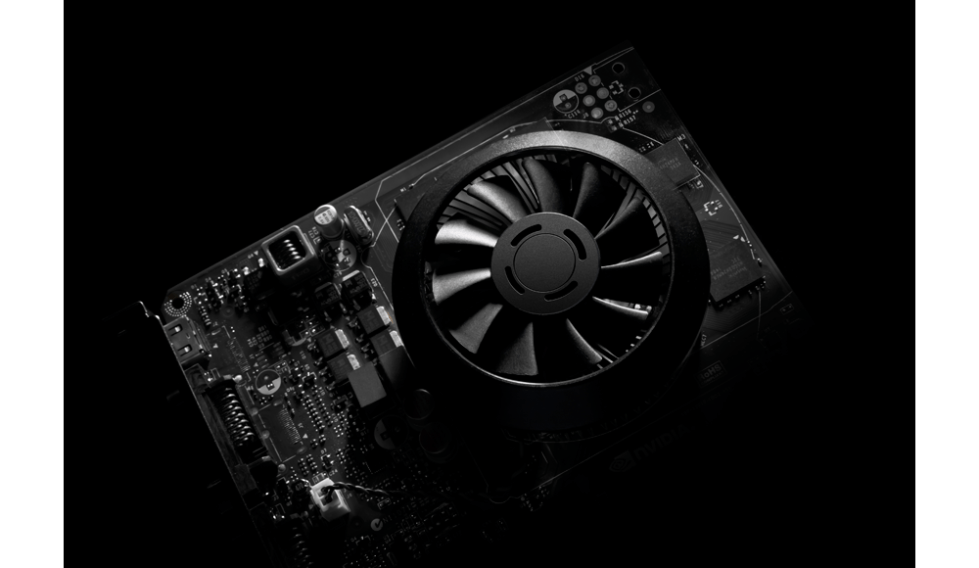
geforce gtx 750 tiNVIDIA has introduced the GeForce GTX 750 Ti and GTX 750, the first GPUs based on the new Maxwell graphics architecture.

A GeForce GTX 750 Ti running at 1080p resolution doubles the performance and uses half the power of the GTX 550 Ti, which was built with the Fermi architecture, and is one of the most used NVIDIA GPUs, according to the Steam Hardware Survey.

“We know that to advance performance, we must advance performance per watt, because every system we design for has a power limit — from supercomputers to PCs to smartphones,” said Scott Herkelman, General Manager of the GeForce business unit at NVIDIA. “That’s why we architected Maxwell to be the most efficient GPU architecture ever built.”

Tablets account for half of PC shipment in Q4

CanalysTablet shipment grew 65.2 percent year-on-year to reach 76.3 million units in Q4, according to Canalys. This represents nearly half (48.3 percent) of the global PC market, which increased 17.9 percent during that period. Excluding tablets, shipment declined 6.9 percent year-on-year with falls in all regions. 

Apple remained the PC market leader in Q4, shipping 30.9 million units to take a 19.5 percent share of the market. It shipped 26.0 million iPads, which accounted for 84.3 percent of its total shipment in Q4. Apple’s share of the overall tablet market increased sequentially from 27.3 percent to 34.1 percent, with the launch of the iPad Air and iPad mini with Retina display providing a much needed boost. The original iPad mini also fell in price, down to US$299 in the US, making it cheaper than ever to buy an iPad. But competition is mounting and Android tablets are falling in price, which will put pressure on Apple’s market share in 2014.

Lenovo secured an 11.8 percent share in Q4, narrowly holding onto second place. Lenovo’s PC shipments increased 25.5 percent year-on-year, driven by growth outside of its core Chinese market, where its shipment declined. Lenovo’s 11.7 percent decline in notebook shipments in China was offset by impressive growth in other regions, notably EMEA, where shipments grew 30.4 percent. Shipments in Latin America also grew strongly, following the acquisition of CCE in the first quarter of 2012.Lenovo was early to embrace Android as a tablet OS, while the likes of HP and Dell waited for Windows 8 and prioritized margin over volume. Lenovo’s strategy has paid off, not only in its home market but worldwide.

Samsung is top global semiconductor buyer

GartnerSamsung Electronics is the world’s top semiconductor buyer, and together with second placed Apple, increased their combined semiconductor demand by 17 percent in 2013, according to Gartner.

The two companies consumed US$53.7 billion of semiconductors in 2013, an increase of $7.7 billion from 2012.

“Samsung Electronics and Apple have topped the semiconductor consumption table for three years running, with their share of the design total available market (TAM) rising from 12 per cent in 2011, to 17 per cent in 2013,” said Masatsune Yamaji, Principal Research Analyst of Gartner. “This increase clearly shows how fast the presence of these two companies has expanded over the last three years and why their decisions have technology and pricing implications for the whole semiconductor industry.”

APAC PC market shrank 10% in 2013

IDCThe Asia/Pacific (excluding Japan) PC market declined 10 percent in 2013 to reach 108 million units, according to preliminary results from IDC.

The economic sluggishness in big emerging markets in the region adversely affected buying sentiments, with education sector projects being a lone bright spot in the commercial space, without which the region could have dropped even further. On the consumer side, smartphone and tablet distractions spread throughout the region this year, further contributing to the sharp decline in the PC market.

In Q4, the market came in two percent below IDC’s initial forecasts with a nine percent year-on-year decline. While most of the region was generally in line with forecasts, Thailand stood out as an exception, as the market there was plagued by the ongoing political turmoil. Shipment volumes this quarter will likely be the lowest in Thailand in the last four years.

Worldwide PC, tablet, ultramobile, and mobile phone shipment to grow 7.6% this year

GartnerGlobal shipment of devices (PCs, tablets, ultramobiles, and mobile phones) are projected to reach 2.5 billion units in 2014, a 7.6 percent increase from 2013, according to Gartner.

Among the operating system (OS) market, Android is on pace to surpass one billion users across all devices in 2014. By 2017, more than 75 percent of Android’s volumes will come from emerging markets.

“The device market continues to evolve, with buyers deciding which combination of devices is required to meet their wants and needs. Mobile phones are a must have and will continue to grow but at a slower pace, with opportunities moving away from the top-end premium devices to mid-end basic products,” said Ranjit Atwal, Research Director at Gartner. “Meanwhile users continue to move away from the traditional PC (notebooks and desk-based) as it becomes more of a shared content creation tool, while the greater flexibility of tablets, hybrids and lighter notebooks address users’ increasingly different demands.”

ViewSonic VX52 series entertainment displays deliver ultimate gaming experience

ViewSonic 52ViewSonic has launched the VX52 series of entertainment displays, which includes the 24-inch (23.6-inch viewable) VX2452mh and 22-inch (21.5-inch viewable) VX2252mh.

The new displays feature Full HD resolution and ClearMotiv II technology that delivers 2ms ultra-fast response times for blur-free, detailed images. Paired with an ultra-high 50M:1 MEGA Dynamic Contrast Ratio and dual built-in 2W stereo speakers, the VX52 series’ sharp, crisp color performance and immersive sound make it perfect for extreme gaming and multimedia entertainment.

The series also features ViewSonic’s proprietary Game Mode technology, which enhances visibility and detail by brightening the dark scenes of video games for the ultimate gaming experience.

Power limiting progress in mobile devices

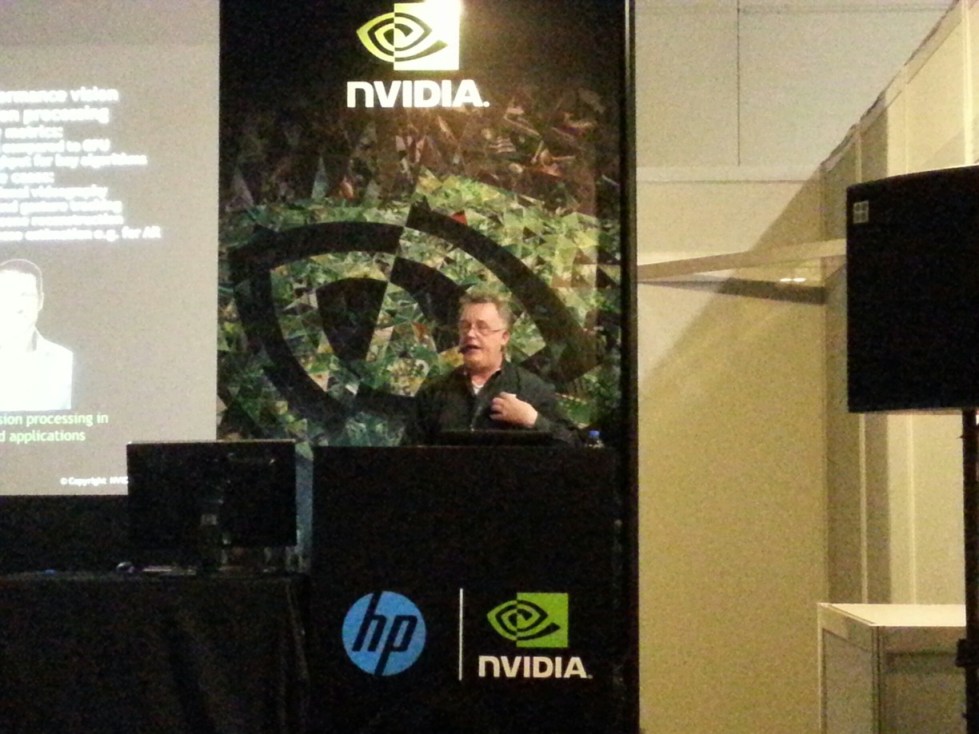
Neil TrevettPower is a big limitation in mobile devices despite improvements in battery power, according to Neil Trevett, Vice President Mobile Content of NVIDIA.

“Power is the new performance limiter. Developers need to use acceleration to preserve battery life and high performance,” he said at NVIDIA Tech Talk at SIGGRAPH Asia in Hong Kong.

On the other hand, advanced mobile GPUs and new sensors are combining to make vision processing the next wave of mobile visual processing. NVIDIA is building a stack of advanced silicon, APIs and libraries to enable advanced mobile vision applications.

NVIDIA fights back in battle of the GPUs with GeForce GTX 780 Ti

NVIDIA GeForce GTX 780TiAMD fired the first salvo after a long period of silence to reignite the GPU battle. But, NVIDIA has hit back immediately and regained the crown with the GeForce GTX 780 Ti. Besides sheer performance, NVIDIA’s armoury also includes G-SYNC, GeForce Experience and ShadowPlay.

The new card delivers smooth frame rates at extreme resolutions for the latest and hottest PC games, including Assassin’s Creed IV — Black Flag, Call of Duty: Ghosts and Batman: Arkham Origins. It also this with cool, quiet operation that is critical to providing an immersive gaming experience.

Powering the GPU is the NVIDIA Kepler architecture, which provides an advanced, low-thermal-density design that translates into better cooling, quieter acoustics and record-breaking performance.

Global video game market to reach US$93b

GartnerThe worldwide video game marketplace, which includes video game console hardware and software, online, mobile and PC games, will reach US$93 billion in 2013, up from $79 billion in 2012, according to Gartner.

Driven by strong mobile gaming and video game console and software sales, the market is forecast to hit US$111 billion by 2015.

Mobile games are the fastest-growing segment of the market, with revenue set to nearly double between 2013 and 2015 from US$13.2 billion to US$22 billion.

Touch-enabled notebooks top wish list

IDCTouch is in. Beyond touch screen phones, users in Asia-Pacific want touch-enabled notebooks.

According to an IDC Asia-Pacific end user survey, 82 percent of respondents prefer a touch-enabled notebook for their next purchase.

The annual survey that studies end user behaviour and usage on client devices. The usage explosion of smartphones and tablets, where touch screen is a prominent feature, is a key driver of taking these screens to the personal computer. The study also finds that the majority of PC users today, even in emerging markets, own a smartphone, especially for 26-35 year olds at 87 percent. 

RTT acquires Bunkspeed

RTTProfessional high-end 3D visualisation solution provider RTT has acquired Bunkspeed, which develops visualisation software and services for design, engineering, and marketing.

Traditionally, RTT has provided enterprise solutions and services for OEMs that employ digital product pipelines. Los Angeles-based Bunkspeed represents a well-established company with a focus on design visualisation tools and is recognised for its affordable range of powerful, easy-to-use software products. The acquisition extends RTT’s services to agencies and designers by offering this lightweight yet robust design tool.

“The addition of Bunkspeed’s specialty services and footprint will allow RTT to provide a broader range of capabilities to our customers,” said Peter Stevenson, CEO of RTT USA.

New Apple hardware? OK, but free OS and apps sound really good!

OSXApple’s fall event early this morning (Singapore time) was about thinner, lighter and more powerful products. Yes, these are improvements but not something that would get me excited to lay my hands on one.

After all, having gone through two iterations of the iPad and other Apple products, the new announcements seem to be marginal improvements. OK, the new iPad Air is lighter and thinner but hey, I’m already used to having the New iPad (or at least, that’s what it was called at launch). However, what kept me awake (remember, it was in the wee hours) was the announcement that users can have the latest Mac operating system, OS X Mavericks, for free. Now, this has the potential to be a game changer especially in its battle with Windows. How often have we heard of free Microsoft products? If at all…

According to Jan Dawson, Chief Telecoms Analyst of Ovum, the changes to Apple’s software licensing for Mac OS X, iLife and iWork is also important, not least for Microsoft.

Cisco and NetApp expand FlexPod portfolio

NetApp cisco Cisco and NetApp have broadened the FlexPod portfolio with new validated designs across the entire portfolio, highlighted by the introduction of FlexPod Select for dedicated data-intensive workloads.
The FlexPod portfolio now includes FlexPod Datacenter (formerly FlexPod) for core enterprise data centres and service providers, FlexPod Express (formerly ExpressPod) for medium-sized businesses and FlexPod supports the growing need to tie storage, networks, applications, and analytics (such as big data) into a more automated, responsive system that increases efficiency and lowers operational expense.

The new offerings build on the joint vision and strategy of Cisco and NetApp to unify branch offices, core data centers, service providers, and dedicated application infrastructures.branch offices, and FlexPod Select for data intensive workloads. FlexPod Select is the first family in the FlexPod portfolio to address targeted workloads, such as high-performance applications.

Lower-priced products to drive devices growth in 2013

GartnerLower-priced devices are driving the growth of worldwide combined shipments of PCs, tablets and mobile phones in 2013, according to Gartner. The global devices market is expected to hit 2.32 billion units, a 4.5 percent increase from 2012.

Worldwide shipments of traditional PCs (desk-based and notebook) are forecast to total 303 million units in 2013, an 11.2 percent decline from 2012, and the PC market, including ultramobiles, is forecast to drop 8.4 percent. Mobile phone shipments are projected to grow 3.7 percent, with volume of more than 1.8 billion units.

Tablet shipments are expected to grow 42.7 percent this year, with shipments reaching 184 million units. Premium tablets are faced with continued price decline in the 7-inch form factor as a larger number of consumers prefer smaller form factors when it comes to content consumption.

ANZ WLAN market boosted by increase in devices

IDCThe wireless local area network (WLAN) hardware market in ANZ continued to grow for the third consecutive quarter, according to IDC.

While enterprises remained the largest users of wireless infrastructure, the consumer space gained share from enterprise over the year. This means that more consumer wireless routers were sold, thanks to an increased number of devices in households during the period.

Service Provider (SP) WLAN deployments differed between Australia and New Zealand. New Zealand SPs embraced 3G/LTE offload via WLAN infrastructure while Australia SPs preferred to rely on available spectrum to support mobile connectivity. Overall, SP contribution to the WLAN market remained minuscule in the region despite having the strongest growth. Table 1 shows growth for the three main segments quarter-on-quarter (QoQ) and year-on-year (YoY):

NVIDIA believes that PC gaming is thriving

thriving

Think that PC gaming is on the wane? NVIDIA certainly doesn’t think so and has brought a group of top journalists to Montreal to deliver this message.

“Some of the season’s most anticipated PC games have been built with technology developed by NVIDIA,” wrote Tony Tamasi, Senior Vice President of Content and Technology of NVIDIA, in a blog post (http://blogs.nvidia.com/blog/2013/10/17/twimtbp/).

“We have a proud heritage on the PC platform, delivering amazing performance and advanced technologies for gamers. Technologies developed as part of our The Way It’s Meant To Be Played programme are among the most deployed in the industry,” he added.

APAC PC shipment down 11.2% in Q3

GartnerAPAC PC shipment continued to head south with 28.1 million units in Q3, an 11.2 percent decline from Q3 of 2012, according to Gartner. Factors contributing to the drop were currency volatilities, especially in India and Indonesia, where currencies plunged to record lows. Vendors were careful in managing inventory, bearing in mind Windows 8.1 and new models based on Intel’s Bay Trail that will start shipping the following quarter.

Globally, PC shipment totaled 80.3 million units in Q3, an 8.6 percent decline from the same period last year. This marks the sixth consecutive quarter of declining worldwide shipments.

“The third quarter is often referred to as the ‘back-to-school’ quarter for PC sales, and sales this quarter dropped to their lowest volume since 2008,” said Mikako Kitagawa, Principal Analyst of Gartner. “Consumers’ shift from PCs to tablets for daily content consumption continued to decrease the installed base of PCs both in mature as well as in emerging markets. A greater availability of inexpensive Android tablets attracted first-time consumers in emerging markets, and as supplementary devices in mature markets.”

Gartner: Top 10 strategic technology trends for 2014

Gartner3D printing, personal cloud, the Internet of Everything — these buzzwords today are expected to be among the top 10 strategic technology trends next year, according to Gartner.

Gartner defines a strategic technology as one with the potential for significant impact on the enterprise in the next three years. Factors that denote significant impact include a high potential for disruption to IT or the business, the need for a major dollar investment, or the risk of being late to adopt.

A strategic technology may be an existing technology that has matured and/or become suitable for a wider range of uses. It may also be an emerging technology that offers an opportunity for strategic business advantage for early adopters or with potential for significant market disruption in the next five years. These technologies impact the organisation’s long-term plans, programs and initiatives.

Beginning of the Digital Industrial Economy

GartnerWorldwide IT spending is forecast to reach US$3.8 trillion in 2014, a 3.6 percent increase from 2013, but it’s the opportunities of a digital world that have IT leaders excited, according to Gartner.

The beginning of the Digital Industrial Economy will make every budget an IT budget; every company a technology company; every business a digital leader, and every person a technology company.

“The Digital Industrial Economy will be built on the foundations of the Nexus of Forces (which includes a confluence and integration of cloud, social collaboration, mobile and information) and the Internet of Everything by combining the physical world and the virtual,” said Peter Sondergaard, Senior Vice President of Gartner and Global Head of Research.

Promotions help drive ANZ inkjet market

IDCThe ANZ inkjet printer market expanded in Q2, thanks largely to heavy price and bundling promotions particularly within the entry level segment, according to IDC. This augmentation was further supported by the growth of high-end machines that served as a replacement for colour laser printers. 

Unit shipments increased 2 percent to about 443,000 although they dropped by 3 percent on a year-on-year basis 

“The second quarter of 2013 saw aggressive promotions on various levels including price, bundling, cash back, catalogue promotions as well as TV commercials. Continued traction within the photographic printer segment and augmentation of A4 inkjet printers that could print A3 added to the positive development. However, with the close of financial year in March for certain vendors, this expansion was offset due to the limited in-take of new stock on the back of already existing stock in their channel,” said Arunachalam Muthiah , Market Analyst of Peripherals Research of IDC New Zealand.

NVIDIA and Ubisoft team up for latest games

Splinter Cell BlacklistNVIDIA has formed an alliance with Ubisoft to offer PC gamers the best gaming experiences possible for Ubisoft’s biggest fall titles, including Tom Clancy’s Splinter Cell Blacklist, Assassins Creed IV Black Flag and Watch Dogs.

NVIDIA’s developer technology team is working closely with Ubisoft’s development studios on incorporating graphics technology innovations to create game worlds that deliver new heights of realism and immersion. One example is NVIDIA® TXAA™ antialiasing, which provides Hollywood-levels of smooth animation, soft shadows, HBAO+ (horizon-based ambient occlusion) and advanced DX11 tessellation.

“PC gaming is stronger than ever and Ubisoft understands that PC gamers demand a truly elite experience — the best resolutions, the smoothest frame rates and the latest gaming breakthroughs,” said Tony Tamasi, Senior Vice President of Content and Technology at NVIDIA. “We’ve worked closely with Ubisoft’s incredibly talented creative team throughout the development process to incorporate our technologies and deliver the most immersive and visually spectacular game worlds imaginable.”

Tablets fail to lift flat PC market in Q2

Tablet shipment’s growth 42.9 percent iwas not enough to lift a sluggish PC market in Q2. Desktop and notebook shipments fell 7.4 percent and 13.9 percent respectively, according to Canalys, which believes that tablets will outsell notebooks by Q4.

PC shipment in the Asia Pacific region declined 0.5 percent year-on-year to just over 40 million units. The region was badly affected by slow shipment in China, which accounted for almost 45 percent of the region’s shipment and declined by about six percent.

Demand for smartphones and tablets is increasing around the world. Faced by an industry in transition, channel partners are exercising caution when planning and placing orders.

Samsung expands ATIV lineup

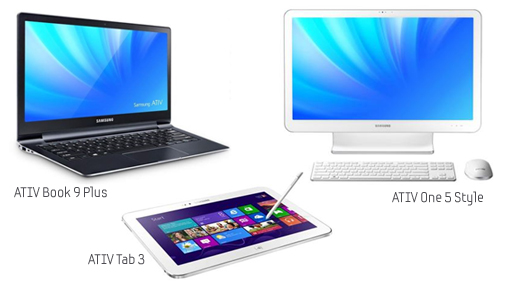
Samsung Ativ SeriesSamsung has boosted its ATIV lineup with four new Windows 8 devices — ATIV Book 9 Plus and ATIV Book 9 Lite notebooks, ATIV Tab 3 tablet and ATIV One 5 Style all-in-one desktop PC.

Also introduced is a new feature called HomeSync Lite, which transforms the PC’s hard drive into a personal cloud server. HomeSync Lite lets users to backup their personal files, photos and videos from portable devices to PCs and access them remotely via a mobile device anytime, anywhere.

The ATIV Book 9 Plus is the next generation of the ATIV Book 9, which is ultra thin and light. Its aluminium, uni-body design features several enhancements from the previous model, including a Windows 8 optimised touchscreen to give users a choice of inputs and a panel that flips 180 degrees so that users can change or share their perspective easily. The notebook will be available in mineral ash black from Q4 at major consumer electronics and IT stores and Samsung Experience Stores.

Global printing dips but APeJ bucks trend

IDCWorldwide page volume from digital hardcopy devices has dipped to 2.98 trillion in 2012 from 3.03 trillion in 2011, a decline of 1.5 percent year over year, according to IDC.

However, in spite of the decline, the world continues to print at a good clip. Developed countries continued their negative page growth trend, driven by digital workflows, adoption of managed print services (MPS) and anemic economies. The silver lining for print volume in developed economies appears to be net new incremental pages from mobile devices.

While it may seem counter intuitive, smartphone and tablet users are generating more print volume compared to non-tablet/smartphone users.

NVIDIA unveils Quadro K6000 GPU

Monsters University is the first Pixar film to implement Global Illumination, a new lighting technology that allows for ultra-complex lighting set-ups where light bounces in a physically realistic way.

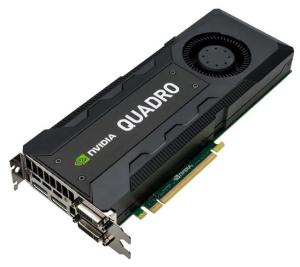
NVIDIA has unveiled the NVIDIA Quadro K6000 GPU and a new line of professional graphics GPUs for mobile workstations.

The Quadro K6000 GPU delivers five times higher compute performance and nearly double the graphics capability of its predecessor, the NVIDIA Quadro 6000 GPU, and features the world’s largest and fastest graphics memory.

Combining breakthrough performance and advanced capabilities in a power-efficient design, it enables leading organisations such as Pixar, Nissan, Apache Corporation, and the Weather Channel’s WSI division to tackle visualisation and analysis workloads of unprecedented size and scope.

China pulls down APAC PC market in Q2

IDCThe PC market slowdown continued in Q2 with Asia/Pacific (excluding Japan) dropping one percent last quarter and 11 percent year-on-year in Q2 to reach 26.7 million units, according to IDC’s preliminary results.

Weak sell-in amid ongoing consumer distractions, such as phones and tablets, as well as a slowing economy affected the PC market performance in China, which pulled the entire region down. While consumer sentiment in the rest of region was also tepid, a higher-than-expected shipment for a large education notebook project in India helped to offset some of this decline.

“The second half of this year still faces a number of challenges such as economic and channel conditions in China as well as uncertainty around an education project in India,” said Handoko Andi, Research Manager at IDC Asia/Pacific. “It’s possible for the market to bottom out and recover by 2014 as technology evolves, but IDC confidence is low at the moment given all of the forces tugging at each other right now.”

Cellebrite introduces PC-based wireless retail solution

Cellebrite DeskTopCellebrite has introduced Cellebrite DeskTop, a PC-based version of its suite of applications that increase revenue, boost margins and improve customer satisfaction in the store and beyond.

Cellebrite DeskTop includes fast phone-to-phone content transfer, back-up, and restore, a fully automated phone trade-in programme, application content and delivery, and robust diagnostics to “detect and correct” phone problems, in an integrated solution running in a Microsoft Windows environment.

It reduces total cost of ownership (TCO) by offering retailers the flexibility of running on a general-purpose PC, eliminating the added cost associated with dedicated hardware. Users will also benefit from unprecedented system performance, including fast content transfer.

Worldwide IT outsourcing market to grow to US$288b in 2013

GartnerThe worldwide IT outsourcing (ITO) market is predicted to reach US$288 billion in 2013, a 2.8 percent increase from 2012, according to Gartner. Compared with Gartner’s previous forecast, nearly all ITO segments are now forecasted to grow more slowly this year.

Gartner’s forecast includes slight upward revisions for both custom application outsourcing and infrastructure utility services (IUS) for 2014 through 2017. Although software as a service (SaaS) impacts the ITO market, it is forecasted as part of the software market, rather than as part of the ITO market.

“We continue to see overall market growth being constrained by near-term market factors, such as evolving ITO delivery models, economic, political and labor conditions, and service provider financial performance,” said Bryan Britz, Research Vice President at Gartner. “Mature Asia/Pacific and Western Europe are the regions where the outlook is most tempered, partly due to currency but also reflective of our view that 2013 is likely to be similar to 2012 in these regions.”

Lenovo nudges HP off global PC perch

IDCLenovo became the number one PC vendor in Q2 as HP slid to second with Dell coming in third.

According to IDC‘s Worldwide Quarterly PC Tracker, Lenovo continued its streak of gains following channel expansion and solid product development. In Q2, it made impressive gains outside of Asia Pacific except Japan (APeJ). However, the headwinds in China continued to affect its home turf significantly. Lenovo ended the quarter with a double-digit decline in APeJ. Overall growth has slowed from prior quarters, and slipped into negative territory this quarter, but still outpaced the market and top competitors.

HP slipped to second place, but growth improved from recent quarters. It was boosted by shipments to India as part of large education projects. Despite ongoing uncertainty surrounding its restructuring, Dell performed above market with a decline of 4.5 percent. As with HP, this was a significant improvement from the past year that was aided by improving growth in the US. It managed to perform above market in all key regions except APeJ.

Smartphones account for half of mobile device shipments in Japan in Q1

Smartphone shipments in Japan grew 4.0 percent year over year in Q1 to 6.8 million units to account for half of the overall mobile device market in Q1, according to IDC’s Japan Quarterly Mobile Device Tracker.

Total shipments in the Japan mobile device market for Q1 came to 13.6 million units, an increase of 9.7  percent on a year-over-year basis.

While the PC market declined by 4.6 percent in the quarter, the rapidly growing tablet market enjoyed year-over-year growth of 187.2 percent to slightly more than 2 million units. The tablet growth was largely driven by the availability of inexpensive new tablets and huge sales incentives from mobile operators to boost the shipping volumes of LTE (4G) tablets. 

NVIDIA rolls out GeForce GTX 760

GeForce GTX 760Barely a month after it introduced the first GeForce 7 series GPUs — the NVIDIA GeForce GTX 780 and the NVIDIA GeForce GTX 770 — NVIDIA has added another new card to its lineup. Priced at US$249, the new NVIDIA GeForce GTX 760 GPU, is designed to deliver extreme frame rates for this year’s hottest PC games, including Call of Duty: GhostsWatch Dogs, and Battlefield 4,.

According to NVIDIA, this would be its last GeForce 7 series card to be introduced this year. The new lineup now consists of:

  • GeForce GTX TITAN/GeForce GTX 690
  • GeForce GTX 780
  • GeForce GTX 770
  • GeForce GTX 760
  • GeForce GTX 660
  • GeForce GTX 650 Ti BOOST
  • GeForce GTX 650 Ti
  • GeForce GTX 650

Powered by an NVIDIA Kepler architecture-based GPU with an incredible 2.3 gigaflops of processing horsepower, the GeForce GTX 760 is more powerful than the next-generation game consoles expected by the end of the year.

Gartner: Worldwide PC, tablet and mobile phone shipments to grow 5.9% in 2013

GartnerCombined shipments of PCs, tablets and mobile phones are projected to reach 2.35 billion units in 2013, a 5.9 percent increase from 2012, according to Gartner. The market is being driven by sales in tablets, smartphones and to a lesser extent, ultramobiles, as PC shipments are on the decline.

Worldwide traditional PC (desk-based and notebook) shipments are forecast to total 305 million units in 2013, a 10.6 percent decline from 2012 , while the PC market including ultramobiles is forecast to decline 7.3 percent in 2013. Tablet shipments are expected to grow 67.9 percent, with shipments reaching 202 million units, while the mobile phone market will grow 4.3 percent, with volume of more than 1.8 billion units.

The sharp decline in PC sales recorded in Q1 was the result in a change in preferences in consumers’ wants and needs, but also an adjustment in the channel to make room for new products hitting the market in the second half of 2013.

Thailand’s PC market declines 20% in Q1

IDCSluggish demand in Thailand’s consumer market helped drive PC shipment down 20 percent in Q1, compared to the same period last year.

According to IDC’s Asia/Pacific Quarterly PC Tracker, PC shipment reached only 800,000 units in Q1.

“Channel partners reacted quickly to the slowdown by reducing PC buy-in to make room for faster-moving devices like tablets” said Jarit Sidhu, Market Analyst for Client Devices Research at IDC Thailand. 

Malaysia’s PC market down 18% in Q1

IDCThe PC market in Malaysia dropped 18 percent in Q1, compared to the same period last year, according to IDC’s Asia/Pacific Quarterly PC Tracker. However, the 898,000 units sold in the quarter represented an 18 percent growth in sequential quarter.

A major delivery of mini-notebooks nationwide under the government’s Malaysian Communications and Multimedia Commission (MCMC) project was the only notable event in an otherwise lacklustre quarter. The education and enterprise segments both posted declines after flushing their budgets last quarter.

Retail spending on PCs was also curtailed by distractions from Chinese New Year festivities and the influx of smartphones and tablets into the market. However, the positive response to touch-based notebooks in retail was a notable silver lining in a gloomy retail climate. 

Vietnam’s PC market up in Q1

IDCIt looks like Indonesia is not the only market where PC sale is still heading north. Vietnam’s PC market grew by 13 percent in Q1 compared to the same period last year, according to IDC’s Vietnam Quarterly PC Tracker.

Nearly 500,000 PCs were shipped despite concerns over high inventory.

Anticipation of growing consumer demands in under-penetrated areas of Vietnam spurred vendors to increase consumer PC shipments. 

PC sales in ANZ dip in Q1

IDCThe PC market is weakening as demand for tablets and other mobile devices strengthen. In Australia and New Zealand (ANZ), the PC market closed Q1 with a 21 percent and 27 percent dip respectively compared to the same quarter last year, according to IDC.

This decline is all the more ominous in view of recent cuts to the Australian Federal interest rate and the quarter being the end of financial year in New Zealand.

“The softness in PC sales across the consumer and commercial space reflects a declining demand for PCs,” said Amy Cheah, Market Analyst of IDC Australia. “More consumers are skipping or delaying PC purchase as tablets become the more common alternative for mobile access. Vendors, as a result, took a more cautious approach this quarter, cutting back on shipments given the slow moving inventory situation.”

1b smart connected devices to be shipped to BRIC countries in 2014

The ASUS Transformer Book Trio is among the many smart devices launched at Computex.

At Computex in Taipei last week, tablets and mobile devices took centrestage. ASUS, maker of the Google Nexus 7, even introduced a tablet starting from just US$129. It looks like these vendors are right on track to tap a burgeoning demand for smart devices.

According to the International Data Corporation (IDCWorldwide Quarterly Smart Connected Device Tracker, global shipments of smart connected devices (PCs, tablets, and smartphones) are expected to surpass 1.7 billion units by 2014 with roughly 1 billion units delivered to emerging markets.

Within the emerging markets, the BRIC countries — China, India, Brazil, and Russia — are expected to generate shipments of 662 million units with a shipment value of more than US$206 billion. More than 650 million units are forecast to be shipped to developed markets, with the US, UK, and Japan capturing more than 400 million units with a shipment value of US$204 billion.

ZTE and Easymeeting.net to develop videoconferencing solutions

ZTEZTE and Easymeeting.net have entered into a strategic partnership to develop and release several major videoconferencing R&D initiatives in the next 12 to 18 months.

The videoconferencing industry is experiencing a huge shift from complicated high-cost solutions towards highly-scalable cloud-based software coupled with affordable hardware. The partnership between ZTE and Easymeeting.net will expedite the transition by making videoconferencing more affordable and simple to use.

ZTE’s depth of knowledge and experience with enterprise communication technology is a perfect match for Easymeeting.net whose focus is on providing innovative and disruptive services to the mass market.

ASUS transforms expectations with exciting new products

ASUS Memo Pad HD7 As a prelude to Computex, which starts tomorrow, ASUS has announced a slew of products at a press conference packed with journalists from around the world at Le Meridien Taipei. The products are part of what Chairman Jonney Shih described as “innovations that transform the market”.

The lineup include a powerful tablet, a phablet, a value tablet, a PC with a difference, complete with mouse and router, an all-in-one PC.

First up is the ASUS Transformer Pad Infinity, the world’s first NVIDIA Tegra 4-powered tablet.

NVIDIA adds GeForce GTX 770 to its lineup

GTX770Just a week after launching its top-of-the-line GeForce GTX 780, NVIDIA has added a scaled-down sibling to its impressive lineup of GPUs based on the award-winning  NVIDIA Kepler architecture.

Priced at US$399, the new NVIDIA GeForce GTX 770 GPU joins the GTX TITAN and the GTX 780 in delivering superior gaming performance, advanced features, and silky smooth frame rates for unsurpassed high-definition PC gaming.

“Only NVIDIA GPUs consistently provide gamers with the ability to achieve extremely fast frame rates at high-definition resolutions with all of the eye candy turned on,” said Scott Herkelman, General Manager of the GeForce GPU business at NVIDIA. “The GeForce GTX 770 represents a new threshold of performance and features for under US$400 and our commitment to PC gaming is why GeForce GPUs continue to be the No. 1 choice of gamers worldwide.”