Category: Telecommunications

Samsung launches low temperature video wall

samsungSamsung has introduced what is claimed to be the world’s first low temperature video wall. Specifically calibrated for the broadcast industry, the UD55E-S has a specialised panel with a lower colour temperature range of 2800k-6500k that corresponds to broadcast camera standards, ensuring that the colours of news footage and graphics are displayed accurately at all viewing angles.

The high resolution UD55E-S raises the quality of video wall solutions in the broadcast industry, where there are specific needs due to lighting conditions within the enclosed studios. The video wall also comes with MagicInfo, Samsung’s flagship signage and content management solution, which allows users to design and manage a complex, interactive multimedia display system.

“To deliver a quality viewing experience for home viewers, broadcasters require equipment with higher standards that are tailored for their unique environment. The UD55E-S addresses this challenge as it is specially optimised for the broadcast industry. With this technology, our broadcast customers will reap time and cost savings with ease of maintenance and minimum tuning while end-viewers enjoy more true-to-life images and footage on their television screens. With our commitment to innovation,” said Yong Sung Jeon, President and CEO of Samsung Electronics Southeast Asia and Oceania.

China will outstrip the US in LTE subscriptions this year

abi research​LTE is growing phenomenally in China. By the end of 2014, China gained almost 100 million LTE subscriptions in the first year of full LTE commercialisation, demonstrating an accelerating growth momentum, according to ABI Research.

Thanks to the first-mover advantages, China Mobile seized almost 90 percent share of the LTE market in China.

“Since the other two China mobile operators — China Unicom and China Telecom — were granted preferred FDD-LTE licenses in March 2015, it is expected that China will overtake the US to become the largest 4G market in the world, accumulating 500 million LTE subscriptions, or 36.5 percent of the domestic cellular subscriptions in 2015,” said Marina Lu, Research Analyst of ABI Research.

ZTE introduces new SDN-based OAM solution

ZTEZTE has demonstrated a new OAM (operations, administration and management) solution based on SDN architecture at the Broadband & TV Connect Asia conference in Singapore.

The new Elastic SDN IPRAN OAM solution, powered by ZTE’s Elastic SDN technology, is claimed to enable operators to perform 90 percent of routine network OAM functions with one-touch control on mobile devices, generating at least 30 percent labour cost savings.

As operators accelerate deployments of 4G LTE networks to meet rising demand, it is becoming increasingly challenging to manage IP RAN mobile bearer networks. This problem is especially acute in Southeast Asia, where operators need to manage their IP RAN networks efficiently on outlying islands and mountainous terrain.

ZTE pitches Blade S6 Plus on eBay

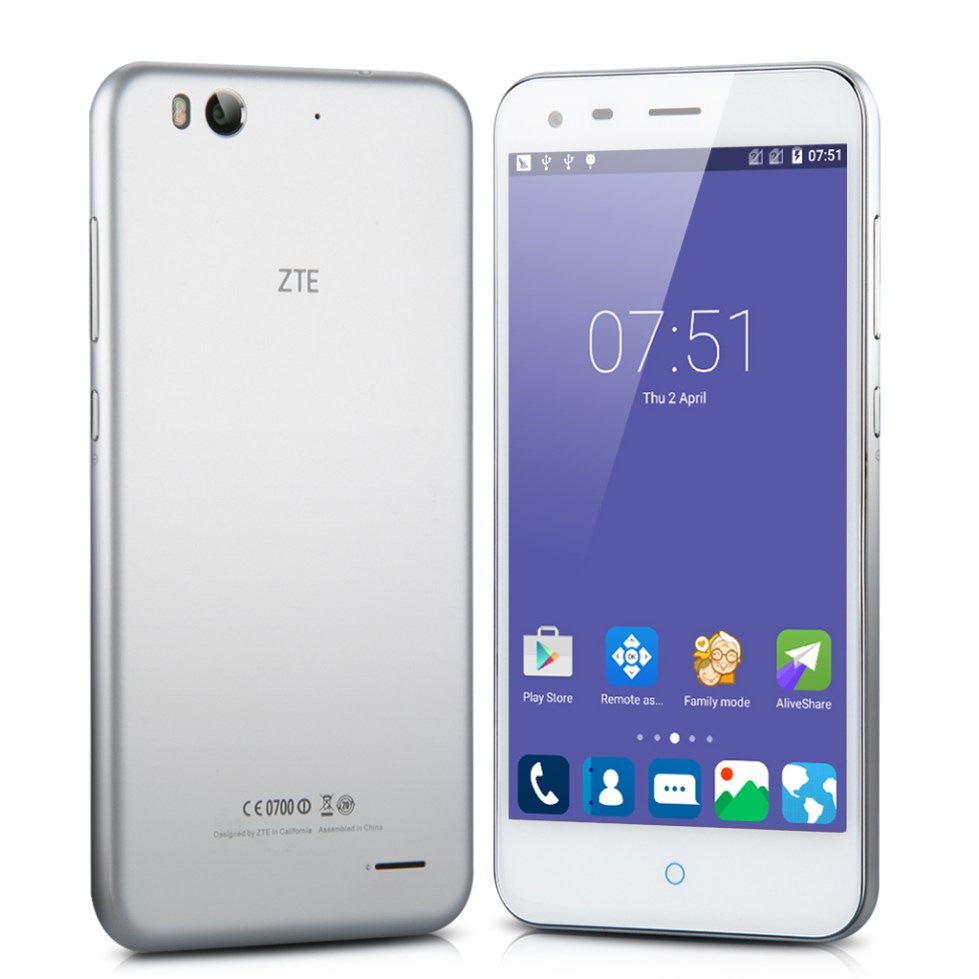
ZTE S6 PlusAnother S6 has made its debut. It’s not Samsung’s but the ZTE Blade S6 Plus — and the company’s making it available globally on eBay for US$299.99.

The Blade S6 Plus was first showcased at Mobile World Congress 2015 in Barcelona, alongside the five-inch Blade S6, which was launched in January. Similar to the Blade S6, the Blade S6 Plus is powered by the Qualcomm Snapdragon 615 octa-core chipset and Adreno 405 image processor, and runs on Android 5.0 Lollipop with ZTE’s customisable MiFavor 3.0 user interface. It boasts a larger JDI Super Screen 5.5-inch HD display with In-Cell technology for better and more vibrant image quality, as well a higher-capacity 3000mAh battery.

Unique to the Blade S6 Plus is a function that allows the device to double as an infra-red remote control. Compatible with all major electronic and household appliance brands, the function allows Blade S6 Plus users to control televisions, set-top boxes, air conditioning units, DSLRs, and more. It is simple and easy to use, and saves users the hassle of switching between several different remote controls.

GSMA launches e-commerce platform for telecoms industry

GSMAGSMA has launched GSMA Marketplace, an e-commerce platform dedicated to the mobile industry.

GSMA Marketplace leverages the associations’s reputation as a trusted intermediary in the telecoms industry to bring together buyers and sellers to do business more easily with each other.

“Whether you are a buyer looking for greater innovation or better prices in your procurement of products or services, or a seller seeking to win new business and enter new markets, GSMA Marketplace will let you browse, contact and connect with companies who can help you achieve your objectives,” said John Hoffman, CEO of GSMA.

ZTE rolls out next generation super HD 4K smart set-top box

ZTEZTE has launched its super HD 4K smart set-top box (STB) product B860A, which uses the 64-byte system solution, Cortex-A9 architecture and four-core CPU.

Running on Android 4.4, the STB supports the latest H.265 video code standard. It uses advanced technology to improve the relationship between the code stream, code quality, time delay and algorithm complexity so that it is at the most optimised setting.

In comparison to the video compression efficiency of H.264, H.265 can save half of the bandwidth, effectively helping to accelerate development of 4K super HD service. The STB has 4K (4096×2160) super high resolution, providing a significant visual difference between the 4K resolution and the ordinary HD.

India smartphone market shrinks in Q4

IDCSmartphone shipment in India observed its first drop in Q4, according to IDC. The decline was attributed to a high channel inventory at the beginning of the quarter among general trade which in turn was caused by the surge witnessed in online sales during festive season.

Q4 was seen as a correction phase when the Smart Phone market shrank by four percent while the feature phone market plummeted by about 14 percent over the previous quarter. The overall mobile phone market stood at 64.3 million units in Q4, which reflects a sequential drop of 11 percent over Q3 and an annual drop of five percent in 2014.

The feature phone to smartphone migration trend is clearly visible as smartphones formed a healthy 35 percent of the overall mobile business in Q4, an increase of 13 percent fom a year ago.

5.2 billion SIM cards shipped in 2014

abi researchGlobal SIM card shipment will reach 5.2 billion units in 2014, a 5.32 percent increase from 2013, according to ABI Research.

LTE, NFC, and M2M are gaining momentum and considered the trends for the next few years.

Large markets such as India, China, and Saudi Arabia are currently among the last countries to undergo ID registration regulations. Among them only India saw a massive decline in shipments during 2013 but data from 2014 show that the market has successfully stabilised and steady growth is expected from 2015 onwards.

China Telecom Sichuan launches commercial 4K ultra-HD iTV service

China TelecomChina Telecom Sichuan has launched the first commercial 4K ultra-HD iTV network service in China. It has teamed up with Huawei to release a 4K ultra-HD intelligent smart set top box, making China Telecom Sichuan the first telecommunications company in China to use 4K STBs for carrying video services.

By combining fibre broadband, 4K ultra-HD video capabilities, and a 4K ultra-HD network construction, the 4K ultra-HD iTV service aims to deliver better quality picture and smoother 4K video experience.

China Telecom Sichuan has adopted the H.265 video coding standard for a better user experience, and also deployed leading technologies to optimize the code stream, coding quality, delay, and algorithm complexity.

India leads growth in Asian smartphone market in Q3

IDCThe smartphone market continued to grow in Asia-Pacific excluding Japan in Q3, albeit at a modest six percent quarter on quarter, according to IDC.

During this period, India led with 23 million units shipped, and added around five million units to the market over Q2.

Emerging markets in the region also surged ahead with 23 million units shipped, accounting for 22 percent growth as tier-1 Chinese vendors extended their reach outside China.

Mobile data to account for more than half of global roaming revenues by 2019

ovumMobile data roaming will generate about US$50 billion in revenue by 2019, contributing as much as 56 percent to global roaming revenues, according to Ovum.

The revenue contribution from Asia is increasing, particularly from Central and Southern Asia, which is expected to grow at a compound average growth rate (CAGR) of 12 percent over the forecast period, as one of the highest among all regions.

“The sheer size of the region contributes to the increase, as does the fact that mobile services will penetrate further into these markets over the forecast period, and the overall propensity to roam is set to improve gradually,” said Nishi Verma Nangia, Senior Analyst of Ovum.

More mobile broadband spectrum needed for APAC economic growth

GSMARising demand for broadband will spur economies in the Asia-Pacific region (APAC).

According to a new GSMA report, increased broadband connections in APAC will generate US$1.2 trillion of GDP growth and create up to 35 million new jobs by 2020.

However, this opportunity can only be realised if governments act now to fully release existing harmonised mobile spectrum bands and allocate more spectrum for mobile to meet rising consumer demand and support the development of new mobile services in the longer term.

Data consumption driving teleco revenue in Malaysia

frost and sullivanData and value-added services have driven mobile growth in Malaysia to reach 42.9 million subscribers and rake in revenues of US$7.45 billion in 2014.

According to Frost & Sullivan, the Malaysian mobile market is currently growing with a mobile penetration rate of 140.7 percent.

Non-voice ARPU is expected to grow by two percent to US$5.9 billion but it will not be able to compensate for the 2.4 percent decline in voice ARPU.

Global smartphone shipment soars past 300m mark in Q3

Q3 is a stunninCanalysg quarter for smartphones as global shipment broke the 300 million unit barrier for the first time. This represented year-on-year growth of 23 percent, according to Canalys.

While Samsung and Apple remain the market leaders, the tussle for the third spot is heating up with was Xiaomi (six percent) followed closely by Lenovo and Huawei at five percent each.

“The global market is becoming more competitive, with vendors beyond Samsung and Apple enjoying growing success. A year ago, in Q3 2013, Samsung and Apple together accounted for 48 percent of worldwide smart phone shipments. While still impressive, in Q3 2014 this had slipped to 38 percent. This trend is likely to continue. It is down to the strong value proposition and increasing quality of products offered across all price points by competing vendors, most notably Chinese companies. In fact, six of the top 10 global vendors in Q3 are based in China,” said Chris Jones, Vice President and Principal Analyst of Canalys.

GSMA to recognise young innovator and connected women

GSMAGSMA has introduced two special awards to commemorate the 20th anniversary of the Global Mobile Awards. The Young Mobile Innovator of the Year and Connected Women: Leadership in Industry awards will be presented at the Global Mobile Awards ceremony at GSMA Mobile World Congress in Barcelona on March 3, 2015.

The Young Mobile Innovator of the Year is designed to showcase young and exciting new talent from across the mobile ecosystem and is open to anyone between 18 and 25 years old, working in an organisation or independently, or currently pursuing further education. The Connected Women: Leadership in Industry award, will recognise leadership in the establishment of initiatives that have a positive impact in reducing the digital skills gap and attracting and retaining women and girls in mobile and telecommunications.

“These additional awards will put the spotlight on individuals and organisations that will be shaping the face of the mobile industry in the years to come,” said Michael O’Hara, Chief Marketing Officer of GSMA.

GSMA announces connectivity guidelines to accelerate the Internet of Things

GSMAGSMA has published guidelines for the Internet of Things (IoT) market that outline how devices and applications should communicate via mobile networks in the most intelligent and efficient way.

The report, IoT Device Connection Efficiency Guidelines, has received the backing of leading mobile operators including AT&T, China Mobile, China Telecom, China Unicom, Deutsche Telekom, Etisalat, KT Corporation, Orange, NTT DOCOMO, Tata Teleservices, Telefónica, Telenor Connexion, and VimpelCom as well as ecosystem partners including Sierra Wireless and Jasper and aims to support device and application developers as the IoT market develops.

The guidelines include a number of best practice areas such as data aggregation within devices, non-synchronous network access, application scalability and guidance on how to manage signaling traffic from de-activated or out-of-subscription SIMs.

Cellular offloading strategies drive wi-fi test equipment market


frost and sullivanIn its revised mobile service bundles, SingTel added free wi-fi access for its mobile users in selected locations in Singapore. This is said to be part of its strategy to alleviate data congestion on its 3G and 4G networks.

The trend is set to continue across the globe as telcos wrestle to cope with the increasing demand for mobile data. To enable wi-fi access, they need to purchase wi-fi test equipment, creating strong opportunities for Wi-Fi test equipment manufacturers globally.

According to Frost & Sullivan, the wi-fi test equipment market earned revenues of US$528.9 million in 2013. This is expected to more than double to reach US$1.09 billion in 2020.

Smartphones to grab lion’s share of mobile market by 2020

GSMASmartphones will grow from one in three today to two out of every three mobile connections globally by 2020, according to GSMA Intelligence, the research arm of the GSMA.

It forecasts that the number of smartphone connections will grow three-fold over the next six years, reaching six billion by 2020. Basic phones, feature phones and data terminals such as tablets, dongles and routers will account for the remaining connections. The study excludes M2M from the connections totals.

“The smartphone has sparked a wave of global innovation that has brought new services to millions and efficiencies to businesses of every type. In the hands of consumers, these devices are improving living standards and changing lives, especially in developing markets, while contributing to growing economies by stimulating entrepreneurship.,” said Hyunmi Yang, Chief Strategy Officer of GSMA.

ZTE teams up with Blue Jeans Network on videoconferencing services

ZTEZTE is collaborating with Blue Jeans Network on video conferencing services, under which ZTE customers will be able to experience Blue Jeans Network’s cloud-based video conferencing services (VCS) and connect easily to one another via their ZTE VCS products, creating a uniform user experience that fosters collaboration.

Starting in August, ZTE VCS room system with Blue Jeans video conferencing services will be available in Singapore, Australia, the US, and Europe.

Blue Jeans Network extends high-quality video communications beyond the traditional boundaries of virtual conference rooms by allowing individuals, employees, partners and family and friends, to connect and interact with each other seamlessly and effectively. Its technology is used by customers such as Facebook, Foursquare, Match.com, and Stanford University.

Global smartphone shipment soars past 300m units in Q2

DIDCemand for smartphones are on the rise with more 301.3 million units shipped worldwide in Q2, up 25.3 percent from the 240.5 million units shipped in the corresponding quarter last year, according to IDC.

The dominant smartphone operating systems (OS), Android and iOS, saw their combined market share swell to 96.4 percent for the quarter, leaving little space for competitors.

Android was the primary driver with its vendor partners shipping a total of 255.3 million Android-based smartphones in Q2, up 33.3 percent year over year. Meanwhile, iOS saw its market share decline despite posting 12.7 percent year-over-year shipment growth. While Android and iOS both realised gains from a year ago, the rest of the market recorded losses.

Chinese smartphone vendors outpace market

IDCApple and Samsung, beware! Chinese smartphone vendors are hot on your heels. According to IDC, a wide range of Chinese OEMs more than outpaced the market in Q2, with Huawei nearly doubling its shipment from a year ago, followed by Lenovo.

Huawei’s growth is spurred by 4G LTE pick up, particularly in China, as all three national carriers subsidised 4G handsets to encourage consumers to upgrade from 3G. Outside of China, large volumes of its lower-cost Y series fueled growth across most regions. The company continues to focus on broadening its global reach and the Q2 results show that the momentum is undoubtedly there.

Lenovo had a record quarter in China despite tremendous pressure from local brands. During the quarter, Lenovo saw increased success from the A788T and the 3G A388T. While its Motorola acquisition is undergoing approval, Lenovo continued to gain traction in international markets. Though less than five percent of Lenovo’s shipments were registered outside of China in Q2 2013, this share nearly tripled this Q2, with emerging markets, particularly BRIC countries, picking up the largest volumes.

Mobile data to overtake voice in Malaysia in 2017

IDCMobile data is expected to bring in more revenue than mobile voice in Malaysia in 2017, according to IDC.
Despite the penetration rate of Malaysian mobile users exceeding 140 percent and high prepaid-postpaid ratio, mobile operators have still been able to maintain their revenue growth. Total revenue has grown by 35 percent in the last three years, and IDC expects the revenue to continue to grow to RM27.6 billion in 2018 at a compound annual growth rate (CAGR) of 2.6 percent.
“Mobile data revenue will continue to grow strongly at CAGR of 8.5 percent and become the main driver of the total mobile revenue in the next five years,” said Alfie Amir, Research Manager of Telecommunications at IDC Malaysia.

Curvaceous HTC One E8 designed for selfies

HTC One E8With a 5MP front-facing wide-angle camera and auto self-timer, the newly-introduced HTC One E8 is designed for selfies. On the other side is a 13MP rear-facing camera.

The stylish HTC One (E8) with its elegant dual curve design also comes with new materials, Motion Launch and HTC BoomSound. A five-inch device features a full HD, borderless display for a cleaner viewing experience.

“The HTC One (M8) had set a new smartphone standard and now we’re taking it in another exciting direction. Combining style and substance, the HTC One (E8) represents the incredible experience people expect from a HTC One device, with a look and feel that’s unlike anything else out there today. If you’re looking for the best flagship smartphone experience and want to stand out from the crowd, this is the phone for you,” said  Jack Yang, President of HTC South Asia.

ZTE moots pre-5G concept

ZTEWith a highly-connected world where fast Internet access is vital, ZTE has pushed the envelope a little further with its pre-5G concept shared at LTE World Summit 2014 in Nice, France.

It has announced that under certain conditions, some 5G technologies can provide a 5G-like user experience on 4G terminals without changing the air interface standards.

“With next-generation 5G technologies being deployed in 2020, there were industry concerns over what technologies will be used in the next six years. To address this, ZTE proposes to apply some of the 5G technology on top of 4G to meet users’ requirements,” said Dr Xiang Jiying, CTO of wireless products at ZTE.

Huawei secures railway LTE project

SHRHuawei has won the bid for the Shenhua Group Corporation’s Shuo Huang Railway (SHR) LTE project.

One of the largest coal supplying and trading companies, Shenhua has developed and implemented the world’s first LTE network for heavy-haul railways. SHR, with an operating route length of 594km, is a critical railway section for China’s West-to-East Coal Transfer project.

Shenhua hopes to expand the railway’s capacity to transfer 350 million tons of coal and needed to maintain efficient and safe operations of 20,000-ton capacity heavy-haul trains. A wireless broadband system was required to communicate between the master-slave locomotives located at both ends of trains, which could be up to 2.5km apart. The railway’s 800MHz and 400kHz communications system would not be able to support the expansion with its limited coverage distance and low reliability.

Huawei successfully tests 10Gbps wi-fi

HuaweiJust as consumers are enthusing about 1Gbps fibre broadband, Huawei has upped the ante in wi-fi speed with the successful testing of 10Gbps wi-fi  in laboratory trials at its Shenzhen campus.

This is a significant milestone, as it is marks the dawn of a new era in big data applications using ultra-fast wi-fi technology to boost data rates to 10Gbps.

The 10Gbps prototype achieved a record transmission data rate of 10.53Gbps on 5GHz frequency bands. The success of this prototype development, and the tenfold increase in spectrum efficiency that made it possible, paves the way for the validation of technologies needed to support the creation of next generation wi-fi.

Motorola Solutions delivers cloud-ready wifi services

Motorola SolutionsEnterprises have more options for deployment cost effective wireless local area networks (WLAN). Motorola Solutions’ new VX 9000 is a scalable WLAN cloud solution backed by the functionality of Motorola’s robust NX hardware controller.
The VX 9000 software-based virtualised controller supports up to 25,000 access points in a single instance and can scale to support multiple instances.

Motorola’s new NX 7500 multi-service platform is designed for mid-size enterprises and campus environments and offers comprehensive management of more than 2,000 access points. Powered by WiNG 5, the NX 7500 ensures optimal RF performance, speed and throughput by enabling every transmission to follow the fastest and most efficient route to its destination.

Technology keeps New Zealanders indoor

IDCBeautiful scenery, spectacular views and natural landscape make New Zealand a wonderful place to delight in outdoor activities. It’s no wonder then that New Zealanders are known to spend lots of time enjoying  outdoor activities.

However, technology seems to be changing the way New Zealanders live. According to IDC, New Zealand consumers are choosing to go out less often for shopping and leisure activities, as they prefer to do these activities in the comfort of their own home, thanks to advances in technology.

The new data reveals that 47 percent of respondents would prefer to do personal shopping online, rather than in a physical store.

Huawei maintains dominance in mobile broadband modem market

abi researchEven as mobile broadband modems and hotspot router shipments fell 21 percent year-on-year to nearly 73 million units, Huawei continued to lead the market with nearly 61 percent share. Together with fellow China company ZTE, the pair shipped more than 85 percent of all mobile broadband modems, according to ABI Research.

The overall drop in the market could be attributed to the declining PC market. USB modem sticks and embedded modem modules led the two-year slide while mobile hotspot routers increased 32 percent.

As the computing marketing continues to evolve with more performance and choices than ever before, mobile broadband modems were not impervious to the transition.

GSMA completes mobile energy efficiency optimisation project in Pakistan

GSMAGSMA has completed its second Mobile Energy Efficiency (MEE) Optimisation project in Pakistan, working in conjunction with mobile operator Warid Telecom and systems integrator Cascadiant.

The project trialled innovative energy-saving technology in Warid’s network and demonstrated significant energy savings of between 30 and 60 percent. When the solutions are rolled out across Warid’s network in Pakistan, the annual savings are expected to be more than US$6 million and 19,700 tonnes of carbon dioxide emissions.

GSMA also announced that Eltek, Enertika, PowerOasis and Purcell Systems have joined the GSMA’s MEE programme as technology partners. The companies are working with the GSMA to deliver MEE Optimisation projects for mobile network operators (MNOs) who wish to reduce their networks’ energy consumption and cost, as well as carbon emissions.

“It is fantastic that this MEE Optimisation project in Pakistan has already successfully demonstrated significant cost savings and emissions reductions, and is clearly showing the benefits of the service to our members,” said Tom Phillips, Chief Regulatory Officer of GSMA. “The GSMA is also delighted to welcome these four companies as MEE Optimisation technology partners to deliver real cost savings and environmental benefits for operators.”

China vendors to account for half of global handset sales next year

abi researchThe Red Wave is spreading from China to the rest of the mobile world. Huawei, ZTE and Lenovo may not be the leading names that come to mind when it comes to handset vendors today but their influence is spreading. As it Xiaomi, which is taking East Asia by storm with sellouts every time it puts its phones for sale online.

ABI Research has reported that Chinese handset vendors will account for more than half of mobile handsets in 2015. Chinese vendors already accounted for 38 percent of mobile handset shipments in 2013 and the ongoing shift in growth to low cost handsets, especially smartphones, will increase their market share.

Many oChinese OEMs have focused almost exclusively on the huge Chinese market, with little activity beyond its borders, but this is set to change. Huawei (6th in worldwide market share for 2013) and ZTE (5th) have already made an impact on the world stage, but other Chinese handset OEMs like Lenovo — the Motorola acquisition is a clear statement of intent — and Xiaomi are set to join them.

HTC unveils HTC Desire 310 in Taiwan

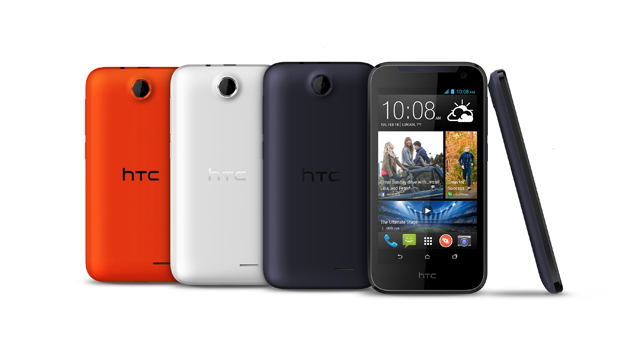
HTC Desire 310HTC has unveiled the HTC Desire 310, which packs a powerful quad-core processor and some of the features of the HTC One series but is more affordable.

Boasting a 1.3GHz quad-core processor, the smartphone can deliver fast, responsive web browsing, silky-smooth graphics when watching videos or playing games and the ability to switch between multiple apps.

“The latest addition to our renowned HTC Desire range combines super-fast processing and premium features at a lower price, offering users the best possible experience in this category,” said Peter Chou, CEO of HTC.

Global tablet growth to slow this year

IDCThe much sought after tablet — the darling of the technology industry in recent years — is expected to grow just 19.4 percent this year. That’s a massive slow down from last year’s growth of 51.6 percent. According to the IDC Worldwide Quarterly Tablet Tracker, the reduction is due to slowing consumer purchases as hardware iterations slow and the installed base — particularly in mature markets — continues to grow.

Over the course of the past two years, average selling prices (ASPs) have declined rapidly in the tablet market, but this too appears to be slowing. In 2012, ASPs declined 18.3 percent from the previous year, and in 2013, prices dropped another 14.6 percent.

Price erosion has started to slowly bottom out, with ASPs forecast to drop a modest 3.6 percent in 2014. IDC believes ASP declines will slow for several reasons; chief among them are the growth of higher-priced commercial shipments and a consumer movement away from ultra-low cost products.

MWC reports record visitors

MWCMore than 85,000 visitors from 201 countries attended Mobile World Congress (MWC), which ended yesterday. This is a record for the mobile industry event, which saw many new product launches and announcements.
In addition to the more than 80,000 attendees at MWC at Fira Gran Via, more than 5,000 people participated in a range of partner programmes at Fira Montjuïc.

“By any measure, the 2014 Mobile World Congress was a stunning success and we thank our attendees, exhibitors, sponsors and partners for their continued support,” said John Hoffman, CEO of GSMA. “Beyond the number of attendees and participating companies, the continued expansion of the event to address key adjacent industry sectors demonstrates just how pervasive mobile is in our everyday lives and how integrated it is becoming in everything that we do. It’s gratifying to be part of such a dynamic, exciting industry.”

GSMA and Facebook to connect the unconnected

GSMAGSMA and Facebook have announced a joint initiative to connect billions of men and women globally who currently have no access to Internet-based communications services. The initiative will focus on reducing the total cost of ownership (TCO) of mobile, given that mobile will be the enabling technology for the vast majority of people in developing markets.

The activities undertaken by GSMA and Facebook will entail working with governments in developing markets to address key factors that have an impact on affordability and availability. The partnership will focus on creating a sustainable environment to incentivise mobile infrastructure investment and usage, as well as eliminating or reducing existing mobile-specific taxation or refraining from imposing new such tax regimes.

Together, GSMA and Facebook will address a range of other issues that will improve affordability and help to connect the world’s population to the Internet, such as maximising the availability of harmonised spectrum to drive mobile broadband adoption; evaluating the establishment of local Internet Exchange Points; fostering the development of local Internet content; and examining the effectiveness of Universal Service Funds.

HTC unveils mid-range Desire 816 smartphone

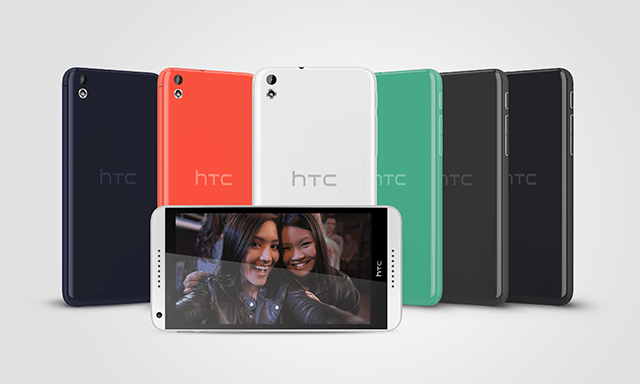
HTC Desire 816HTC has unveiled the first model in its 2014 mid-range portfolio — the HTC Desire 816, which packs an advanced feature set that makes it one of the better value smartphones.

The first edition of the new-look HTC Desire family comes fully loaded with HTC’s iconic dual-frontal speakers and HTC BoomSound, while HTC BlinkFeed keeps users up-to-date with the latest news and social updates on the 5.5-inch screen. A 13MP rear-facing camera complete with HTC Zoe and automatic highlight videos, as well as a 5MP front-facing camera, make it ideal for capturing both selfie and landscapes.

The new smartphone is powered by a quad-core, 1.6 GHz processor and offers 4G LTE connectivity.

Huawei teams up with the Gunners

HuaweiHuawei has taken a shot at the English Premier League by becoming the official smartphone partner of league leaders Arsenal.

Huawei and Arsenal announced the global deal, which lasts until the end of season 2015/16 at the Arsenal Training Centre in Colney, Hertfordshire, with members of the first team including, Aaron Ramsey, Lukas Podolski and Mesut Özil along with manager Arsène Wenger.

“We are delighted to be partnering with Huawei at such an exciting time in the development of its brand globally, and in particular in the UK and Europe,” said Tom Fox, Chief Commercial Officer of Arsenal.

IMS deployments to reach US$4b by 2017

abi researchIMS Core Network deployments are edging up as operators put the necessary infrastructure and capacity in place for planned 2014 VoLTE launches, according to ABI Research.

Spending for the core network products (HSS, CSC, Media Controllers and Gateways, MSF, IBCF, SBC and P-CSCF) integral to a functioning IMS network will reach US$4 billion by 2017. “We see increasing IMS Core Network revenues through 2017, after which IMS revenues will flatten and reflect capacity expansion,” said Joe Hoffman, Research Director of ABI Research.

IMS spending for mobile 4G markets follows the LTE deployments, as operators seek to get their network coverage in place, stabilised, and compatible mobiles for VoLTE become available. The leading LTE market, North America, will peak 2015 to 2016, while the largest market, Asia-Pacific shows continued growth into the foreseeable future.

Telecom New Zealand launches ultra mobile 4G LTE network

Telecom NZTelecom New Zealand has launched a new 4G LTE network that can provide speeds of up to 150 Mb/s to mobile subscribers in parts of Auckland, Wellington and Christchurch.

The telco has made access to the 4G network free for all of its current subscribers who have 4G-capable devices. It recognises that the network’s faster data will quickly become the “new normal” for New Zealanders who have embraced smart devices.

According to Tim Miles, CEO of Telecom’s enterprise business arm Gen-i, 4G would help to feed growing demand for new applications which leverage the high speeds, while the seamless integration of the 4G network with 3G, fibre and Wi-Fi into a single platform for mobility would deliver a superior overall experience for customers.

nubia nabs 2.5m orders for Z5S and Z5s mini smartphones

Nubia Z5SZTE’s boutique smartphone brand nubia has received 2.5 million orders for the Z5S and Z5S mini on JD.com as consumers in China.

The response to Z5S, priced at RMB1,999, and Z5S mini, priced at RMB1,499, surpassed a sales record previously set by Xiaomi. The two new smartphones were designed using consumer feedback garnered by nubia and JD.com in a C2B (consumer to business) approach to deliver a customer-defined user experience. Z5S and Z5S mini take nubia’s strengths in smartphone photography to a new level, becoming the first phones in China to offer the optical image stabiliser feature.

The new NEOVISION 3.0 system on Z5S and Z5S mini bring the feature of independent white-balance to smartphone users in China for the first time, after nubia pioneered independent focus and independent light-metering. The advanced imaging technology offered on Z5S and Z5S mini have earned the new handsets the moniker of “Single-Lens Reflex (SLR) Smartphones.” In addition, nubia’s industry-leading photography technology is now available for beta downloads (nubia Camera) by users of other handset manufacturers.

1O1O and one2free launch first VoLTE network in Hong Kong

1010 and one2free VOLTE-1O1O and one2free have turned on the first VoLTE (Voice over LTE) network in Hong Kong powered by Hong Kong’s Trusted Network. The full commercial launch is expected to take place in the first half of 2014, in line with projected device maturity in the market.

CSL’s VoLTE offers clearer voice, instant connection, and better quality video calls enabled by ZTE’s IMS (IP Multimedia Subsystem) solution. Customers will experience a clearer voice and richer multimedia experience, with a distinct improvement in video call quality with VoLTE.

VoLTE also allows 1O1O and one2free to achieve better spectral efficiencies and will increase network capacity and subsequently enhancing the 4G LTE experience.

SEA smartphone sales up 61% in first three quarters

gfk_logoSoutheast Asia consumers bought 41.5 million smartphones, spending US$10.8 billion in the first three quarters of this year, according to GfK Asia.

Indonesia led the way with sale of 14.8 million smartphones worth more than USS3.33 billion. Thailand and Malaysia were next with 7.2 million and 6.4 million units sold respectively. However, in terms of smartphone sales revenue, the ranking of these two countries are switched with Malaysia garnering US$2.25 billion while Thailand raked in US$1.96 billion in January to September.

“The increasing affordability of smartphones, particularly in the developing markets is helping many consumers in these countries make the switch from their basic feature phones to own their very first smartphone,” said Gerard Tan, Account Director for Digital Technology of GfK Asia. “It is worth highlighting the significant milestone of September being the month whereby sales penetration reached the halfway mark; where one in every two mobile handsets purchased in the region is now a smartphone.”

Lower-priced models drive explosive smartphone growth in India

IDCIndia’s smartphone market grew an astounding 229 percent year-on-year in Q3. According to IDC’s APEJ Quarterly Mobile Phone Tracker, vendors shipped a total of 12.8 million smartphones in Q3 compared to 3.8 million units in the same period of 2012. Q3 also saw an increase of 28 percent over Q2.

The 5.0- to 6.99-inch screen size smartphones continued to show sustained growth, contributing 23 percent of the overall market in terms of volume.

The overall mobile phone market (feature phones and smartphones) had a 12 percent growth year-on-year and a seven percent growth quarter on quarter with the share of feature phones sliding further to make 81 percent of the total market in Q3 despite the feature phone market growing at three percent growth over the previous quarter.