
Taiwan smartphone maker HTC is making a cut of the most painful kind — by slicing 20 percent of its workforce. The decision to swallow the bitter pill comes in the wake of heavy losses and strong competition.
Taiwan smartphone maker HTC is making a cut of the most painful kind — by slicing 20 percent of its workforce. The decision to swallow the bitter pill comes in the wake of heavy losses and strong competition.
 Epicentre Holdings has sold its Apple business in Singapore — both online and retail stores — to competitor Elush (T3), marking the end of an era.

The worldwide wearables market is adjusting as smartwatches continue to come to the forefront. In the coming years, smartwatches will encompass more features and functionalities.
 Twenty-two days. It took relatively unknown smartphone maker OnePlus just that amount of time to sell one million units of OnePlus 6, its latest smartphone.

China smartphone makers Huawei and Xiaomi grew strongest as the market recovered in Q1, according to Gartner.
 Online game distributor Steam’s attempt to release the free Steam Link app for iPhones has hit a roadblock from Apple.


Amazon and Google went head to head in the smart speaker market last year and the battle is expected to be more intense in the coming days with more players joining the fray.
 Apple has apologised for slowing down the performance of older iPhone models to prevent accidental shutdowns due to aging batteries.
 The names Benjamin Lazarus, Jeffrey Aberman, Stephen Margolis, Sandy Brodsky, and Victoria Childs are probably unfamiliar to most. But inthe days to come, they may become more popular.

The launch of the iPhone 8 and drop of prices of older models have helped Apple turn in a sterling quarter in China, with shipment rising 40 percent to 11 million units this Q3.
Even though the X in the newly announced iPhone X is supposed to be pronounced as “10”, it can be interpreted as eXpensive. At S$1,648 for the 64GB version and S$1,888 for the 256GB iteration, […]
 Consumer and enterprise PC purchases are driving growth in the Australia PC market, which includes desktop, notebook and workstation.
The consumer segment grew 8.6 percent year over year (YoY) in Q2, according to IDC.
“The retail channel was negatively impacted by Dick Smith’s exit last year. This year however, promotional events such as Modern PC program run by Harvey Norman spiked growth in the consumer space. AMD’s new Ryzen series launch and EOFY sales further fuelled growth in this segment,” said Sagar Raghavendra, Client Devices Analyst of IDC Australia.
 New Android mobile phone launches spurred growth in Australia, leading to year-on-year growth of 18.4 percent to 2.16 million units, exceeding expectations in Q2, according to IDC.
Smartphones accounted for nearly all of the shipped phones — totalling 2.06 million.
Android returned to being the most popular smartphone OS in Australia. Recently, iOS had overtaken Android as the most popular smartphone OS in Q4 2016 as it held over 54 percent of the market compared to 47 percent for Android.
 Huawei has taken top spot again in China’s smartphone market, edging past Oppo after two quarters of trailing in second place. According to Canalys, the Chinese smartphone giant, which launched the P10 and P10 Plus during MWC, shipped close to 21 million units to secure an 18 percent market share in Q1.
Despite strong annual growth of 55 percent, Oppo fell to second place with shipments of just under 20 million units. Third-placed Vivo had the lowest annual growth of the top three, capturing a 15 percent share with its shipment of 17 million units.
“China’s smartphone market continues to grow, with shipments increasing by over nine percent year on year this quarter. But there is a clear indication that the market is consolidating. The top three vendors are pulling away at the head of the market, accounting for more than 50 percent of shipments for the first time this quarter,” said Lucio Chen, Research Analyst of Canalys.
Everybody knows China is big but with nearly half a billion smartphones shipped last year, the market is massive — that’s one smartphone for every three person in the world’s most populous country.
According to Canalys estimates, China reached 476.5 million unit shipment, growing year on year at 11.4 percent, far exceeding the annual growth rate of 1.9 percent in 2015. China shipment reached 131.6 million units in Q4, which is the highest single quarter total in history, accounting for nearly a third of worldwide shipment.
Huawei took the top spot in the market with 76.2 million shipment, a small lead ahead of runner-up Oppo with 73.2 million units, followed by Vivo in third place at 63.2 million units.
 Worldwide combined shipments for devices (PCs, tablets, ultramobiles and mobile phones) are expected to drop three percent in 2016, according to Gartner.
This will mark the second consecutive year of decline as the global devices market fell by 0.75 percent in 2015. And the immediate future remains bleak for this market.
“The global devices market is not on pace to return to single-digit growth soon,” said Ranjit Atwal, Research Director of Gartner.
It’s almost unthinkable but the smartphone market has dipped for the first time in its history.
According to Canalys, worldwide smartphone shipment fell from 324 million units in Q1 2015 to 321 million units in Q1 2016. The top two vendors both posted shipment declines, with Apple the worse hit.
Excluding Apple and Samsung, smartphone shipment grew five percent despite some of the big named international vendors outside the top five also faring badly. LG, Lenovo and TCL-Alcatel posted significant declines, while Sony plummeted by around 57 percent.

Smartphone sale hit a record 117.3 million in China in Q4. This represents an eight percent growth compared to the same period last year.
The phenomenal increase was partly driven by China’s annual singles day online shopping festival in November and Huawei’s strong shipments in the quarter. China’s Q4 growth boosted the calendar year 2015 growth to three percent.
“Xiaomi, Huawei and Apple are the top smartphone players in 2015. This is a stark contrast to the top players in 2013, which was Samsung, Lenovo and Coolpad – with Samsung clearly dominating other players. With operators reducing smartphone subsidy and given the volatility of consumers’ brand preference in the market, the smartphone scene has changed significantly since then,” said Tay Xiaohan, Senior Market Analyst of IDC Asia/Pacific’s Client Devices team.
The year’s looking bad for tablets as worldwide demand is expected to slide 8.1-percent to just 211.3 million units, according to IDC.
The new forecast follows three consecutive quarters of declining worldwide tablet shipments in 2015. Despite the challenges facing the overall market, IDC expects detachable tablets will continue to represent a growing portion of total shipments.
“We’re witnessing a real market transition as end users shift their demand towards detachables and more broadly towards a productivity-based value proposition. The proliferation of detachable offerings from hardware vendors continues to help drive this switch. We’re starting to see the impact of competition within this space as the major platform vendors – Apple, Google and Microsoft – now have physical product offerings. With attractive price points, including the introduction of sub-US$100 detachables, and platform innovation being driven by competition, IDC is confident that the detachables segment will nearly double in size in the next year, recording more than 75 percent growth compared to 2015,” said Jean Philippe Bouchard , Research Director, Tablets, IDC.
Tablet sale continued its decline for the fourth straight quarter, according to IDC. Q3 shipment of 48.7 million units represented a 12.6 drop year on year, further highlighting the challenges the tablet market is facing.
At the close of 2014, IDC estimated the installed base of tablets to be 581.9 million globally, which was up 36 percent from 2013 but slowing quickly. With mature markets such as North America, Western Europe, and Asia/Pacific well past 100 million active tablets per region, the opportunities for growth are getting fewer.
“We continue to get feedback that tablet users are holding onto devices upwards of four years. We believe the traditional slate tablet has a place in the personal computing world. However, as the smartphone installed base continues to grow and the devices get bigger and more capable, the need for smaller form factor slate tablets becomes less clear. With shipment volumes slowing over four consecutive quarters, the market appears to be in transition,” said Ryan Reith, Program Director of IDC.
Xiaomi continued its phenomenal growth to regained its crown as the largest smart phone vendor in China with 15.9 percent market share in Q2, according to Canalys. One in three smartphones shipped were from Xiaomi or […]
The numbers for the tablet and 2-in-1 market for Q1 in Australia look grim — total shipment was 770,772 units, representing a massive 40 percent quarter-on-quarter decline.
According to IDC, while the seasonal slump is customary, the magnitude of this decline is steeper than expected. Shipment decline of 25 percent year-on-year further reinforced the reality of a slow-down in demand for this product category.
However, drilling down into the segments reveals some positive signs. Whilst consumer shipments declined by 27 percent year-on-year, commercial shipments increased by a modest 1.2 percent.
 Apple held on to its top spot despite a 16 percent drop in PC shipment in Q1. It shipped 17.2 million units, taking a 15 percent market share while Lenovo and HP came in second and third place respectively. Samsung was next with 9.5 million units shipped with Dell just behind with 9.4 million units.
Overall, the global PC market, including tablets, declined seven percent, according to Canalys.
“The growth drivers that previously helped the market through 2014 will have little effect this year. Vendors are struggling with exchange rate fluctuations which is making financial planning more difficult and forcing price increases. These challenges, combined with a softening of demand as Windows 10 draws nearer along with Microsoft’s free upgrade plans, means PC market declines will be greater in the second quarter than they were in the first,” said Tim Coulling, Senior Analyst of Canalys.
 Can’t say that we did not see this coming. Tablets are set to overtake notebooks as the largest mobile computing category (includes tablets, MS Windows laptops, Chromebooks, and Ultraportable PCs), according to ABI Research.
Tablets, agreed by many to be in competition with Notebook PCs, will gain 52 percent majority of the mobile computing market by the end of 2015.
ABI Research forecasts the flat growth of notebooks, due to longer replacement cycles and device market competition, causing notebook devices to drop from 51 percent market share in 2013 to 48 percent in 2015, and further to 47 percent by 2016.
The stats are in – tablet shipment dropped 12 percent to 67 million units in Q4, according to Canalys. The desktop market fell back into a decline in Q4 as Windows XP upgrades waned. The notebook market held firm with another quarter of just one percent growth.
Total PC shipments (desktops, notebooks and tablets) fell six percent in Q4 to reach 148 million units, resulting in full-year 2014 shipments of 528 million units, up three percent on 2013.
Apple regained the top spot in the PC market on the strength of holiday sales, with just under 27 million units shipped. Lenovo’s shipments grew six percent year on year to almost 20 million units as it increased its market share to 13.3 percent. Samsung dropped out of the top three to make way for HP, with growth of 17 percent driving shipments over 17 million units, its best quarter since Q3 2011.
Q3 is a stunnin g quarter for smartphones as global shipment broke the 300 million unit barrier for the first time. This represented year-on-year growth of 23 percent, according to Canalys.
While Samsung and Apple remain the market leaders, the tussle for the third spot is heating up with was Xiaomi (six percent) followed closely by Lenovo and Huawei at five percent each.
“The global market is becoming more competitive, with vendors beyond Samsung and Apple enjoying growing success. A year ago, in Q3 2013, Samsung and Apple together accounted for 48 percent of worldwide smart phone shipments. While still impressive, in Q3 2014 this had slipped to 38 percent. This trend is likely to continue. It is down to the strong value proposition and increasing quality of products offered across all price points by competing vendors, most notably Chinese companies. In fact, six of the top 10 global vendors in Q3 are based in China,” said Chris Jones, Vice President and Principal Analyst of Canalys.
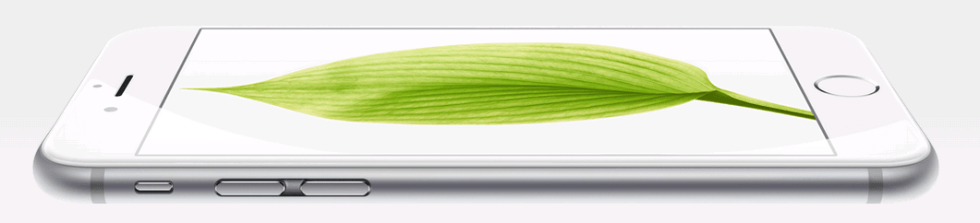 It’s confirmed. The new iPhone 6 and 6 plus are bigger than their predecessors. Of course, this is not exactly news with the numerous leaks over the past weeks.
Sporting a 4.7-inch Retina HD display, the iPhone 6 is the smaller of the two and is marginally thinner than the previous incarnation. The larger iPhone 6 plus ventures into the phablet space with a 5.5-inch display. Both smartphones come with the A8 processor, a 8MP rear and 2.1MP front camera.
Singapore, Hong Kong, Japan, and Australia are among the 15 countries where the Apple products will be first sold on September 19.
Worldwide PC shipment hit 123.9 million units in Q2, representing year-on-year growth of 14 percent, according to Canalys. With no sequential growth, the positive effect that tablets have had on overall PC shipments is beginning to wear off.
Tablet shipment in Asia Pacific (including China) came in 8 percent below Q1 numbers, mainly due to a fall in shipment by Apple and Samsung.
Apple continued to lead the market with a 14 percent market share, though a 10 percent increase in Mac shipments could not make up for a decline in iPad sales, resulting in the company’s overall shipments declining by 5 percent.
Apple and Samsung, beware! Chinese smartphone vendors are hot on your heels. According to IDC, a wide range of Chinese OEMs more than outpaced the market in Q2, with Huawei nearly doubling its shipment from a year ago, followed by Lenovo.
Huawei’s growth is spurred by 4G LTE pick up, particularly in China, as all three national carriers subsidised 4G handsets to encourage consumers to upgrade from 3G. Outside of China, large volumes of its lower-cost Y series fueled growth across most regions. The company continues to focus on broadening its global reach and the Q2 results show that the momentum is undoubtedly there.
Lenovo had a record quarter in China despite tremendous pressure from local brands. During the quarter, Lenovo saw increased success from the A788T and the 3G A388T. While its Motorola acquisition is undergoing approval, Lenovo continued to gain traction in international markets. Though less than five percent of Lenovo’s shipments were registered outside of China in Q2 2013, this share nearly tripled this Q2, with emerging markets, particularly BRIC countries, picking up the largest volumes.
Samsung has retained its pole position in ABI Research’s tablet vendor Competitive Assessment. In the analysis of 23 leading tablet vendors, ABI Research ranked companies on several criteria for product implementation and vendor innovation. The Korean giant prevailed in the innovation category and finished second in the implementation strategy.
Close behind Samsung in second place is Apple. Clearly dominating in shipment volume, Apple has been a strong contender in the tablet ecosystem. Apple places number one in implementation strategy but comes in close second for innovation. The two leading tablet makers have managed to stay ahead of other tablet OEM vendors.
In third place is Lenovo, which has done a great job of expanding its tablet portfolio by marketing to a large audience range and providing unique user interfaces.
Worldwide client PC shipment rose five percent year on year to hit 123.7 million units in Q1 , according to Canalys. Growth in tablet shipments slowed to 21 percent, yet at 50.8 million units they continue to outship notebooks. Tablets accounted for 41 percent of the market while notebooks had 38 percent.
Notebooks and desktops in China declined 13 percent and six percent respectively compared with the previous year.
In the tablet market, there was strong growth in the Middle East (100 percent) and Greater China (74 percent). The US market was adversely affected by a drop in Apple iPad shipment, which fell 40 percent. This was offset somewhat by 20 percent growth in China, Apple’s second largest market. Worldwide, iPad shipments in Q1 fell 16 percent year on year to 16.4 million and accounted for 80 percent of Apple’s total PC shipments. Despite this, Apple continued to lead the global PC market. Its share fell both sequentially and year on year from 20 to 17 percent, due chiefly to the increasingly competitive tablet market.

Worldwide tablet plus 2-in-1 shipments slipped to 50.4 million units in Q1, according to preliminary data from IDC. The total represents a sequential decline of 35.7 percent from the high-volume holiday quarter and just 3.9 percent growth over the same period a year ago. The slowdown was felt across operating systems and screen sizes and likely points to an even more challenging year ahead for the category.
“The rise of large-screen phones and consumers who are holding on to their existing tablets for ever longer periods of time were both contributing factors to a weaker-than-anticipated quarter for tablets and 2-in-1s,” said Tom Mainelli, IDC Program Vice President, Devices and Displays. “In addition, commercial growth has not been robust enough to offset the slowing of consumer shipments.”
Apple maintained its lead in the worldwide tablet plus 2-in-1 market, shipping 16.4 million units. That’s down from 26.0 million units in the previous quarter and well below its total of 19.5 million units in Q1 of 2013. Despite the contraction, the company saw its share of the market slip only modestly to 32.5 percent, down from the previous quarter’s share of 33.2 percent.
Once a luxury item, embedded in-car navigation systems are now increasingly becoming less expensive and are offered in mass-market cars. At the same time, more and more car navigation units are becoming connected and multi-functional as they converge with other technologies in the car.
The attachment of embedded in-dash factory installed navigation units is expected to increase from 22 percent at the end of 2013 to 38 percent by 2019, according to ABI Reseach. This represents a compounded annual growth rate of 13.6 percent.
“However, this growth will be eclipsed by the number of smartphone-based navigation devices used in the car, particularly off-board devices, where navigation is performed in the cloud as opposed to on the device,” said Gareth Owen, Principal Analyst of ABI Research, which forecasts that shipment of handset-based navigation services will reach 1.68 billion globally by 2019.
Tablet shipment grew 65.2 percent year-on-year to reach 76.3 million units in Q4, according to Canalys. This represents nearly half (48.3 percent) of the global PC market, which increased 17.9 percent during that period. Excluding tablets, shipment declined 6.9 percent year-on-year with falls in all regions.
Apple remained the PC market leader in Q4, shipping 30.9 million units to take a 19.5 percent share of the market. It shipped 26.0 million iPads, which accounted for 84.3 percent of its total shipment in Q4. Apple’s share of the overall tablet market increased sequentially from 27.3 percent to 34.1 percent, with the launch of the iPad Air and iPad mini with Retina display providing a much needed boost. The original iPad mini also fell in price, down to US$299 in the US, making it cheaper than ever to buy an iPad. But competition is mounting and Android tablets are falling in price, which will put pressure on Apple’s market share in 2014.
Lenovo secured an 11.8 percent share in Q4, narrowly holding onto second place. Lenovo’s PC shipments increased 25.5 percent year-on-year, driven by growth outside of its core Chinese market, where its shipment declined. Lenovo’s 11.7 percent decline in notebook shipments in China was offset by impressive growth in other regions, notably EMEA, where shipments grew 30.4 percent. Shipments in Latin America also grew strongly, following the acquisition of CCE in the first quarter of 2012.Lenovo was early to embrace Android as a tablet OS, while the likes of HP and Dell waited for Windows 8 and prioritized margin over volume. Lenovo’s strategy has paid off, not only in its home market but worldwide.
Ultra-portables are becoming increasingly popular, growing 100 percent from 2012 to 2013, according to ABI Research. This translates to 12.3 percent (22.5 million) of notebook PC shipment in 2013 (182.7 million).
“Across 24 countries tracked in November 2013, we found average ultra-portable PC selling prices ranging from US$940 to US$1,540 with the majority of models offered above US$1,200 in each country,” said Jeff Orr, Senior Practice Director of ABI Research. “The ASPs suggest ultra-portables including the convertible and detachable 2-in-1 configurations remained at the high-end of the notebook PC category exiting 2013.”
Beyond Apple’s MacBook Air running MacOS, the bulk of ultra-portable PCs are powered by the Windows 8 operating system, which suffered fits and starts during 2013 due to usability issues and poor first impressions by early adopter audiences. A revision, Windows 8.1, was released in the second half of the year to address these concerns, though popular opinion suggests many considering a refresh to their existing systems are willing to wait for the hiccups to be worked out before making a financial commitment.
 Samsung Electronics is the world’s top semiconductor buyer, and together with second placed Apple, increased their combined semiconductor demand by 17 percent in 2013, according to Gartner.
The two companies consumed US$53.7 billion of semiconductors in 2013, an increase of $7.7 billion from 2012.
“Samsung Electronics and Apple have topped the semiconductor consumption table for three years running, with their share of the design total available market (TAM) rising from 12 per cent in 2011, to 17 per cent in 2013,” said Masatsune Yamaji, Principal Research Analyst of Gartner. “This increase clearly shows how fast the presence of these two companies has expanded over the last three years and why their decisions have technology and pricing implications for the whole semiconductor industry.”

Source: Canalys
Tablets will almost out ship all other PC form factors combined, forming almost 50 percent of the total client PC market (desktops, notebooks, and tablets) in 2014, according to Canalys.
The worldwide client PC market grew 18 percent in Q3, despite desktop and notebook shipments continuing to decline. Tablet PC shipments accounted for 40 percent of PC shipments in Q3, less than half a million units behind global notebook shipments.
Tablet domination is set to continue, with Canalys forecasting 285 million units to ship in 2014, growing to 396 million units in 2017. Apple and Samsung are expected keep ahead of their competitors in the medium term, but there could be challenges for both vendors as competition in the tablet market continues to heat up.
The numbers are clear. Big is getting more popular. Large screen smart phones (five-inch and above) accounted for 22 percent of the quarter billion smartphones shipped in Q3. This is the highest number ever and translates to a staggering 56 million units.
Samsung is the dominant player in the large screen segment. Breaking this down further, 66 percent of the 56 million smart phones had a five-inch display, 31 percent had screens between five and six inches while just three percent had six-inch or larger screens.
According to Canalys, the smartphone market grew 44 percent year-on-year in Q3. The top two vendors, Samsung and Apple, maintained their positions, with market shares of 34 percent and 15 percent respectively. Huawei, Lenovo and LG completed the top five.
Apple’s “iOS in the Car” will lead the market for in-vehicle infotainment (IVI) systems equipped with smartphone integration technologies, according to ABI Research.
It predicts that the market will grow substantially during the next five years to reach 35.1 million units globally by 2018. Of these, 49.8 percent will be equipped with Apple’s “iOS in the Car”, 43.6 percent with MirrorLink and 28.2 percent with other technologies.
Developments in the smartphone world are revolutionising consumers’ in-car expectations. Besides Internet connectivity itself, the ability to select apps whenever they choose is probably one of the IVI features that consumers value the most.
Several trends are affecting the market for mobile device semiconductors. Two have been the shift towards multi-core application processors and the addition of x86 and MIPS to what used to be purely an ARM play. Two newer trends are the addition of heterogeneous processing functionality and 64-bit processors for mobile devices, according to ABI Research.
The trend towards more integrated platforms is the most crucial because the revenue of standalone components is folding into integrated platforms and the revenue for mobile device semiconductors lie with the higher cost components – mostly the application processor.
While the shift from standalone components to integrated platforms is drastic over the next five years in terms of shipments, this shift is even more radical in terms of revenue. From 2013 to 2018, the share of integrated platforms compared to all application processors in terms of shipments will jump from 46 percent to 79 percent while the revenue shares of the same will be higher. Smartphone application processor (integrated and standalone) revenue as a percentage of total mobile device semiconductor revenue for the major components will increase from 71 percent in 2013 to 89 percent in 2018.
 Apple’s fall event early this morning (Singapore time) was about thinner, lighter and more powerful products. Yes, these are improvements but not something that would get me excited to lay my hands on one.
After all, having gone through two iterations of the iPad and other Apple products, the new announcements seem to be marginal improvements. OK, the new iPad Air is lighter and thinner but hey, I’m already used to having the New iPad (or at least, that’s what it was called at launch). However, what kept me awake (remember, it was in the wee hours) was the announcement that users can have the latest Mac operating system, OS X Mavericks, for free. Now, this has the potential to be a game changer especially in its battle with Windows. How often have we heard of free Microsoft products? If at all…
According to Jan Dawson, Chief Telecoms Analyst of Ovum, the changes to Apple’s software licensing for Mac OS X, iLife and iWork is also important, not least for Microsoft. 
 China smartphone makers looking to take their domestic success globally need to carefully consider their expansion strategies, according to Frost & Sullivan.
While the China market has been driven by demand for cheap devices that offer a unique range of services such a virtual goods, messaging apps, and photo sharing, the more mature Western markets are very different, with carrier relationships, strong brand equity, and innovative features crucial to success.
Along with Huawei and ZTE, three interesting China companies have ambitions to take their smartphone businesses international: Lenovo, Yulong Coolpad and Xiaomi. The first and most successful China smartphone company is Lenovo, which has the largest smartphone market share of China companies, second only to Korean giant Samsung in China. Lenovo is also one of the most diversified China electronics companies, with a broad portfolio. The company has already achieved success on the global stage with its PC business, now the world’s largest after overtaking HP in 2012.
A shift in leadership is now upon the tablet mobile computing market, observed ABI Research.
At the year’s mid-point, the market intelligence firm has identified a trio of events signalling Apple’s iPad family of products has passed the baton to the Android ecosystem. During Q2, the number of Android-powered tablets surpassed iOS-based slates for the first time, tablet-related hardware revenues reached parity, and perhaps most important, the average selling price (ASP) of iPad is rapidly approaching the market average.
Overall shipments in the quarter dropped 17 percent sequentially while growing 23 percent year-over-year for the same quarterly period. “Smaller 7-inch class tablets are finally the majority of shipments,” says Jeff Off, Senior Practice Director at ABI Research. “The 7.9-inch iPad mini represented about 60 percent of total iPad shipments and 49 percent of iPad-related device revenues in the quarter.”
China’s mobile phone shipments reached 110 million in Q2, with smartphones accounting for 86 million units, according to IDC. “The smartphone market has maintained a two-digit quarter-on-quarter growth rate in Q2 due to two reasons. First, […]
Apple and Samsung are slugging it out for attention in Singapore and across Asia. Yesterday, Apple fans in Singapore queued to be among the first to lay their hands on the Apple iPhone 5s and […]
To most people around the world, Coolpad, Lenovo and Xiaomi don’t quite ring a bell when it comes to smartphones. But, in China, these three Chinese smartphone OEMs outsold Apple in Q2, according to ABI Research.
Only Samsung managed to hold its own but snaring a 17 percent market share. Lenovo was next with 13 percent, Coolpad with 10 percent and Xiaomi edged out Apple with 6.5 percent.
“Even though these OEMs are only selling into the Chinese market, the size of the market has allowed them to achieve shipment volumes that place these OEMs in the top 12 globally. It is not hard to imagine these OEMs as global competitors within the next two years,” said Michael Morgan, Senior Analyst of ABI Research.
Tablets and smartphone shipment will continue to drive growth in 2013, according to IDC, which expects tablet shipment to surpass total PC shipment (desktop plus portable PCs) in Q4. The worldwide smart connected device market, comprising PCs, tablets, and smartphones, is forecast to grow 27.8 percent year over year in 2013, slightly lower than the 30.3 percent growth in 2012.
PCs shipment is still expected to be greater than tablet shipment for the full year, but IDC forecasts tablet shipments will surpass total PC shipments on an annual basis by the end of 2015. Smartphones will continue to ship in high volumes, surpassing 1.4 billion units in 2015 and accounting for 69 percent of all smart connected device shipments worldwide.
In terms of shipment value, the worldwide smart connected device market will again exhibit double-digit year-over-year growth of 10.6 percent in 2013, but this growth will gradually slow to just 3.1 percent in 2017. The tapering revenue forecast reflects the increasing impact of low-cost smartphones and the white box tablet market.
 Android’s smartphone mobile app revenues are projected to reach almost US$6.8 billion by the end of 2013, nearly doubling its revenues from the previous year, according to ABI Research.
The Android platform has some way to go before catching iOS’s smartphone revenues but the smartphone app market will be Android’s most fruitful hunting ground compared to other devices.
ABI Research estimates that Android smartphone app revenues will increase from 59.1 percent to 65.9 percent when compared to iOS smartphone app revenues over the next 12 months.
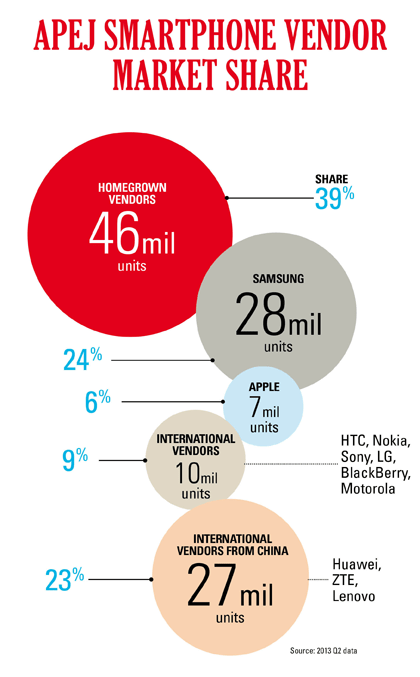
Homegrown brands are gaining more market share in the Asia-Pacific (excluding Japan) (APEJ) smartphone market. While Samsung continues to lead the smartphone pack, Apple fell out of the top five in the region for the first time. Chinese players — Lenovo, Coolpad, Huawei and ZTE — all outshipped Apple in the Q2, according to the IDC Asia/Pacific Quarterly Mobile Phone Tracker.
Korean giant Samsung has nudged aside all competition in ABI Research’s assessment of 19 top tablets.
The competitive assessment ranked companies on several criteria related to both product implementation and vendor innovation.
Samsung bested all other tablet vendors in the innovation category while scoring second overall in the implementation category. Clearly king of the hill when it comes to tablet shipment volumes, Apple trailed Samsung on tablet Innovation landing in second.
Tablet shipment’s growth 42.9 percent iwas not enough to lift a sluggish PC market in Q2. Desktop and notebook shipments fell 7.4 percent and 13.9 percent respectively, according to Canalys, which believes that tablets will outsell notebooks by Q4.
PC shipment in the Asia Pacific region declined 0.5 percent year-on-year to just over 40 million units. The region was badly affected by slow shipment in China, which accounted for almost 45 percent of the region’s shipment and declined by about six percent.
Demand for smartphones and tablets is increasing around the world. Faced by an industry in transition, channel partners are exercising caution when planning and placing orders.

Samsung and Apple grew smartphone shipment by 55 percent and 20 percent respectively to maintain first and second place in Q2, according to Canalys.
However, both lost market share to Chinese vendors as the top 5 China vendors (Lenovo, Yulong, Huawei, ZTE, and Xiaomi) now account for 20 percent of the market, up from less than 15 percent a year ago.
Altogether, some 238.1 million units were shipped in Q2, an impressive 50 percent year-on-year gain.
Samsung has a device for every price point, giving it leadership in all, bar one category — the high end where it faces Apple.
According to ABI Research’s Device Portal sales channel analysis, the balance of power remains with Samsung/Android and Apple and looks set to remain so in the foreseeable future.
“This leaves little room for the other vendors to compete, especially the other Android vendors and those using uncompetitive operating system ecosystems. Despite some carrier’s efforts to create a more balanced smartphone device vendor industry with their use of subsidy, ultimately they are obliged to fulfill consumer demand and at the moment that means Samsung/Android and Apple,” said Nick Spencer, Senior Practice Director of ABI Research.
Three in 10 PC shipped in Q2 were tablets. According to Canalys, more than 34 million tablets were shipped in Q2, a 43 percent year-on-year increase. Even more impressive is the fact that tablets now account for 31 percent of worldwide PC shipments.
The charge is led by Android-based tablets as Apple’s tablet shipments declined 14 percent in Q2 and saw its market share shaved to 43 percent. The chasing pack of Samsung, Amazon, Lenovo, and Acer each grew annually by over 200 percent, driven by increasing demand for small-screen tablets.
Canalys estimates that 68 percent of tablets shipped in Q2 had a screen size smaller than nine inches. “Consumers have been evaluating tablets and the results are now in,” said Tim Coulling, Senior Analyst at Canalys . “With touchscreens contributing to a high proportion of the build cost of a tablet, small-screen products can be priced very aggressively.”

ZTE has grabbed five percent of the global smartphone market, catapulting it into fourth worldwide, according to Strategy Analytics. The 11.5 million smartphones shipped in Q2 represented a 79 percent year-on-year increase. The China smartphone maker will […]
Demand for mobile phones continue to grow. In Q2, the worldwide mobile phone market grew six percent year over year, according to the IDC Worldwide Quarterly Mobile Phone Tracker.
Vendors shipped a total of 432.1 million mobile phones in Q2 compared to 407.7 million units in the corresponding quarter of 2012. The Q2 total was also slightly higher than the 428.8 million units shipped in Q1.
The growth in the mobile phone market was partly driven by vendors from outside the Top 5 who experienced torrid shipment growth that outpaced the overall market. Several vendors, including Alcatel and Huawei, had high double- and triple-digit growth rates in Q2 for their Android-based offerings shipped to high-growth countries such as China and India. These vendors from outside the Top 5 accounted for 44.8 percent of the overall shipment volume, up from 42.2 percent in the same quarter one year ago.
Accelerometers, vision-based gesture recognition, gyroscopes, and NFC are predicted to be the feature set big winners in smartphones in 2013, according to ABI Research.
“Gesture recognition is soon going to become a key differentiator in high-end flagship smartphones. Samsung’s latest Galaxy S4 has already incorporated the technology within its handset and has received significant plaudits for its new innovative user experience. Today’s consumers are becoming much savvier with their smartphones and they’re looking for new interesting ways to communicate with each other and their devices,” said Joshua Flood, Senior Analyst of ABI Research.
In 2013, almost 12 percent of smartphones shipped will have vision-based gesture recognition capabilities. It is unsure if Apple will include the technology in its next generation iPhone but the company is expected to include a full array of MEMS sensors and NFC.
Fancy a new accessory? How about a smart watch? It looks like smart watches are going to be the next “must have” item. According to Canalys, the worldwide smart watch market will exceed five million units in 2014.
Canalys estimates that over 330,000 smart watches were shipped in 2012, led by Sony and Motorola. Kickstarter-backed Pebble Technology has joined Sony as a market leader in 2013. More than half a million units will be shipped this year. Smart watches are then set to explode by the end of 2014, growing tenfold as a new generation of devices from Apple, Google, Microsoft, Samsung, and others are launched.
Unlike earlier products, these smart watches will provide more sophisticated software and more elegant hardware. Glanceable information, integration across sensors and hooks into web services will be key features. These companion devices will not replace smart phones, but rather complement them as ‘appcessories’.
Combined shipments of PCs, tablets and mobile phones are projected to reach 2.35 billion units in 2013, a 5.9 percent increase from 2012, according to Gartner. The market is being driven by sales in tablets, smartphones and to a lesser extent, ultramobiles, as PC shipments are on the decline.
Worldwide traditional PC (desk-based and notebook) shipments are forecast to total 305 million units in 2013, a 10.6 percent decline from 2012 , while the PC market including ultramobiles is forecast to decline 7.3 percent in 2013. Tablet shipments are expected to grow 67.9 percent, with shipments reaching 202 million units, while the mobile phone market will grow 4.3 percent, with volume of more than 1.8 billion units.
The sharp decline in PC sales recorded in Q1 was the result in a change in preferences in consumers’ wants and needs, but also an adjustment in the channel to make room for new products hitting the market in the second half of 2013.
 Entelechy Asia