
 The number of QR codes for payment is akin to the number of credit card offerings in the market — it keeps growing, making it more of a hassle than convenience for merchants and consumers. The Monetary Authority of Singapore (MAS) has stepped in to solve this problem with the launch of the Singapore Quick Response (SGQR) Code.
The Weather Channel showcases realistic weather simulation
The weather wreaked havoc across the world last week with a number of hurricanes and typhoons. The Weather Channel leveraged the same technology used for computer games to create simulations that brought the impact of such weather into homes.
Smartphone prices soaring
 The prices of top end smartphones are going through the roof. Apple announced yesterday that its new iPhone XS Max with 512GB of storage will cost a whopping US$1,449.
Alibaba founder Jack Ma walks the talk
 By Edward Lim
It’s hard to let go when you’re one of the richest man in the world and leading one, if not the biggest, e-commerce company in the world. But, Jack Ma is a man of his word. A man who knows his time and a man who has shown what resilience is all about.
Facebook to build S$1.4b data centre in Singapore
 Hot on the heels of Google’s announcement last month that it will build its third data centre in Singapore is Facebook, which declared today that it will be establishing its first Asia data centre in the country.
Pilot develops Rate My Landing app

Pilot John Rood has teamed up with mobile app developer eZoom to come up with Rate My Landing, which allows gamers to learn what it takes to land an aircraft.
NVIDIA GPU Cloud supports Microsoft Azure
 NVIDIA and Microsoft have announced that Microsoft Azure is now supported on the NVIDIA GPU Cloud (NGC) platform.
China wins battle for AI investments
 A battle of sorts is taking place in the field of artificial intelligence (AI). It has been widely reported that China is ramping up its focus on the technology that is expected to transform businesses and industries. Numbers from ABI Research point to a swing in favour of China.
Google Pixel 3 coming on October 9

The rumour mills are spinning at top speed as smartphone launch season gets ready to kick off. With Samsung having announced the Note 9, and Apple expected to respond with a new iPhone next month, Google looks to be getting into the act too with the Pixel 3 slated for an October 9 introduction, according to Bloomberg.
NVIDIA AI Conference keynotes: Transforming industries, creating AI infrastructure
 The first NVIDIA AI Conference in Sydney on September 4 will kick off with two keynote addresses. Marc Hamilton, Vice President of Solutions Architecture and Engineering, NVIDIA, will talk about Transforming Industries With AI. Jason Humphrey (right), Head of Retail Risk, ANZ Bank, will then share on Creating the Infrastructure to Undertake Deep Learning.
NVIDIA CEO teases at GeForce RTX announcement
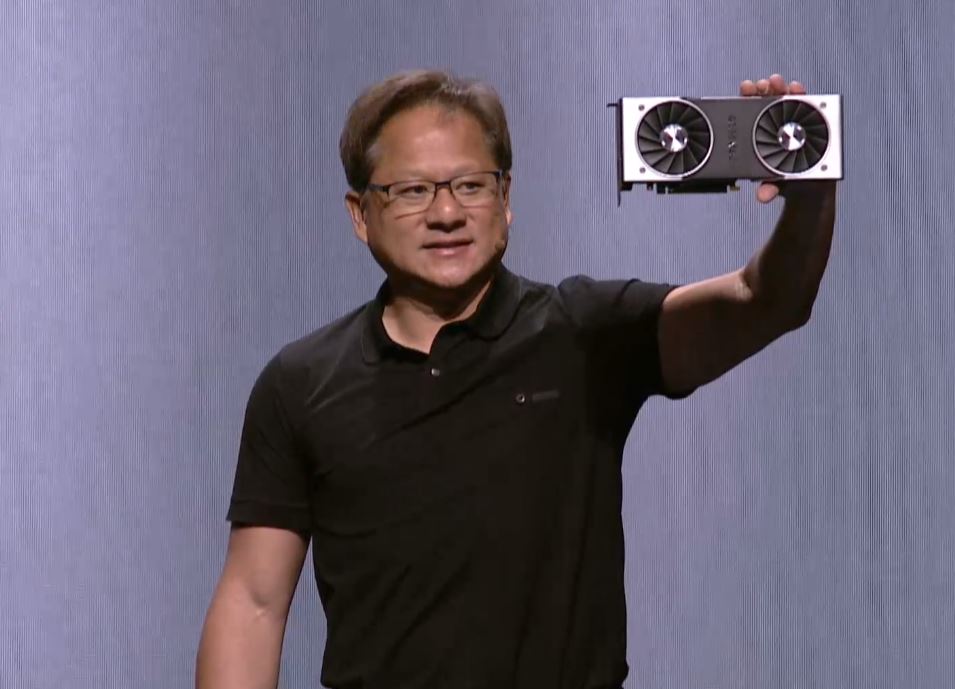 It has been two years since NVIDIA’s last major announcement at the gaming front. And NVIDIA CEO Jensen Huang decided that the thousands of audience at the auditorium in Cologne and nearly a quarter million who were catching the keynote presentation on Twitch could wait a little longer.
Apple pulls out 25,000 apps from China app store
 The ongoing spat between China and the US seem to have claimed another victim. Apple has removed 25,000 gaming-related apps from its China app store. This move follows hard on the heels of the US ban on Huawei and ZTE technology from being used by the US government and government contractors yesterday.
Free WhatsApp backup on Google Drive
 WhatsApp backup will no longer count towards Google Drive storage quota, thanks to a new agreement between the two companies.
NVIDIA and RED Digital Cinema ease 8K bottleneck
 8K is the new benchmark for professional videos captured by state-of-the-art cameras but delivering that standard for editing was not quite possible until NVIDIA’s announcement this week at SIGGRAPH of the Turing architecture and the new Quadro RTX GPUs.
NVIDIA unveils Turing architecture and new Quadro products

To the uninitiated, images just look look sharper and more detailed because of improved resolution. But, there’s much more to that, one of which is ray tracing, a rendering technique used to generate an image by tracing the path of light as pixels in an image plane and simulating the effects of its encounters with virtual objects.
Seamless Spotify listening experience across Samsung devices
 Spotify has joined hands with Samsung to give users a seamless listening experience across Samsung devices.
StatX takes on Telegram with messaging and information app
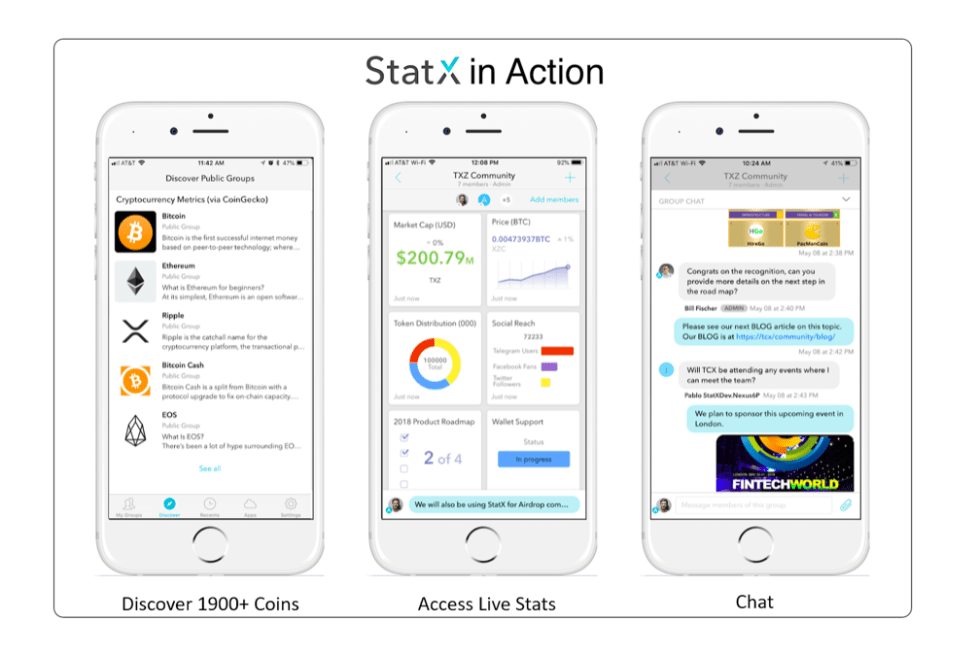 Blockchain startup StatX has launched a mobile app that combines information-sharing and messaging features the crypto and blockchain community. While traditional messaging apps such as Telegram is more conversation centric than information-centric.
TSMC hit by computer virus

Chipmaker Taiwan Semiconductor Manufacturing Co (TSMC) was affected by a computer virus attack over the weekend. However, the manufacturing of new Apple iPhones is not expected to be impacted.
NetApp rolls out NVIDIA-powered NetApp ONTAP AI architecture
 NetApp has introduced NetApp ONTAP AI proven architecture to simplify, accelerate and scale the data pipeline across edge, core and cloud for deep learning deployments and to help customers achieve real business impact with AI.
Pico Interactive introduces stronger, lighter and more capable VR headset
 Pico Interactive has launched the Pico G2, its second generation virtual reality (VR) headset that is stronger, lighter and sports more capabilities than its predecessor.
Google Calendar: Yes, no, maybe, or reschedule

When a user gets a meeting invitation, the options are “Yes”, “No” or “Maybe”. Google has gone one up by adding “Propose a new time”, which lets users reschedule a meeting on Google Calendar.
Making autonomous vehicles more perceptive
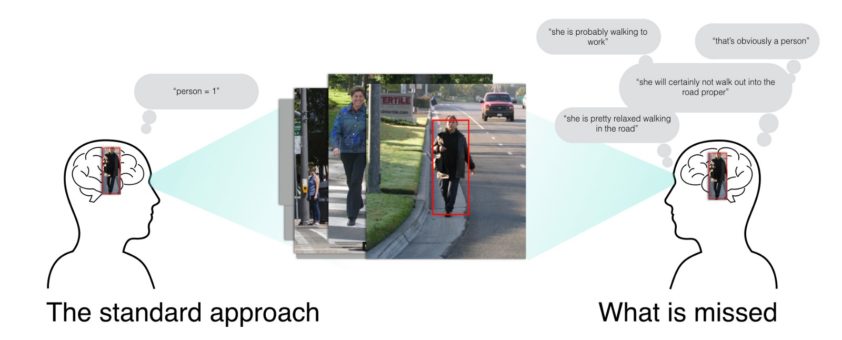
Perceptive Automata, a startup which had its beginnings in Harvard University, is leveraging deep intelligence to give human intuition into autonomous vehicles. The technology will be able to observe body language of pedestrians and react accordingly to enable safer self-driving.
Uber clear leader with Grab 3rd in global ride sharing market
 Uber is miles ahead of the competition in the worldwide ride sharing market, according to ABI Research. Regional leader Grab came in at third, behind Didi Chuxing of China and ahead of Lyft.
VLC blacklists recent Huawei smartphones

VLC has taken the drastic measure of blacklisting recent Huawei smartphones, specifically the Huawei P8, P10, and P20, from installing its media player app. The move is in response to negative customer reviews for VLC as a result of Huawei blocking the installation of the media player.
Chrome marks http as “not secure”

HTTP has been synonymous with an entire generation of Internet users but what many are unaware is that the protocol is not secured. Anyone with the right skills can change the contents of the site before it reaches the person browsing. To combat this, Google is marking all HTTPsites as “not secure” from today so users are more aware of the sites’ security status.
IBM retrenches 200 in Singapore in Mexico shift
 IBM has axed reportedly at least 200 staff from its Tampines plant in Singapore. This is because the IT giant is shifting manufacturing of its IBM Power Systems to IBM Guadalajara, Mexico.
Singtel and Ericsson to pilot 5G network at one-north
 Slowly but surely, 5G is coming. In Singapore, Singtel and Ericsson will launch by the country’s first 5G pilot network at one-north in Q4.
SingHealth patient database compromised in cyber attack
 Singapore Prime Minister Lee Hsien Loong was among 1.5 million patients who had their personal data stolen in the nation’s most severe cyber attack to date. Also compromised were the outpatient prescriptions of 160,000 patients.
Samsung and Xiaomi neck-to-neck in India in Q2

Xiaomi and Samsung shipped 9.9 million smartphones each to India in Q2. Together they account for 60 percent of the total shipment that quarter, according to Canalys.
EU fines Google 4.3b euro
 However you look at it, the amount is massive! The European Union (EU) has slapped Google with a 4.3 billion euro fine for blocking its rivals from Android.
Google Maps motorcycle mode now available in Singapore
 Google Maps has enabled its motorcycle mode feature for Singapore and elsewhere in the region in due time. Originally launched in India in December 2017, the app will give motorcyclists routes that are more suitable for two-wheelers.
Consortium introduces standard to simplify VR headset connectivity
 NVIDIA, Oculus, Valve, AMD, and Microsoft have come together to introduce VirtualLink, an open standard that simplifies next-generation virtual reality (VR) headset connectivity to PCs and other devices. Instead of a range of cords and connectors, the new standard adopts the single, high-bandwidth USB Type-C connector.
TechnologyOne secures 5-year deal with 3 NZ government agencies

TechnologyOne has inked a five-year contract with New Zealand’s Central Agency Shared Services, under which it will provide software-as-a-service (SaaS) to the Treasury, the State Services Commission and the Department of Prime Minister and Cabinet.
Outage and strike do not faze Amazon on Prime Day
 Amazon Prime Day is still going strong and racking up tons of sales despite an outage that prevented some customers in North America from accessing the website and the app, and a strike by workers in Spain.
Singapore launches SEA’s first geospatial centre
 Singapore Land Authority (SLA) has launched GeoWorks, the first geospatial industry centre in Southeast Asia (SEA). The centre will kick off by housing 22 geospatial technology start-ups from across the region to network and interact with government agencies and the industry with the aim of developing geospatial solutions.
Google faces massive fine over Android
 It happened to Microsoft in 2013 and it looks like history is repeating itself, albeit with Google being the one under the spotlight. The European Union (EU) is expected to decide on a record fine for forcing Android smartphone makers to pre-install its search and web browsing tools and use them by default unless they want to lose access to the Play Store.
Oppo A5 debuts in China

Oppo has introduced the Oppo A5, its latest mid-range smartphone in China.
OnePlus 6 red arrives in Singapore
 The wait’s finally over! The much-lauded OnePlus 6 smartphone is now available in Singapore. Better yet, there’s the red edition as well.
PC market inches up 2.7% in Q2

Global traditional PC shipment posted the strongest growth in more than six years during the past quarter, according to IDC. Total shipment was 62.3 million units, which translates to a 2.7 percent year-on-year growth.
Broadcom to acquire CA for US$18.9b
 Fresh from its failure to acquire Qualcomm in March, Broadcom has made a move for former software giant CA Technologies. The US$18.9b deal brings together two unlikely partners — one a chipmaker and the other a software company that had its glory days in the 1990s.
NVIDIA brings premier AI conference to Sydney
 A global line-up of artificial intelligence (AI) experts will be heading to Sydney to speak at the NVIDIA AI Conference. Researchers and developers will also get training from the NVIDIA Deep Learning Institute (DLI) during the event.
Bosch and Daimler pick NVIDIA Drive Pegasus for robotaxis
 Daimler and Bosch have chosen NVIDIA Drive Pegasus AI supercomputer to power their robotaxis, which are expected to start testing in Silicon Valley next year.
100m smart speakers by end of 2018

Smart speakers are picking up steam with the installed base expected to hit 100 million by the end of this year, according to Canalys. That’s 2.5 times the size of end 2017.
Suning Tesco opens first UAV logistics route in Wuhan
 China e-commerce firm Suning Tesco has opened the first pilot route for unmanned aerial vehicle (UAV) logistics and transportation in Wuhan, China. Its logistics arm Suning Logistics and Ewatt Aerospace jointly developed two UAVs for this purpose.
Xiaomi share price dips on debut
 The long awaited Xiaomi listing made an impressive debut — dropping 2.9 percent on its opening day in Hong Kong. Priced at HK$17.00 at launch, the share price dipped to HK$16.50 in early trading.
China tops IDC’s smart cities awards
 China has emerged tops with five out of 19 winners in the 2018 IDC Smart City Asia Pacific Awards (SCAPA). Taiwan and Singapore were next with four and three awards respectively across 12 functional categories.
Alibaba leverages AI for copywriting

Copywriters, beware! A new tool dubbed “The AI copywriter” by Alimama can generate an astounding 20,000 lines of copy in a second. Alimama is the digital marketing arm of China e-commerce giant Alibaba.
IBM snags A$1b Australia government contract
IBM has scored a massive win with a five-year A$1 billion agreement with the Australia government.
Reolink launches wire-free Argus Pro smart security camera
 Hong Kong security product maker Reolink has introduced Argus Pro, a smart camera that is powered by rechargeable battery or the solar panel for easy installation and enhanced security.
HTC to slice 1,500 from workforce

Taiwan smartphone maker HTC is making a cut of the most painful kind — by slicing 20 percent of its workforce. The decision to swallow the bitter pill comes in the wake of heavy losses and strong competition.
To Dell and back
 Dell Technologies is making a comeback on the New York Stock Exchange. The PC giant went private in 2013 as part of a transition strategy in the midst of changes in the industry brought about by mobile and cloud computing.
Banking spend drives external storage Q1 growth in India
 Banking led professional services, manufacturing, telecommunications and government to contribute more than 80 percent to overall external storage market in India in Q1, according to IDC India. The quarter saw a jump of 12.7 percent year-on-year to US$84.1 million.
StumbleUpon stumbles out
 After 16 years, discovery engine StumbleUpon, which pushes web contents to users, has shut down.
Myanmar startup Goama launches mobile gaming app in India
 Myanmar startup Goama has launched its “Netflix of Games” mobile gaming subscription app in India. Called Go|Games, the Android app has more than 700,000 subscribers in Bangladesh, Sri Lanka, Malaysia, Indonesia, Cambodia, and Myanmar.
SenseTime makes triple signing in Singapore

China artificial intelligence (AI) company SenseTime has inked memoranda of understanding (MOU) with Nanyang Technological University (NTU), National Supercomputing Centre of Singapore (NSCC) and Singtel.
1Coach wearable: More than a tracker, it’s a run advisor!
 SensFusion has launched 1Coach, a wearable running sensor that not only tracks but also offers training advice for improving runs.
ELSA Speak helps in English pronunciation
 Artificial intelligence (AI) startup ELSA is giving non-native English speakers help with ELSA Speak, an app that teaches how to pronounce English words correctly.
Glitch with Google Home and Chromecast

By Edward Lim
“Sorry, something went wrong. Try again in a few seconds.” and “There was a glitch. Try again in a few seconds.” are not messages most Google Home and Home mini users are familiar with, but these messages kept repeating themselves most of yesterday.
Qualcomm targets kids with Snapdragon Wear 2500 platform
 Qualcomm is targeting smartwatches for children with its Snapdragon Wear 2500 platform. Announced at Mobile World Congress Shanghai, the chip is designed to deliver extended battery life, low power location tracking and an optimised version of Android for kids.
Epicentre exits Apple business in Singapore
 Epicentre Holdings has sold its Apple business in Singapore — both online and retail stores — to competitor Elush (T3), marking the end of an era.
 Entelechy Asia