Worldwide shipment of wearable devices are expected to reach 101.9 million units by the end of 2016, representing 29.0 percent growth over 2015, according to IDC.
The market for wearable devices will experience a compound annual growth rate (CAGR) of 20.3 percent, culminating in 213.6 million units shipped in 2020.
“Unlike the smartphone, which consolidated multiple technologies into one device, the wearables market is a collection of disparate devices,” said Jitesh Ubrani, Senior Research Analyst of IDC Mobile Device Trackers.
It’s almost unthinkable but the smartphone market has dipped for the first time in its history.
According to Canalys, worldwide smartphone shipment fell from 324 million units in Q1 2015 to 321 million units in Q1 2016. The top two vendors both posted shipment declines, with Apple the worse hit.
Excluding Apple and Samsung, smartphone shipment grew five percent despite some of the big named international vendors outside the top five also faring badly. LG, Lenovo and TCL-Alcatel posted significant declines, while Sony plummeted by around 57 percent.
Samsung Electronics Singapore has introduced the Samsung Galaxy TabPro S, its first 2-in-1 premium tablet featuring seamless integration of laptop and tablet capabilities.
As the first premium tablet range to be powered by Windows 10 to support LTE Category 6 capabilities, the Galaxy TabPro S comes with enhanced features and long-lasting battery life, making it suitable for on-the-go individuals seeking convenience and performance.
Encased in a 6.3mm slim and sleek exterior, it weighs just 696 grams. The tablet also comes with a full-sized keyboard and cover – the touchpad of the keyboard emulates that of a laptop. The Pogo pin on the Galaxy TabPro S keyboard eliminates the need for pairing or charging separately.
A sale offering products at up to 80 percent off will certainly catch the eye. But, it could also bring a tear or two to the generations that have frequented Challenger Technologies’ megastore at Funan DigitaLife […]
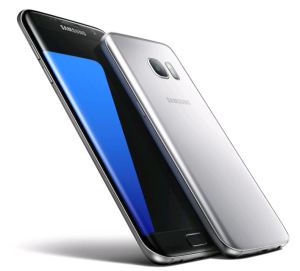
Despite the launch of new models, such as the Samsung Galaxy S7 Edge, smartphone growth is expected to slow down this year.
Global smartphone sale is expected to experience just a single-digit growth this year, according to Gartner.
It estimates that global smartphone sale will reach 1.5 billion units, a seven percent increase from 2015. The total mobile phone market is predicted to reach 1.9 billion units in 2016.
“The double-digit growth era for the global smartphone market has come to an end. Historically, worsening economic conditions had negligible impact on smartphone sales and spend, but this is no longer the case. China and North America smartphone sales are on pace to be flat in 2016, exhibiting a 0.7 per cent and 0.4 per cent growth respectively,” said Ranjit Atwal, Research Director of Gartner.
While smartphone sales will continue to grow in emerging markets, the growth will slow down. Gartner predicts that, through 2019, 150 million users will delay upgrades to smartphones in emerging Asia-Pacific, until the functionality and price combination of a low-cost smartphone becomes more desirable.
At just US$50, the Amazon Fire tablet is expected to stoke the flames in a highly-competitive tablet market, according to ABI Research.
The Fire’s price is significantly lower than the average vendor selling price of US$323. It is a calculated risk that Amazon can afford to take as the company shifts its revenue focus away from solely hardware and toward recurring digital content sales.
Sporting a seven-inch screen, the tablet comes with 8MB of built-in memory, quad-core 1.3GHz processor, dual camera, and battery life good for up to seven hours of reading, web surfing, video watching, and music listening.
The personal computer (PC) is still alive and breathing. According to ABI Research, 163 million notebook PCs shipped globally in 2015.
The majority were laptops, which constituted nearly 80 percent of the category. The data suggests that despite a floating myth speculating that it will only be a matter of time before PCs meet their demise, the market is still going strong and shows no sign of slowing down in the immediate future.
“Industry experts greatly exaggerated the death of the PC. The platform is continuing to evolve its designs to provide flexibility for productivity purposes, while also adapting its shape to support tablet-like, touch applications. Chromebooks and ultraportable PCs will continue to drive the most growth within the notebook PC market,” said Jeff Orr, Research Director of ABI Research.
Smartphone sale hit a record 117.3 million in China in Q4. This represents an eight percent growth compared to the same period last year.
The phenomenal increase was partly driven by China’s annual singles day online shopping festival in November and Huawei’s strong shipments in the quarter. China’s Q4 growth boosted the calendar year 2015 growth to three percent.
“Xiaomi, Huawei and Apple are the top smartphone players in 2015. This is a stark contrast to the top players in 2013, which was Samsung, Lenovo and Coolpad – with Samsung clearly dominating other players. With operators reducing smartphone subsidy and given the volatility of consumers’ brand preference in the market, the smartphone scene has changed significantly since then,” said Tay Xiaohan, Senior Market Analyst of IDC Asia/Pacific’s Client Devices team.
Samsung has pulled further ahead of the competition with a quarter share of the India smartphone market in 2015, according to Canalys.
Micromax held on to second place, with annual shipment falling by more than 20%, primarily due to inventory build-up in its distribution network.
Lenovo and Motorola’s combined shipments were just short of three million units, up almost 60 percent up from the previous year, moving them past Intex to take third place in the market.
The global economy is hitting IT spending, with Gartner predicting just a 0.6 percent increase over 2015 spending of US$3.52 trillion.
2015 saw the largest US dollar drop in IT spending since Gartner began tracking IT spending. US$216b less was spent on IT in 2015 than in 2014 and 2014 spending levels won’t be surpassed until 2019.
“The rising US dollar is the villain behind 2015 results. US multinationals’ revenue faced currency headwinds in 2015. However, in 2016 those headwinds go away and they can expect an additional five percent growth,” said John-David Lovelock, Research Vice President of Gartner.
Samsung has launched its Galaxy A (2016) smartphones – the Galaxy A3 (2016) 4G, Galaxy A5 (2016) 4G+ and Galaxy A7 (2016) 4G+ – in Singapore. These additions come in three screen size options: 4.7-inch for the Galaxy A3 (2016) 4G, 5.2-inch for the Galaxy A5 (2016) 4G+ and 5.5-inch for the Galaxy A7 (2016) 4G+.
The ultra slim unibody sports a 2.7mm narrow bezel for an immersive viewing experience.
The smartphones pack a 13MP rear camera and a 5MP front-facing camera with brighter f1.9 aperture lenses. Innovative smart selfie features such as wide selfie, palm selfie and beauty face embedded in the Galaxy A (2016) allow users to capture high-resolution and vivid selfies with ease. The Galaxy A5 (2016) 4G+ and Galaxy A7 (2016) 4G+ rear cameras are also enhanced with optical image stabiliser for blur-free images.
The year’s looking bad for tablets as worldwide demand is expected to slide 8.1-percent to just 211.3 million units, according to IDC.
The new forecast follows three consecutive quarters of declining worldwide tablet shipments in 2015. Despite the challenges facing the overall market, IDC expects detachable tablets will continue to represent a growing portion of total shipments.
“We’re witnessing a real market transition as end users shift their demand towards detachables and more broadly towards a productivity-based value proposition. The proliferation of detachable offerings from hardware vendors continues to help drive this switch. We’re starting to see the impact of competition within this space as the major platform vendors – Apple, Google and Microsoft – now have physical product offerings. With attractive price points, including the introduction of sub-US$100 detachables, and platform innovation being driven by competition, IDC is confident that the detachables segment will nearly double in size in the next year, recording more than 75 percent growth compared to 2015,” said Jean Philippe Bouchard , Research Director, Tablets, IDC.
Powered by Oculus technology, Samsung Gear VR will be available for S$148 from November 28 in Singapore. The headset is fully optimised and compatible with the latest Samsung flagship smartphones, including the Galaxy Note 5 4G+, […]
Smartphone sale is rising in India with 28.3 million shipped in Q3, according to IDC. That’s a 21.4 percent increase from 23.3 million units for the same period last year.
In Q3, 4G enabled devices have witnessed almost a three-fold increase in unit shipment over the previous quarter.
“The growth in the smartphone market was helped by rising demand for affordable 4G smartphones,” said Karthik J, Senior Market Analyst, Client Devices, IDC.
NVIDIA has released the 1.0 version of two powerful VR software development kits (SDKs) — NVIDIA GameWorks VR and NVIDIA DesignWorks VR — to help developers deliver VR games and applications.
Immersive VR requires seven times the graphics processing power compared to traditional 3D apps and games.
When used in conjunction with the company’s industry-leading GeForce and Quadro GPUs, these SDKs provide developers the tools to create VR experiences, increase performance, reduce latency, improve hardware compatibility, and accelerate 360-degree video broadcasts.
Looks like ZTE believes that Thais love to take selfies. The newly-launched ZTE Blade S7, which is designed for selfie lovers, will first be made available in Thailand before hitting the rest of the region.
The smartphone features a five-inch full HD LTPS screen with a 445 PPI Super Retina display for 178-degree full viewing angles. Housed in an aluminum alloy frame with thin bezels, Blade S7 offers a 72.1 percent screen-to-body ratio and is protected with 2.5D curved Gorilla Glass 3 on both the front and back.
Just 7.2mm thick and 67mm wide, it comes with a powerful 13-megapixel front-facing camera with a front flash and phase detection autofocus, as well as functions for panorama shots and 14 different beautification options. At the back is another 13-megapixel rear camera that supports professional and auto shooting modes, selective focus, and laser auto focus for fast and accurate shooting in low-light conditions.
ZTE has opened a new research and development (R&D) center in Tokyo to focus on the development of 5G and other next-generation network technologies. The new R&D centre will support ZTE’s partnerships with operators and […]
Every other piece of mobile accessory in the world is sold in the Asia-Pacific (APAC) region. To be precise, APAC accounts for 52.9 percent of all mobile accessories shipment, according to ABI Research.
Admittedly, the region does have a huge population but the sales figures are still staggering as global revenues for mobile accessories are expected to hit US$81.5 billion this year.
Driving the demand are cost competitive smartphones. China holds huge opportunities for accessories due to its large existing and potential consumer base, rapid growth of smartphone and tablet adoption, a growing online retail market and increasing disposable incomes.
Tablet sale continued its decline for the fourth straight quarter, according to IDC. Q3 shipment of 48.7 million units represented a 12.6 drop year on year, further highlighting the challenges the tablet market is facing.
At the close of 2014, IDC estimated the installed base of tablets to be 581.9 million globally, which was up 36 percent from 2013 but slowing quickly. With mature markets such as North America, Western Europe, and Asia/Pacific well past 100 million active tablets per region, the opportunities for growth are getting fewer.
“We continue to get feedback that tablet users are holding onto devices upwards of four years. We believe the traditional slate tablet has a place in the personal computing world. However, as the smartphone installed base continues to grow and the devices get bigger and more capable, the need for smaller form factor slate tablets becomes less clear. With shipment volumes slowing over four consecutive quarters, the market appears to be in transition,” said Ryan Reith, Program Director of IDC.
Huawei has dethroned Xiaomi as China’s top smart phone vendor in Q3. This is Huawei’s first time at the summit of China’s smartphone, according to Canalys. The company powered its way to first place with 81 percent […]
While many cannot imagine life without mobile phones, the technology can be a life-saver in disasters. Case in point are recent crises in Afghanistan, Indonesia, Iraq, Nepal, and the Philippines where mobile network coverage enabled those directly impacted to collaborate in order to help themselves and others more quickly and effectively than external aid agencies.
A new report Connected Citizens — Managing Crisis by Developing Telecoms noted that working with “Connected Citizens” enables aid agencies to work more efficiently by better targeting the areas of greatest need and more accurately identifying requirements.
The overall effect is to speed up response, improve aid delivery and reduce both the short and long term impact of disasters. Maintaining mobile network coverage enables connected citizens to become active partners in recovery and reconstruction, rather than passive recipients of aid.
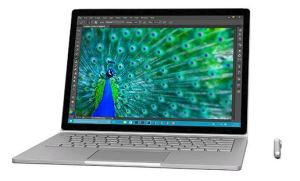
Notebook, tablet, 13.5-inch display, 12 hours of battery life, and a NVIDIA GeForce GPU to boot — that’s what the new Microsoft Surface Book is made of. And it certainly got the world excited as news poured out from the press briefing in New York last night.
Dubbed the “ultimate” laptop by Microsoft, the device will sell for US$1,499 for the entry level model and US$2,699 for the top-end model, which comes with 512GB and a Core i7 processor.
Past iterations of the Surface have been pitched as a tablet first but this new model is presented as a laptop first, with a screen that detaches from the keyboard to become a tablet.
More Chinese smartphone vendors are investing in equipping their devices with fingerprint sensors with such phones expected to hit one billion shipment by 2020, marking a 17 percent CAGR, according to ABI Research.
Biometrics on smartphone devices have moved past the simple authentication option and are headed towards establishing a more robust mobile payment solution.
However, other biometric modalities such as face, voice and eye-based recognition are currently moving out of the fledgling phase and are to be integrated as highly-secure – albeit more expensive – biometric capabilities in smartphone devices with a five-year CAGR revenue growth of 144 percent.
Xiaomi continued its phenomenal growth to regained its crown as the largest smart phone vendor in China with 15.9 percent market share in Q2, according to Canalys. One in three smartphones shipped were from Xiaomi or […]
ZTE and Uros have introduced the Goodspeed 4G mobile hotspot MF900 — which is manufactured under a technology licence from Uros — providing travellers with affordable international data roaming.
The device is the world’s first commercially available 4G hotspot that accommodates up to 10 SIM cards at once. It provides private connectivity for up to 14 Wi-Fi connections and one USB connection simultaneously.
The Goodspeed MF900 supports all mainstream global 4G frequencies (LTE FDD & LTE TDD), allowing end-users to connect to 4G networks whenever, wherever. Powering the device is a Qualcomm Gobi MDM9225 modem chipset, which offers downlink data rates of up to 150Mbps and uplink rates of up to 50Mbps.
Hybrid devices are leading the growth in the mobile PC market and should reach 21.5 million units this year, an increase of 70 percent from 2014, according to Gartner. Eight million of these will be ultramobile tablets (two-in-one tablets) and 13.5 million hybrid ultramobiles (two-in-one detachable and convertible ultramobiles).
“This will make hybrid ultramobiles the fastest-growing segment of the mobile PC market with 77 percent year-on-year growth,” said Tracy Tsai, Research Director of Gartner.
“The combination of portability, productivity and flexibility of touch and a keyboard in one device is attracting some notebook and tablet users to replace their devices with hybrid form factors. PC vendors are expanding into this segment with a value proposition to compete with Apple and Android-based tablet vendors. Sales of hybrid devices have not stopped growing since 2012, totaling 12.6 million units in 2014 and expected to reach 58 million units in 2019,” she added.
ZTE and South East Asia Telecom (Seatel) are teaming up to build a national FDD-LTE network in Cambodia to deliver high-performance mobile broadband services to consumers and businesses across the country. ZTE will provide end-to-end 4G solutions and […]
Singapore’s three telcos will stop providing 2G services from April 2017. The spectrum will then be freed for advanced 4G services as the Infocomm Development Authority (IDA) of Singapore moves to make more efficient use of the limited resources. According […]
The numbers for the tablet and 2-in-1 market for Q1 in Australia look grim — total shipment was 770,772 units, representing a massive 40 percent quarter-on-quarter decline.
According to IDC, while the seasonal slump is customary, the magnitude of this decline is steeper than expected. Shipment decline of 25 percent year-on-year further reinforced the reality of a slow-down in demand for this product category.
However, drilling down into the segments reveals some positive signs. Whilst consumer shipments declined by 27 percent year-on-year, commercial shipments increased by a modest 1.2 percent.
Huawei and Volkswagen are working together on car connectivity. They have unveiled technology that integrates smartphone functions with vehicle-mounted systems and allows drivers to use those functions safely while driving at the International Consumer Electronics Show Asia in Shanghai this week.
The partners have demonstrated a series of apps that safely allow drivers to use GPS navigation systems, play music, send and receive messages, and make phone calls while behind the wheel. The apps support MirrorLink, an open technology standard designed to maximise interoperability between smartphones and vehicle-mounted systems. They cover multiple services including phone calls, SMS, navigation, multimedia, and payment that are all centered on smartphones.
“Our cooperation with Huawei will seamlessly blend the capabilities of users’ smartphones with the systems in their cars. All content on the phone will be shown in real time on the car’s infotainment touch screen. The result is smart and convenient interaction between phone and car,” said Sven Patuschka, Executive Vice President for Research and Development of Volkswagen Group China.
The combined market share of Chinese brands fell to a two-year low on a global basis, as growth in China slowed to single digit in the first quarter of 2015, according to Canalys Apple increased […]
Another S6 has made its debut. It’s not Samsung’s but the ZTE Blade S6 Plus — and the company’s making it available globally on eBay for US$299.99.
The Blade S6 Plus was first showcased at Mobile World Congress 2015 in Barcelona, alongside the five-inch Blade S6, which was launched in January. Similar to the Blade S6, the Blade S6 Plus is powered by the Qualcomm Snapdragon 615 octa-core chipset and Adreno 405 image processor, and runs on Android 5.0 Lollipop with ZTE’s customisable MiFavor 3.0 user interface. It boasts a larger JDI Super Screen 5.5-inch HD display with In-Cell technology for better and more vibrant image quality, as well a higher-capacity 3000mAh battery.
Unique to the Blade S6 Plus is a function that allows the device to double as an infra-red remote control. Compatible with all major electronic and household appliance brands, the function allows Blade S6 Plus users to control televisions, set-top boxes, air conditioning units, DSLRs, and more. It is simple and easy to use, and saves users the hassle of switching between several different remote controls.
Can’t say that we did not see this coming. Tablets are set to overtake notebooks as the largest mobile computing category (includes tablets, MS Windows laptops, Chromebooks, and Ultraportable PCs), according to ABI Research.
Tablets, agreed by many to be in competition with Notebook PCs, will gain 52 percent majority of the mobile computing market by the end of 2015.
ABI Research forecasts the flat growth of notebooks, due to longer replacement cycles and device market competition, causing notebook devices to drop from 51 percent market share in 2013 to 48 percent in 2015, and further to 47 percent by 2016.
Shipment of devices (PCs, tablets, ultramobiles, and mobile phones) in Asia Pacific are expected to hit 1.2 billion units in 2015, an increase of 3.2 percent over 2014, according to Gartner.
“Device penetration is very high in Asia Pacific – at or beyond saturation point in mature markets and major cities in the emerging markets. Market saturation, along with consumers extending the lifetime of their tablets, has caused a re-calibration in the growth trajectory in the market. From 2016, we expect the tablet market to resume growth from a stabilised base,” said Lillian Tay, Principal Analyst of Gartner.
The computing devices market is forecast to drop 1.9 percent this year, affected by weak demand for tablets. The PC market overall will continue to grow slightly, as shipment in the premium ultramobile category compensate for a decline in sales of traditional desk-based and notebook PCs.
Business intelligence and analytics are the top priorities of CIOs in Southeast Asia (SEA), according to a Gartner survey.Next on their list are mobile, ERP and cloud.
Eighty-four percent of CIOs in SEA recognise the need to adapt their leadership style in the next three years to succeed in digital business, compared with the global average of 75 percent. To achieve this, 69 percent said that they want to decrease their controlling approach to focus on significantly increasing their visionary and coaching attributes.
The annual survey covered more than 2,810 CIOs worldwide, representing more than US$397 billion in CIO IT budgets in 84 countries. It included responses from 117 CIOs from Indonesia, Malaysia, Philippines, Singapore, Thailand, and Vietnam.
Rising demand for mobile games is driving the video game market to reach US$80 billion in 2020, up from under US$70 billion last year, according to ABI Research.
Traditional PC and console segments, on the other hand, will see a one- to two-percent annual growth.
Triple-A titles have the potential to dramatically change a developer/publisher’s financials, but gaming’s long tail is equally important to the continued growth of the industry. This is particularly true in the mobile space where a hit title can catapult a mobile game developer into the upper echelons of the market — as was true for developers such as King Digital (Candy Crush Saga) and Supercell (Clash of Clans).
It was only a matter of time before NVIDIA updates its GTX 900M line-up. The GeForce GTX 960M and 950M are designed for lean and thin gaming notebooks. They come with the same features found in […]
Smartphones and tablets helped boost Android’s reign over all smart device operating systems (OS) in 2014.
According to the ABI Research report, although Android’s reign is strong, that dominance may have reached its peak as OS competition increases. It expects Android to experience a modest CAGR of 10 percent between 2014 and 2019 as leading OEMs realise the profits produced by Android vendors is finite and seek new OSs for differentiation.
Since inception, the smart device market has been rapidly increasing as devices, especially smartphones, become ubiquitous.
This week’s introduction of the Samsung Galaxy S6 Edge brought back memories of when the first Samsung Galaxy Note came out in 2011. While many were pooh-poohing the smartphone for being too large and bulky, I was really excited and among the first owners.
Four years down and I have not regretted that decision to cut over from what was the last Symbian-based Nokia phone to the massive Android smartphone. In fact, my family of four now carries the entire Samsung Galaxy Note range (OK, we’ve retired the original Note).
Last December, I upgraded from my trusty but slowing Note 2 to the Note Edge. It’s been nearly three months and I’m really loving it — the same feeling I had with the first Note.
ZTE’s flagship Grand S3 now comes with Eyeprint ID, an eye-based biometric solution from EyeVerify that allows users a password-free method of unlocking the Grand S3, offering an enhanced level of privacy and security to […]
The HTC Grip is a newcomer to the wearable market.
With vendors are rolling out new wearable devices at Mobile World Congress in Barcelona, it is not surprising that the market is set to boom.
In 2014, GfK noted that 13.5 million health and fitness trackers were sold globally compared to 4.1 million smartwatches. This year, that combined number is expected to jump 51.2 million units in 2015.
Last year, actual sales of health and fitness trackers (HFT) easily outstripped smartwatches. This was driven, in part, by the significantly lower average sales price of HFT, making these devices more affordable than full-feature smartwatches.
Smartphone shipment in India observed its first drop in Q4, according to IDC. The decline was attributed to a high channel inventory at the beginning of the quarter among general trade which in turn was caused by the surge witnessed in online sales during festive season.
Q4 was seen as a correction phase when the Smart Phone market shrank by four percent while the feature phone market plummeted by about 14 percent over the previous quarter. The overall mobile phone market stood at 64.3 million units in Q4, which reflects a sequential drop of 11 percent over Q3 and an annual drop of five percent in 2014.
The feature phone to smartphone migration trend is clearly visible as smartphones formed a healthy 35 percent of the overall mobile business in Q4, an increase of 13 percent fom a year ago.
Saw a product you like in a brick-and-mortar shop? Why not whip out your smartphone to read a review of the product or compare prices with other stores? That’s what more and more shoppers are doing during their visit to physical stores.
According to a GfK survey of mobile phone users in 23 countries, 40 percent of shoppers compare prices online while another 40 percent contact a friend or family member for advice. Thirty-six percent take photos of products that interest them.
Globally, men outweigh women on using their mobile phone inside a store to compare prices on a regular basis, standing at 42 percent and 37 percent respectively. The most active age group is shoppers aged 20-29, with nearly half (49 percent) saying they regularly do this, followed by those aged 15-19 and 30-39, both at 45 percent.
ZTE has launched its new Unified Communication & Collaboration (UC&C) solution to help enterprises harness the power of mobility. It delivers cloud-based video conferencing and collaboration services for end users anywhere, anytime, supporting different devices and […]
Ever wished that you could use WhatsApp on your desktop? After all, it would make reading easier and writing messages faster. If you have, your wish was granted yesterday! WhatsApp is now available on the desktop […]
Global SIM card shipment will reach 5.2 billion units in 2014, a 5.32 percent increase from 2013, according to ABI Research.
LTE, NFC, and M2M are gaining momentum and considered the trends for the next few years.
Large markets such as India, China, and Saudi Arabia are currently among the last countries to undergo ID registration regulations. Among them only India saw a massive decline in shipments during 2013 but data from 2014 show that the market has successfully stabilised and steady growth is expected from 2015 onwards.
Imagine supercomputing power in a mobile device. That’s what the newly-announced NVIDIA Tegra X1 mobile super chip can deliver. Built on the NVIDIA Maxwell GPU architecture, it is the world’s first mobile processor to pack more […]
The smartphone market continued to grow in Asia-Pacific excluding Japan in Q3, albeit at a modest six percent quarter on quarter, according to IDC.
During this period, India led with 23 million units shipped, and added around five million units to the market over Q2.
Emerging markets in the region also surged ahead with 23 million units shipped, accounting for 22 percent growth as tier-1 Chinese vendors extended their reach outside China.
ITE students will be industry-relevant skills to work on Samsung mobile devices.
The ITE-Samsung Tech Hub was opened this week to provide real-world training that will enhance the employability of ITE (Institute of Technical Education) students in Singapore.
It consists of a Display Solutions Centre to showcase various emerging display technologies, and a Mobile Service Centre which simulates Samsung’s customer service environment to train students in mobile device technical support and customer service.
ITE College East students enrolled in Nitec in Electronics (Mobile Devices) and Nitec in Electronics (Display Technology) are currently taking lessons at the facility.
Mobile data roaming will generate about US$50 billion in revenue by 2019, contributing as much as 56 percent to global roaming revenues, according to Ovum.
The revenue contribution from Asia is increasing, particularly from Central and Southern Asia, which is expected to grow at a compound average growth rate (CAGR) of 12 percent over the forecast period, as one of the highest among all regions.
“The sheer size of the region contributes to the increase, as does the fact that mobile services will penetrate further into these markets over the forecast period, and the overall propensity to roam is set to improve gradually,” said Nishi Verma Nangia, Senior Analyst of Ovum.
Good news to those in Singapore holding out for the Samsung Galaxy Note Edge 4G+, the stylish Note with at the curved edge. It is now available for pre-order for collection from November 22.
Consumers can visit the following telcos for more information:
Q3 is a stunning quarter for smartphones as global shipment broke the 300 million unit barrier for the first time. This represented year-on-year growth of 23 percent, according to Canalys.
While Samsung and Apple remain the market leaders, the tussle for the third spot is heating up with was Xiaomi (six percent) followed closely by Lenovo and Huawei at five percent each.
“The global market is becoming more competitive, with vendors beyond Samsung and Apple enjoying growing success. A year ago, in Q3 2013, Samsung and Apple together accounted for 48 percent of worldwide smart phone shipments. While still impressive, in Q3 2014 this had slipped to 38 percent. This trend is likely to continue. It is down to the strong value proposition and increasing quality of products offered across all price points by competing vendors, most notably Chinese companies. In fact, six of the top 10 global vendors in Q3 are based in China,” said Chris Jones, Vice President and Principal Analyst of Canalys.
GSMA has introduced two special awards to commemorate the 20th anniversary of the Global Mobile Awards. The Young Mobile Innovator of the Year and Connected Women: Leadership in Industry awards will be presented at the Global Mobile Awards ceremony at GSMA Mobile World Congress in Barcelona on March 3, 2015.
The Young Mobile Innovator of the Year is designed to showcase young and exciting new talent from across the mobile ecosystem and is open to anyone between 18 and 25 years old, working in an organisation or independently, or currently pursuing further education. The Connected Women: Leadership in Industry award, will recognise leadership in the establishment of initiatives that have a positive impact in reducing the digital skills gap and attracting and retaining women and girls in mobile and telecommunications.
“These additional awards will put the spotlight on individuals and organisations that will be shaping the face of the mobile industry in the years to come,” said Michael O’Hara, Chief Marketing Officer of GSMA.
ZTE has launched the ZTE STAR 1 smartphone in Malaysia, the first time the model has been introduced outside China. According to the company, Malaysia was chosen because of the nation’s strong economy and development in […]
Algebra can be a bane to students and while some turn to their teachers for help, others request for assistance from parents, siblings and tutors. With PhotoMath, they now have another source of help. Best of all, it’s free!
PhotoMath, which is now available on iOS and Windows smartphones, leverage the devices’ cameras to scan a printed math problem and provide an answer in an instant — complete with the steps to solving the problem.
All the student needs to do is to install the app, scan the equation within a red frame and the app does the rest.
When Google announced the Nexus 9 last Wednesday, one of the more pertinent developments is that the new tablet sports the NVIDIA Tegra K1, which brings 64-bit capabilities to Android for the first time.
Google’s first tablet, the first Nexus 7, was also powered by the NVIDIA Tegra two years ago.
The Nexus 9 has broken new ground as the Tegra K1 is the first ARM processor for Android to take advantage of Lollipop support for 64-bit CPU architectures. Earlier known as Project Denver, the ARM v8-based custom CPU design brings class-leading efficiency and power to mobile devices.
Smartwatches are set to be more than health trackers with countries around the world exploring different potential.
According to a recent GfK survey, 54 percent of respondents are keen to use smartwatches for payment even though mobile payment using a smartphone to pay at the checkout with near field communication (NFC) technology hasn’t proved very popular so far.
Besides mobile payment, the survey covering China, Germany, South Korea, the UK, and the US, revealed taht people in these countries see potential in using smartwatches to “carry” tickets for passenger transport or as security keys to their computers and online accounts.
A slew of demand for semiconductors is helping the industry to hit a targeted 7.2 percent growth to hit US$338 billion this year.
Apple and Samsung are among the many IT vendors that have unleashed new products in recent months, spurring the growth in the semiconductor market.
“Semiconductor revenue set an all-time record in the third quarter of 2014, fueled by a strong electronics build for the holiday season. Get ready for a flood of new product introductions, ranging from simple low-cost tablets to high-end ultramobiles and smartphones. Demand for the iPhone 6 and iPhone 6 Plus has been robust, but there is concern for other types of devices planned for the holidays,” said Jon Erensen, Research Director of Gartner.
Skipping a generation seems to be the norm these days. A couple of weeks ago, NVIDIA introduced its GeForce GTX 900 series, bypassing the 800 series. Yesterday, Microsoft made a similar move by skipping a highly anticipated Windows 9 to introduce Windows 10.
In a technical preview, Microsoft highlighted advancements in the new operating system that are designed for business, including an updated user experience and enhanced security and management capabilities.
“Windows 10 represents the first step of a whole new generation of Windows, unlocking new experiences to give customers new ways to work, play and connect. This will be our most comprehensive operating system and the best release Microsoft has ever done for our business customers, and we look forward to working together with our broader Windows community to bring Windows 10 to life in the months ahead,” said Terry Myerson, Executive Vice President of the Operating Systems group at Microsoft.

 Worldwide shipment of wearable devices are expected to reach 101.9 million units by the end of 2016, representing 29.0 percent growth over 2015, according to IDC.


 The personal computer (PC) is still alive and breathing. According to ABI Research, 163 million notebook PCs shipped globally in 2015.
 Samsung has pulled further ahead of the competition with a quarter share of the India smartphone market in 2015, according to Canalys.
 The global economy is hitting IT spending, with Gartner predicting just a 0.6 percent increase over 2015 spending of US$3.52 trillion.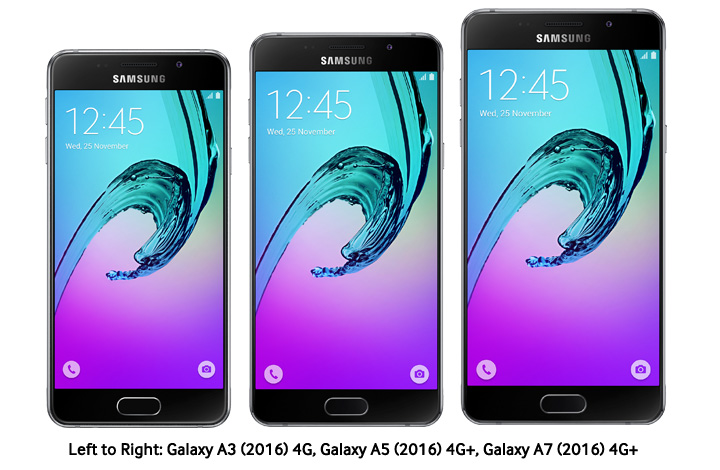
 NVIDIA has released the 1.0 version of two powerful VR software development kits (SDKs) — NVIDIA GameWorks VR and NVIDIA DesignWorks VR — to help developers deliver VR games and applications.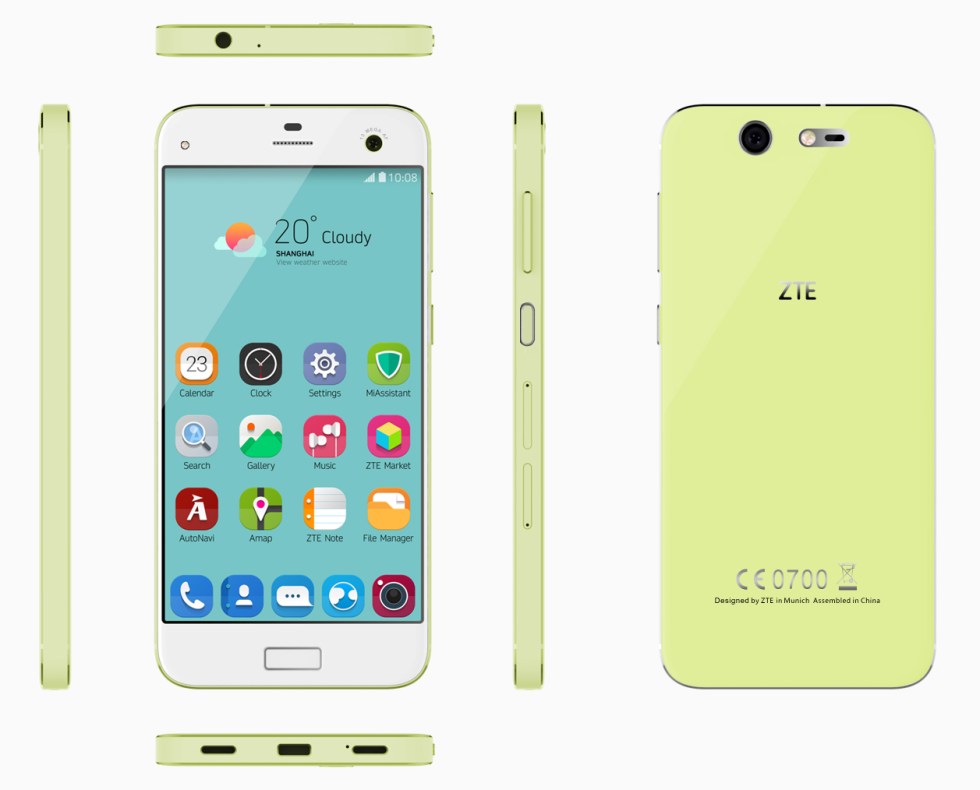
 While many cannot imagine life without mobile phones, the technology can be a life-saver in disasters. Case in point are recent crises in Afghanistan, Indonesia, Iraq, Nepal, and the Philippines where mobile network coverage enabled those directly impacted to collaborate in order to help themselves and others more quickly and effectively than external aid agencies.
 Notebook, tablet, 13.5-inch display, 12 hours of battery life, and a NVIDIA GeForce GPU to boot — that’s what the new Microsoft Surface Book is made of. And it certainly got the world excited as news poured out from the press briefing in New York last night.
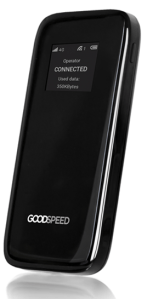 ZTE and Uros have introduced the Goodspeed 4G mobile hotspot MF900 — which is manufactured under a technology licence from Uros — providing travellers with affordable international data roaming.
 Hybrid devices are leading the growth in the mobile PC market and should reach 21.5 million units this year, an increase of 70 percent from 2014, according to Gartner. Eight million of these will be ultramobile tablets (two-in-one tablets) and 13.5 million hybrid ultramobiles (two-in-one detachable and convertible ultramobiles).
 Business intelligence and analytics are the top priorities of CIOs in Southeast Asia (SEA), according to a Gartner survey.Next on their list are mobile, ERP and cloud.
 This week’s introduction of the Samsung Galaxy S6 Edge brought back memories of when the first Samsung Galaxy Note came out in 2011. While many were pooh-poohing the smartphone for being too large and bulky, I was really excited and among the first owners.


 Mobile data roaming will generate about US$50 billion in revenue by 2019, contributing as much as 56 percent to global roaming revenues, according to Ovum.
 Data and value-added services have driven mobile growth in Malaysia to reach 42.9 million subscribers and rake in revenues of US$7.45 billion in 2014.
 GSMA has introduced two special awards to commemorate the 20th anniversary of the Global Mobile Awards. The Young Mobile Innovator of the Year and Connected Women: Leadership in Industry awards will be presented at the Global Mobile Awards ceremony at GSMA Mobile World Congress in Barcelona on March 3, 2015.
 Algebra can be a bane to students and while some turn to their teachers for help, others request for assistance from parents, siblings and tutors. With PhotoMath, they now have another source of help. Best of all, it’s free!
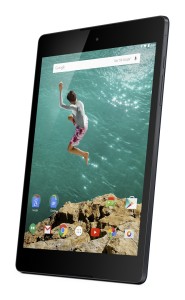 When Google announced the Nexus 9 last Wednesday, one of the more pertinent developments is that the new tablet sports the NVIDIA Tegra K1, which brings 64-bit capabilities to Android for the first time.
 Smartwatches are set to be more than health trackers with countries around the world exploring different potential.
 Entelechy Asia