
 China will lead in drones and robotics systems (US$46.9 billion) in 2020, according to IDC. Asia/Pacific (excluding Japan and China) (APeJC) will be the second largest region with US$25.1 billion in spending, followed by the US (US$17.5 billion) and Western Europe (US$14.4 billion).
Tag: IDC
Lenovo retains pole position in India PC market in Q3
 India’s PC market shipped 3.1 million units, rising 15.8 percent year-on-year in Q3, according to IDC. The key growth driver was the second phase of shipment to the Electronics Corporation of Tamil Nadu (ELCOT) under its ongoing initiative of free distribution of laptops in the state. The coming end of life of Windows 7 in early 2020 also contributed to the growth as corporate and enterprise users accelerated their upgrades to Windows 10.
Huawei narrows gap with Samsung at top of smartphone market

Huawei achieves strong domestic performanceDespite the challenges of US sanctions, Huawei has steamrolled ahead and narrowed the gap with Samsung for global smartphone supremacy in Q3.
Google acquires Fitbit for US$2.1b

The Fitbit Versa 2 was launched in Septermber.The rumours have come true. After days of speculation, Google has confirmed that its is acquiring Fitbit for US$2.1 billion.
India server market dips in Q2
 The server market in India dropped one percent year on year, driven primarily by a dip in x86 server sales.
India PC market slides in Q1
 Weak consumer demand, high inventory from previous quarters, and supply issues for Intel chips are among the reasons why the India PC market slipped in Q1. According to IDC, the segment dropped 8.3 percent to 2.15 million units that quarter.
Huawei bucks the trend as global smartphone shipment shrinks in Q1

While its competitors struggled, Huawei strode ahead and emerged the winner in the worldwide smartphone market in Q1. Though it’s still behind market leader Samsung, the China-based smartphone giant narrowed the gap with an astounding 50 percent growth in the quarter, according to IDC.
Smartphone and feature phone neck-to-neck in India

For the first time, the smartphone market is on par with the feature phone market in India, according to IDC. Overall, the India market reached 42.6 million units for a 9.1 percent year-on-year growth in Q3.
Global smartphone shipment slides 6% in Q3
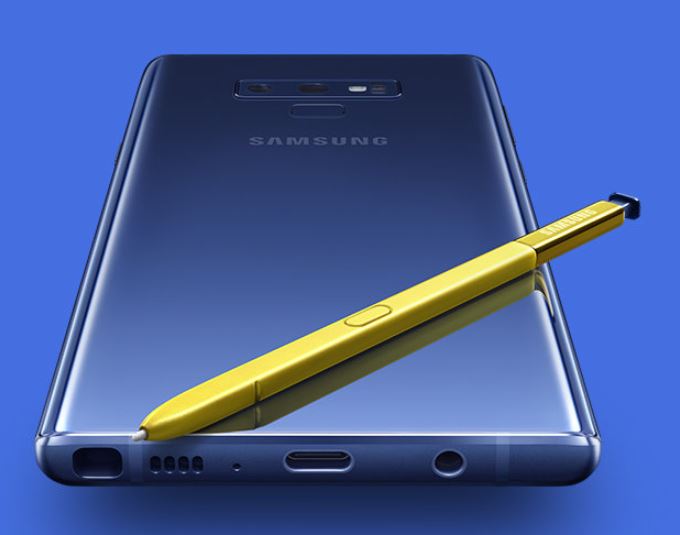 Smartphone vendors shipped 355.2 million units in Q3, down six percent from the corresponding quarter last year, according to preliminary estimates by IDC. This is the fourth straight quarter of year-on-year decline.
PC market inches up 2.7% in Q2
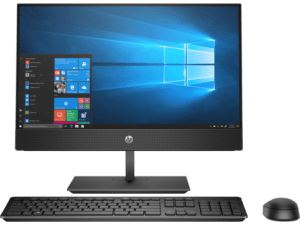
Global traditional PC shipment posted the strongest growth in more than six years during the past quarter, according to IDC. Total shipment was 62.3 million units, which translates to a 2.7 percent year-on-year growth.
China tops IDC’s smart cities awards
 China has emerged tops with five out of 19 winners in the 2018 IDC Smart City Asia Pacific Awards (SCAPA). Taiwan and Singapore were next with four and three awards respectively across 12 functional categories.
Banking spend drives external storage Q1 growth in India
Banking led professional services, manufacturing, telecommunications and government to contribute more than 80 percent to overall external storage market in India in Q1, according to IDC India. The quarter saw a jump of 12.7 percent year-on-year to US$84.1 million.
Smartwatch market heading towards steady growth

The worldwide wearables market is adjusting as smartwatches continue to come to the forefront. In the coming years, smartwatches will encompass more features and functionalities.
ICT spending in APAC (sans Japan) to hit US$1.5t in 2021

Information and communications technology (ICT) spending in Asia/Pacific (excluding Japan) will hit US$1.5 trillion in 2021, according to IDC.
India smartphone market posts strongest Q1 shipment
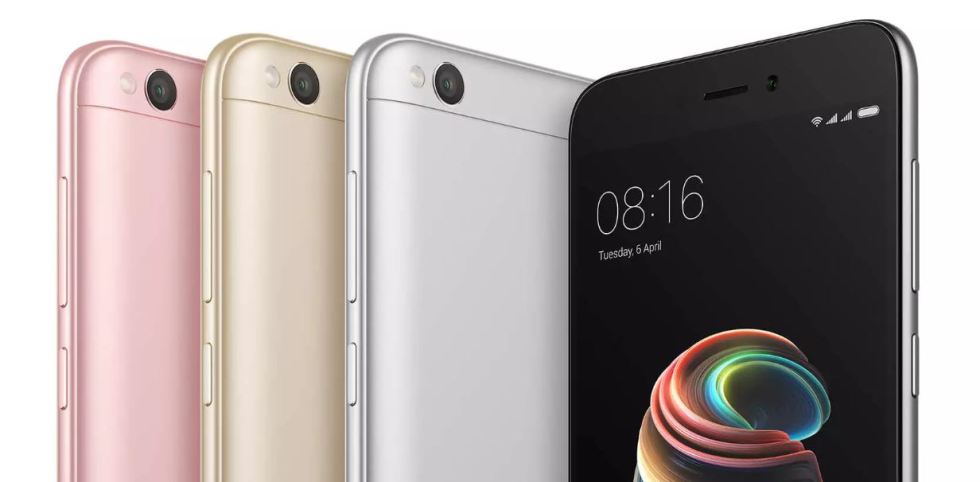
The India smartphone market shipped 30 million units in Q1, the strongest Q1 performance ever and an 11-percent growth year on year, according to IDC.
Bangladesh smartphone market continues growth trajectory
Bangladesh mobile operators began offering 4G services last month, albeit in limited areas, after gaining the necessary licences.
India is fastest growing smartphone market in 2017
India has become the fastest growing smartphone market in the world with total shipment growing 14 percent to 124 million units in 2017, according to IDC.
Forced migration

By Edward Lim
The telecommunications market, except for mobile, is facing a slowdown in growth. According to IDC, the Pay TV services market, which consists of cable, satellite, Internet protocol (IP), and digital terrestrial TV services, will remain flat over from 2017 to 2021.
Dell and Asus posts solid growth in monitor market in Q2
Dell and Asus are the leading lights in an overall weak PC monitor market in Q2. Total shipment was 28.5 million units in Q2, a 6.4 percent decline from the corresponding period last year, according to […]
New Android devices boost Australia smartphone market in Q2
 New Android mobile phone launches spurred growth in Australia, leading to year-on-year growth of 18.4 percent to 2.16 million units, exceeding expectations in Q2, according to IDC.
Smartphones accounted for nearly all of the shipped phones — totalling 2.06 million.
Android returned to being the most popular smartphone OS in Australia. Recently, iOS had overtaken Android as the most popular smartphone OS in Q4 2016 as it held over 54 percent of the market compared to 47 percent for Android.
China to dominate APAC robotics spending
Spurred by growing interest in artificial intelligence (AI), the Asia-Pacific (APAC) robotics market is expected to growth to US$162 billion in 2021, accounting for 70 percent of the world’s total robotics market in 2021, according to […]
China vendors corner India smartphone market
China-based vendors strengthened their grip in the India smartphone market, snaring 51.4 percent share of the smartphone shipment in Q1, according to IDC. They grew 16.9 percent sequentially and an impressive 142.6 percent over the same period last year.
In contrast, share of homegrown vendors dropped to 13.5 percent in the Q1 from 40.5 percent in the same quarter last year.
Overall, 27 million smartphones were shipped in Q1, a 14.8 percent growth over the same period last year. Unlike last year, shipment grew sequentially in the first quarter of 2017 by 4.7 percent recovering from demonetisation impact in Q4.
Singtel identified as APAC leader in 2016-17
Singtel is one of four telcos identified as leaders in Asia Pacific (APAC) in 2016-17 by IDC in its report entitled IDC Telecom MarketScape for Next-Generation Service Providers 2016-17.
The report, which evaluates the leading regional and global telecommunications service providers (SPs) in APAC, also listed AT&T, BT and Orange alongside Singtel was “Leaders” of the next-generation telecom service providers in the region along with plenty of challengers in the market.
These service providers demonstrated a strong regional network presence, comprehensive suite of enterprise cloud and managed ICT service offerings, diverse portfolio of services in areas such as Internet of Things (IoT) and collaboration in the region, as well as a large base of mid and large-sized enterprises, multinational corporations (MNCs), and government clients across Asia Pacific.
Worldwide services market to cross US$1 trillion mark by 2018
Global IT services and business services revenues are expected to cross the US$1 trillion mark for the first time in 2018, according to IDC.
Worldwide services spending totals for 2016 are expected to stay within the US$900 billion range and by 2020 expected to near US$1.1 trillion.
With more than US$100 million worth of spending each this year, the largest services markets will be key horizontal business process outsourcing (BPO) and systems integration services, which will also generate the largest revenue pools over the 2016-2020 forecast period. Business Consulting Services is forecast to outpace both markets in terms of growth.
Oppo tops China’s smartphone market

Move aside Huawei and Xiaomi because Oppo is now the leader in China’s smartphone market. And the number goes to vivo, another Chinese maker.
According to IDC, the China smartphone market grew 5.8 percent year-on-year and 3.6% quarter-on-quarter in Q3 with Oppo and vivo overtaking Huawei for the first time.
Oppo and vivo rose because the Chinese market has evolved beyond operator and online driven channels over to an offline structure that dovetails with Oppo and vivo’s strengths.
Smartwatch market drops 5.6% in Q3
 One of the hottest products recently is experiencing growing pains. Smartwatch shipment slid 51.6 percent to 2.7 million units in Q3 compared to the same period last year, according to IDC.
Although the decline is significant, it is worth noting that Q3 was the first time Apple’s Watch had widespread retail availability after a limited online launch. Meanwhile, the second generation Apple Watch was only available in the last two weeks of Q3.
“The sharp decline in smartwatch shipment volumes reflects the way platforms and vendors are realigning. Apple revealed a new look and feel to watchOS that did not arrive until the launch of the second generation watch at the end of September. Google’s decision to hold back Android Wear 2.0 has repercussions for its OEM partners as to whether to launch devices before or after the holidays. Samsung’s Gear S3, announced at IFA in September, has yet to be released. Collectively, this left vendors relying on older, aging devices to satisfy customers,” said Ramon Llamas, Research Manager of IDC’s Wearables team.
3D printing market to cross US$35b in 2020
3D printing continues to gain traction globally and the market is expected to more than double to reach US$35.4 billion in 2020, according to IDC.
While 3D printers and materials will represent nearly half the total worldwide revenues throughout the IDC forecast, software and related services will also experience significant growth.
Revenues for computer-aided design (CAD) software are forecast to triple over the five-year forecast period while the market for on-demand parts services will nearly match this growth. The gains in both software and on-demand parts printing are being driven by the rapidly expanding use of 3D printing for design prototyping and products that require a high degree of customization in non-traditional environments.
Philippines is fastest growing smartphone market in SEA
The Philippines smartphone market jumped 20 percent in Q1, according to IDC. With a projected annual growth of 25 percent this year, this makes the country the fastest growing smartphone market in Southeast Asia (SEA).
“While many of the more mature smartphone markets of the world already displayed signs of saturation, the Philippines smartphone market continues to enjoy robust growth owing to a relatively low smartphone penetration rate (30 percent in 2015), active local brand presence, and healthy consumer spending,” said Jerome Dominguez, Market Analyst for Mobile Devices of IDC Philippines.
Local vendors continue to dominate the Philippines smartphone market as they flood it with the most affordable smartphone options.
Wearables market to grow 29% in 2016
Worldwide shipment of wearable devices are expected to reach 101.9 million units by the end of 2016, representing 29.0 percent growth over 2015, according to IDC.
The market for wearable devices will experience a compound annual growth rate (CAGR) of 20.3 percent, culminating in 213.6 million units shipped in 2020.
“Unlike the smartphone, which consolidated multiple technologies into one device, the wearables market is a collection of disparate devices,” said Jitesh Ubrani, Senior Research Analyst of IDC Mobile Device Trackers.
VR hardware to take off in 2016

Virtual reality (VR) is not new but it has had a few false starts in recent years. However, it looks like 2016 is going to be a great year for VR.
According to IDC, worldwide shipment of VR hardware will hit 9.6 million units in 2016. Led by key products from Samsung, Sony, HTC, and Oculus, the category should generate hardware revenue of about US$2.3 billion this year.
While VR will drive nearly all of the hardware volume in 2016, augmented reality (AR) hardware is forecast to ramp up over the next few years. The combined AR/VR device market will see hardware shipments surge past 110 million units in 2020.
APAC bucks thin and terminal client down trend
The economic gloom has hit the global enterprise client device market comprising thin and terminal clients. The market was down 6.8 percent in Q4, bringing 2015 decline to 6.9 percent, according to IDC.
This was due to project cutback or delay in the face of a faltering economic outlook and reduced public budgets.
The Asia-Pacific region (excluding Japan) provided the only bright spark in the downturn, growing just over 10 percent in 2015.
Worldwide wearable market jumps 171.6% in 2015
Wearable devices are all the rage. Fueled by the growing popularity of fitness trackers and the Apple Watch, the global wearable device market grew 126.9 percent in Q4, bringing total annual shipment to 78.1 million units, a rise of 171.6 percent, according to IDC.
“Triple-digit growth highlights growing interest in the wearables market from both end-users and vendors. “It shows that wearables are not just for the technophiles and early adopters; wearables can exist and are welcome in the mass market. And since wearables have yet to fully penetrate the mass market, there is still plenty of room for growth in multiple vectors: new vendors, form factors, applications, and use cases. This will help propel the market further,” said Ramon Llamas, Research Manager of IDC’s wearables team.
“What is warranted is continued innovation and development. The market can only get so far with ‘me too’ and ‘copycat’ wearable devices. End-users expect improvement from what they have now, and new applications to spur replacement and increased adoption. Historical data, like steps taken and calories burned, has been a very good start. Prescriptive data, like what else a user can do to live a healthier life, coupled with popular applications like social media, news, and navigation, will push wearables further, and attract more users,” he added.
China smartphone sale hit record high in Q4
Smartphone sale hit a record 117.3 million in China in Q4. This represents an eight percent growth compared to the same period last year.
The phenomenal increase was partly driven by China’s annual singles day online shopping festival in November and Huawei’s strong shipments in the quarter. China’s Q4 growth boosted the calendar year 2015 growth to three percent.
“Xiaomi, Huawei and Apple are the top smartphone players in 2015. This is a stark contrast to the top players in 2013, which was Samsung, Lenovo and Coolpad – with Samsung clearly dominating other players. With operators reducing smartphone subsidy and given the volatility of consumers’ brand preference in the market, the smartphone scene has changed significantly since then,” said Tay Xiaohan, Senior Market Analyst of IDC Asia/Pacific’s Client Devices team.
Tablet market to drop 8% in 2015
The year’s looking bad for tablets as worldwide demand is expected to slide 8.1-percent to just 211.3 million units, according to IDC.
The new forecast follows three consecutive quarters of declining worldwide tablet shipments in 2015. Despite the challenges facing the overall market, IDC expects detachable tablets will continue to represent a growing portion of total shipments.
“We’re witnessing a real market transition as end users shift their demand towards detachables and more broadly towards a productivity-based value proposition. The proliferation of detachable offerings from hardware vendors continues to help drive this switch. We’re starting to see the impact of competition within this space as the major platform vendors – Apple, Google and Microsoft – now have physical product offerings. With attractive price points, including the introduction of sub-US$100 detachables, and platform innovation being driven by competition, IDC is confident that the detachables segment will nearly double in size in the next year, recording more than 75 percent growth compared to 2015,” said Jean Philippe Bouchard , Research Director, Tablets, IDC.
Smartphones account for 1/3 of mobile phone sale in India in Q3
Smartphone sale is rising in India with 28.3 million shipped in Q3, according to IDC. That’s a 21.4 percent increase from 23.3 million units for the same period last year.
In Q3, 4G enabled devices have witnessed almost a three-fold increase in unit shipment over the previous quarter.
“The growth in the smartphone market was helped by rising demand for affordable 4G smartphones,” said Karthik J, Senior Market Analyst, Client Devices, IDC.
Tablet sale slides 12.6% in Q3
Tablet sale continued its decline for the fourth straight quarter, according to IDC. Q3 shipment of 48.7 million units represented a 12.6 drop year on year, further highlighting the challenges the tablet market is facing.
At the close of 2014, IDC estimated the installed base of tablets to be 581.9 million globally, which was up 36 percent from 2013 but slowing quickly. With mature markets such as North America, Western Europe, and Asia/Pacific well past 100 million active tablets per region, the opportunities for growth are getting fewer.
“We continue to get feedback that tablet users are holding onto devices upwards of four years. We believe the traditional slate tablet has a place in the personal computing world. However, as the smartphone installed base continues to grow and the devices get bigger and more capable, the need for smaller form factor slate tablets becomes less clear. With shipment volumes slowing over four consecutive quarters, the market appears to be in transition,” said Ryan Reith, Program Director of IDC.
Cloud IT infrastructure market to grow 24% this year
Total spending on cloud IT infrastructure (server, storage, and Ethernet switch, excluding double counting between server and storage) will grow by 24.1 percent to reach US$32.6 billion in 2015, according to IDC.
This amount will account for a third of the overall end user spending on enterprise IT infrastructure, up from 27.9 percent in 2014. In comparison, spending on IT infrastructure deployed in traditional, non-cloud, environments will decline by 1.6 percent in 2015, although at US$66.8 billion will remain the largest segment of the market.
Spending on private cloud IT infrastructure in 2015 will grow by 15.8 percent year over year to US$12.1 billion, while spending on public cloud IT infrastructure will increase by 29.6 percent to US$20.5 billion.
Camera drones thriving in China

Camera drones are getting the attention, or rather causing concern among governments and the general public. While the public is usually perturbed by the invasion of privacy, governments has security and safety concerns.
That’s why it’s surprising that China’s camera drone market is thriving and used in areas such as film and television, geological exploration, and emergency response.
According to IDC, with a growing demand for more sophisticated products, Chinese consumers view camera drones as a trendy and in vogue product.
India x86 server market edges up in Q1
HP continued to lead the India x86 server market in Q1 2015 with 38 percent market share in terms of units, followed by Dell with 19 percent, according to IDC. Lenovo increased its share marginally due to large multi-million dollars deal in central government vertical.
White box players have also witnessed year on year growth as some of the organisations specially cloud providers are preferring them for reducing cost and greater control over their infrastructure.
Overalll, the x86 server market in India grew by 7.5 percent in terms of units and double-digit in revenue in Q1.
Australia tablet and 2-in-1 market takes massive hit
The numbers for the tablet and 2-in-1 market for Q1 in Australia look grim — total shipment was 770,772 units, representing a massive 40 percent quarter-on-quarter decline.
According to IDC, while the seasonal slump is customary, the magnitude of this decline is steeper than expected. Shipment decline of 25 percent year-on-year further reinforced the reality of a slow-down in demand for this product category.
However, drilling down into the segments reveals some positive signs. Whilst consumer shipments declined by 27 percent year-on-year, commercial shipments increased by a modest 1.2 percent.
Vietnam only bright spark in Asia PC market
Vietnam is the only growth market for PCs in Asia in Q4, according to IDC. A total of 610,000 PCs were shipped during this period, bringing annual total to 2.13 million units, a two-percent increase over 2014.
In the second half of 2014, promotions of Windows 8.1 with Bing notebooks and the slow but steady growth of convertibles led to an increase in volumes that helped to stabilise the PC market.
“While it helps to prevent the drop of PC shipment in Vietnam, aggressive moves from vendors generally took down the price further that impacts the margins too. Looking at 2015, we’re still expecting a resilient PC spending added with small but growing gaming market to keep the market stable,” said Yen Phan, Market Analyst for PCs at IDC Vietnam.
India smartphone market shrinks in Q4
Smartphone shipment in India observed its first drop in Q4, according to IDC. The decline was attributed to a high channel inventory at the beginning of the quarter among general trade which in turn was caused by the surge witnessed in online sales during festive season.
Q4 was seen as a correction phase when the Smart Phone market shrank by four percent while the feature phone market plummeted by about 14 percent over the previous quarter. The overall mobile phone market stood at 64.3 million units in Q4, which reflects a sequential drop of 11 percent over Q3 and an annual drop of five percent in 2014.
The feature phone to smartphone migration trend is clearly visible as smartphones formed a healthy 35 percent of the overall mobile business in Q4, an increase of 13 percent fom a year ago.
APAC PC market down 6% in 2014
It’s not surprising but the Asia-Pacific (excluding Japan) PC market dipped 6.3 percent to 101 million units in 2014, according to preliminary results from IDC. The fall is not as bad as in 2013, which saw a 10.3 percent drop.
In Q4, the market was flat year-on-year, reaching 25.9 million units, which was marginally higher than IDC’s initial forecasts.
“The good news is that 2015 should not contract as much as last year. While high retail channel inventory and uncertain economic conditions will still bear down on China, upcoming commercial sector activity should help offset that somewhat. India should still have post-elections momentum and yet another large education tender. Indonesia should similarly have post-elections momentum, although high inflation and currency fluctuations are downside risks,” said Handoko Andi Research Manager for Client Devices Research at IDC Asia-Pacific.”
Flash-based array market clips US$11b in 2014
Flash-based array is more than just a flash in the pan. The emergence of more robust offerings that can handle a wide range of increasingly complex workloads helped drive the worldwide flash-based array market to US$11.3 billion in 2014, according to IDC.
The impact that flash-based arrays will have on the datacentre is undeniable as more flash-based platforms are delivering enterprise-class data services, including snapshots, clones, encryption, replication, and quality of service (QoS) as well as storage efficiency features.
Once dominated by storage startups looking to carve out a niche with flash-optimised solutions, the promise of flash in the datacentre is driving traditional enterprise storage vendors, such as Dell, EMC, HDS, HP, IBM, NetApp, and Oracle, to all get on board and offer flash-optimised hybrid flash arrays, and in some cases, all-flash arrays.
India leads growth in Asian smartphone market in Q3
The smartphone market continued to grow in Asia-Pacific excluding Japan in Q3, albeit at a modest six percent quarter on quarter, according to IDC.
During this period, India led with 23 million units shipped, and added around five million units to the market over Q2.
Emerging markets in the region also surged ahead with 23 million units shipped, accounting for 22 percent growth as tier-1 Chinese vendors extended their reach outside China.
Singapore has right attributes for Smart City development
Singapore possesses the necessary ingredients for sustained Smart City developments, according to IDC Government Insights.
While it is still unclear which paths lead to the success of Smart City implementations, IDC explains that this forecast relates to an effective and innovative strategic leadership as well as strengths in close cross-industry ties across a multitude of technology and business partners alike to drive the necessary future developments of its city.
It defines Smart Cities as a district, town, city, county, metropolitan area, city state, or even functionally clustered government operations such as public order and safety, transportation, healthcare, and education sectors. Such next-generation models of cities are anticipated to capture, analyse, and use information to achieve over-arching long-term sustainability goals around improving the lives of their residents, business, and government services.
APAC PC market up 8% in Q3
Spurred by consumer PC demand in China and India, the APAC (excluding Japan) PC market rose eight percent in Q3, according to IDC’s preliminary results. However, shipment dropped five percent year-on-year compared to Q3 2014 to 26.6 million units.
In India, positive consumer sentiment after the elections resulted in high retail walk-ins while vendors in China pushed volumes in spite of a poor sell-out. Asean was a mixed bag with Indonesia, Malaysia and Thailand experiencing double-digit annual declines, while other countries such as Vietnam did well.
“XP migration helped boost commercial PC spending earlier this year. But in recent quarters, we have seen Microsoft add a lot to the entry-level segment by launching the Windows 8.1 with Bing programme. This programme has helped consumers buy licensed OS PC in many countries in the region,” said Handoko Andi, Research Manager for Client Devices Research at IDC Asia/Pacific.
Lenovo becomes leading x86 server provider in China
Lenovo is now the biggest x86 server provider in China, following the completion of its acquisition of IBM’s x86 server business. And IDC believes this acquisition will enrich Lenovo’s x86 server portfolio and strengthen its products and channels.
According to the research firm’s latest data, Lenovo shipped 99,101 units in the first half of 2014 and is ranked 4th among all vendors in the same category.
Combining IBM and Lenovo’s shipments in this period of time would make Lenovo the biggest vendor in China x86 server market with a market share of 23.9 percent.
India PC market up on consumer PC rebound
Strong demand for consumer PCs has helped the India PC market grow to 2.55 million units in Q2, jumping 23.6 percent over Q1 2014, according to IDC.
Overall consumer PC market recorded 1.16 million units, a quarter-on-quarter growth of 12.8 percent over Q1.
“The overall sentiments have picked up and IDC observes improved discretionary spending from consumers across devices. It is expected to have a positive influence on the market as we enter the festival season starting Onam,” said Manish Yaday, Market Analyst of Client Devices at IDC India.
Global smartphone shipment soars past 300m units in Q2
Demand for smartphones are on the rise with more 301.3 million units shipped worldwide in Q2, up 25.3 percent from the 240.5 million units shipped in the corresponding quarter last year, according to IDC.
The dominant smartphone operating systems (OS), Android and iOS, saw their combined market share swell to 96.4 percent for the quarter, leaving little space for competitors.
Android was the primary driver with its vendor partners shipping a total of 255.3 million Android-based smartphones in Q2, up 33.3 percent year over year. Meanwhile, iOS saw its market share decline despite posting 12.7 percent year-over-year shipment growth. While Android and iOS both realised gains from a year ago, the rest of the market recorded losses.
Chinese smartphone vendors outpace market
Apple and Samsung, beware! Chinese smartphone vendors are hot on your heels. According to IDC, a wide range of Chinese OEMs more than outpaced the market in Q2, with Huawei nearly doubling its shipment from a year ago, followed by Lenovo.
Huawei’s growth is spurred by 4G LTE pick up, particularly in China, as all three national carriers subsidised 4G handsets to encourage consumers to upgrade from 3G. Outside of China, large volumes of its lower-cost Y series fueled growth across most regions. The company continues to focus on broadening its global reach and the Q2 results show that the momentum is undoubtedly there.
Lenovo had a record quarter in China despite tremendous pressure from local brands. During the quarter, Lenovo saw increased success from the A788T and the 3G A388T. While its Motorola acquisition is undergoing approval, Lenovo continued to gain traction in international markets. Though less than five percent of Lenovo’s shipments were registered outside of China in Q2 2013, this share nearly tripled this Q2, with emerging markets, particularly BRIC countries, picking up the largest volumes.
APAC PC market matches Q2 expectations
The Asia/Pacific (excluding Japan) PC market grew two percent from last quarter and declined 10 percent year-on-year in Q2 to reach 24.3 million units, coming in marginally higher than IDC’s initial forecasts, according to the research firm’s preliminary results.In India, shipments to an ongoing large education project came in earlier than expected, adding about 100,000 units to the commercial PC segment. Thailand’s coup d’état, on the other hand, resulted in a steep double-digit annual decline as channels were wary to take in shipments. Microsoft’s Bing programme is ramping up in the region’s emerging markets, with Malaysia being the first to come in strong this quarter.
“The ongoing economic slowness in the emerging markets sets the tone of the overall PC demand and inhibited the region’s year-on-year growth. There are pockets of optimism coming from mature markets such as ANZ, Singapore, and Hong Kong, where the smartphones and tablets near saturation. However, the region’s growth has been adversely impacted with the rise of large-screen smartphones in China and most ASEAN countries,” said Handoko Andi, Research Manager for Client Devices Research of IDC Asia/Pacific.
GST implementation a boon for enterprise application market in Malaysia
While the implementation of the Goods and Services Tax (GST) is not welcomed by most Malaysians, the move is expected to drive growth in the enterprise application (EA) market.
According to IDC, the tax initiative will be a boost to EA vendors as it forces business to either upgrade or replace their legacy system with a system that is GST compliant.
“With GST coming into effect in the early part of 2015, we predict there will be a scramble from the businesses to be fully GST ready in line with government regulations and the implementation will be one of the catalysts for growth in Malaysian EA market for 2014 and possibly in 2015 as well,” said Wong Yih-Khai, Market Analyst of Software at IDC Malaysia.
India PC market sluggish in Q1
The India PC market continued to slide in Q1, largely due to poor end-user demand, according to IDC. Overall PC shipment was 2.03 million units, representing a year-on-year drop of 25.2 percent over Q1 2013.
The Commercial PC segment accounted for 1.02 million units, showing a marginal increase of 4.1 percent sequentially over Q4 2013.
“The overall Commercial PC market showed first signs of improvement over the last 9-10 months as investment activities have improved in the banking and government verticals. Vendors are optimistic about the overall market sentiments and believe it will pick up gradually among other verticals too in the course of 2014,” said Kiran Kumar, Research Manager of Client Devices at IDC India.
Global tablet shipment misses target
Worldwide tablet plus 2-in-1 shipments slipped to 50.4 million units in Q1, according to preliminary data from IDC. The total represents a sequential decline of 35.7 percent from the high-volume holiday quarter and just 3.9 percent growth over the same period a year ago. The slowdown was felt across operating systems and screen sizes and likely points to an even more challenging year ahead for the category.
“The rise of large-screen phones and consumers who are holding on to their existing tablets for ever longer periods of time were both contributing factors to a weaker-than-anticipated quarter for tablets and 2-in-1s,” said Tom Mainelli, IDC Program Vice President, Devices and Displays. “In addition, commercial growth has not been robust enough to offset the slowing of consumer shipments.”
Apple maintained its lead in the worldwide tablet plus 2-in-1 market, shipping 16.4 million units. That’s down from 26.0 million units in the previous quarter and well below its total of 19.5 million units in Q1 of 2013. Despite the contraction, the company saw its share of the market slip only modestly to 32.5 percent, down from the previous quarter’s share of 33.2 percent.
APAC PC market dips for 8th consecutive quarter
The Asia/Pacific (excluding Japan) PC market declined eight percent sequentially and 11 percent year-on-year in 2014 Q1 to reach 23.8 million units, according to preliminary results from IDC.
Elections in some of the bigger markets contributed to the region’s overall decline. In India, an ongoing large education project was postponed due to the upcoming elections, shaving off about half a million units from the commercial PC segment. In Thailand, political unrest continued to have an adverse impact on the economy, while in Indonesia, government funds were diverted in the run-up to the elections, resulting in lower commercial spending in PCs there this quarter.
“However, as these markets stabilise after the elections, IDC expects commercial activity to resume in the second half as a result of pent-up demand,” said Handoko Andi, Research Manager for Client Devices of IDC Asia/Pacific. “On the consumer side, ongoing distractions from smartphones and tablets as well as cautious channel intake impacted most markets in the region, especially in Southeast Asia.”
APAC PC market shrank 10% in 2013
The Asia/Pacific (excluding Japan) PC market declined 10 percent in 2013 to reach 108 million units, according to preliminary results from IDC.
The economic sluggishness in big emerging markets in the region adversely affected buying sentiments, with education sector projects being a lone bright spot in the commercial space, without which the region could have dropped even further. On the consumer side, smartphone and tablet distractions spread throughout the region this year, further contributing to the sharp decline in the PC market.
In Q4, the market came in two percent below IDC’s initial forecasts with a nine percent year-on-year decline. While most of the region was generally in line with forecasts, Thailand stood out as an exception, as the market there was plagued by the ongoing political turmoil. Shipment volumes this quarter will likely be the lowest in Thailand in the last four years.
Smartphone shipment up 40% while average price drops 12%
Worldwide smartphone shipments are expected to surpass one billion units in 2013, representing 39.3 percent growth over 2012, according to a recently published mobile phone forecast from IDC Worldwide Quarterly Mobile Phone Tracker.
Despite a number of mature markets nearing smartphone saturation, the demand for low-cost computing in emerging markets continues to drive the smartphone market forward. By 2017, total smartphone shipments are expected to approach 1.7 billion units, resulting in a compound annual growth rate (CAGR) of 18.4 percent from 2013 to 2017.
While shipment has gone up, the average selling price (ASP) has seen a steady decline. Android has enabled a number of new manufacturers to enter the smartphone market supported by a variety of turnkey processing solutions. Many of these handset vendors have focused on low-cost devices as a way to build brand awareness.
ANZ WLAN market boosted by increase in devices
The wireless local area network (WLAN) hardware market in ANZ continued to grow for the third consecutive quarter, according to IDC.
While enterprises remained the largest users of wireless infrastructure, the consumer space gained share from enterprise over the year. This means that more consumer wireless routers were sold, thanks to an increased number of devices in households during the period.
Service Provider (SP) WLAN deployments differed between Australia and New Zealand. New Zealand SPs embraced 3G/LTE offload via WLAN infrastructure while Australia SPs preferred to rely on available spectrum to support mobile connectivity. Overall, SP contribution to the WLAN market remained minuscule in the region despite having the strongest growth. Table 1 shows growth for the three main segments quarter-on-quarter (QoQ) and year-on-year (YoY):
Myanmar’s devices market set for explosive growth
Myanmar’s devices market is on target to take centre stage as the country hurtles towards becoming an ICT-driven nation, according to IDC.
Following the award of telecommunications licenses to Telenor and Ooredoo, SIM cards and service provision has dipped considerably towards levels even low-wage earners are able to afford. IDC expects this to drive a considerable uptake in demand for both mobile phones and tablets.
“The Myanmar government has set highly ambitious targets for mobile subscriber penetration over the next two years. At this point, they are on the right track, but there is still much work left to be done,” said Daniel Pang, ASEAN Research Manager for Client Devices at IDC Asia/Pacific.
 Entelechy Asia