

The Huawei Mate X is one of the devices that’s ready for 5G.5G mobile phone services will be available across China from tomorrow (November 1, 2019). China Mobile, China Unicom and China Telecom have announced on their 5G plans which from 128 yuans a month.




 Samsung, China Mobile and Alibaba have made it to the top 10 of Forbes 2019 top 100 digital companies. The Korea giant came in third behind Apple and Microsoft, but edged out Google and Intel.


 The signs are not good for smartphone sales as Gartner reports a 1.7 percent decline in Q2. Bucking the trend among the top five markets are China and Brazil. China clocked up 101 million smartphone sales, up 0.5 percent year on year in Q2, to maintain its top position.



 Singapore aims to roll out at least two 5G networks by 2020. With its greater reliability, lower latency and ability to connect more devices, the next generation network will enable applications such as augmented reality/virtual reality content and live streaming of 4K/8K videos.
 China Unicom is readying to roll out 5G in China with the support of Qualcomm and in collaboration with device partners nubia, OnePlus, OPPO, Vivo, Xiaomi, and ZTE.
 Leaks of the launch of the OnePlus 7 keep coming and CEO Pete Lau seemed to be fanning the flame.
 Hong Kong-based eSIM solutions provider 10T Tech has announced the launch of the eSIM Alliance, the world’s first global alliance of mobile operators (MNOs) and virtual mobile operators (MVNOs).
 Thailand has bucked an attempt by the United States to block Huawei by letting the Chinese telecom giant trial 5G in the country.




 OnePlus has fired the first salvo in the 5G race. At a Qualcomm event in Hawaii, the China smartphone maker announced its intention to launch its first 5G handset in the United Kingdom.
 Japanese conglomerate SoftBank plans to raise US$21 billion for its mobile telecommunications unit, making it the world’s biggest IPO since Alibaba in 2014.


 The legal tussle between Qualcomm and Apple has hit another level with the chipmaker accusing the smartphone giant of passing trade secrets to Intel. An earlier court battle, Qualcomm said that Apple breached an agreement for it to audit Apple’s use of Qualcomm’s source code.
 A battle of sorts is taking place in the field of artificial intelligence (AI). It has been widely reported that China is ramping up its focus on the technology that is expected to transform businesses and industries. Numbers from ABI Research point to a swing in favour of China.
 The ongoing spat between China and the US seem to have claimed another victim. Apple has removed 25,000 gaming-related apps from its China app store. This move follows hard on the heels of the US ban on Huawei and ZTE technology from being used by the US government and government contractors yesterday.

 Slowly but surely, 5G is coming. In Singapore, Singtel and Ericsson will launch by the country’s first 5G pilot network at one-north in Q4.


 The long awaited
 Qualcomm is targeting smartwatches for children with its Snapdragon Wear 2500 platform. Announced at Mobile World Congress Shanghai, the chip is designed to deliver extended battery life, low power location tracking and an optimised version of Android for kids.

 Help is at hand for parents who need help in teaching their young children the dos and don’ts of using smartphones and other mobile devices. They can now turn to Tittle for Parents, an app that lets parents protect their children on mobile devices and teach about safe and appropriate use.
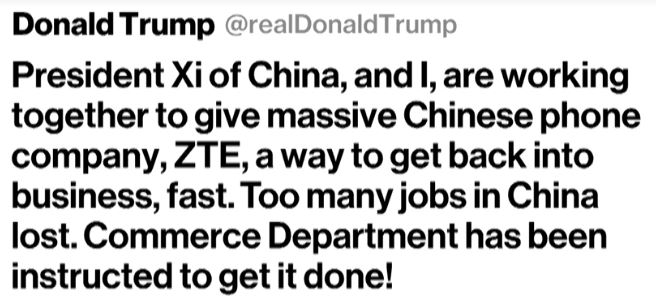
 US$1 billion is a hefty sum to pay for a fine but for ZTE, it means getting its business back on track.
 China’s biggest initial public offering (IPO) since 2015 will come to pass if Foxconn Industrial Internet hits its target of 27.1 billion yuan on May 24.
 In a quarter when the China smartphone market experienced it biggest ever decline, Xiaomi bucked the trend and grew 37 percent to 12 million units, according to Canalys.
 Singapore telco StarHub has upped its 4G speed to 1Gbps — giving users faster access at various parts of the island.
 Entelechy Asia