Tag: Samsung

Smartphone market in historic drop

It’s almost unthinkable but the smartphone market has dipped for the first time in its history.

According to Canalys, worldwide smartphone shipment fell from 324 million units in Q1 2015 to 321 million units in Q1 2016. The top two vendors both posted shipment declines, with Apple the worse hit.

Excluding Apple and Samsung, smartphone shipment grew five percent despite some of the big named international vendors outside the top five also faring badly. LG, Lenovo and TCL-Alcatel posted significant declines, while Sony plummeted by around 57 percent.

VR hardware to take off in 2016

The HTC Vive lets users experience room-scale gameplay.

Virtual reality (VR) is not new but it has had a few false starts in recent years. However, it looks like 2016 is going to be a great year for VR.

According to IDC, worldwide shipment of VR hardware will hit 9.6 million units in 2016. Led by key products from Samsung, Sony, HTC, and Oculus, the category should generate hardware revenue of about US$2.3 billion this year.

While VR will drive nearly all of the hardware volume in 2016, augmented reality (AR) hardware is forecast to ramp up over the next few years. The combined AR/VR device market will see hardware shipments surge past 110 million units in 2020.

Samsung launches 2-in-1 Windows 10 tablet in Singapore

Samsung Galaxy TabPro SSamsung Electronics Singapore has introduced the Samsung Galaxy TabPro S, its first 2-in-1 premium tablet featuring seamless integration of laptop and tablet capabilities.

As the first premium tablet range to be powered by Windows 10 to support LTE Category 6 capabilities, the Galaxy TabPro S comes with enhanced features and long-lasting battery life, making it suitable for on-the-go individuals seeking convenience and performance.

Encased in a 6.3mm slim and sleek exterior, it weighs just 696 grams. The tablet also comes with a full-sized keyboard and cover – the touchpad of the keyboard emulates that of a laptop. The Pogo pin on the Galaxy TabPro S keyboard eliminates the need for pairing or charging separately.

China smartphone sale hit record high in Q4

IDCSmartphone sale hit a record 117.3 million in China in Q4. This represents an eight percent growth compared to the same period last year.

The phenomenal increase was partly driven by China’s annual singles day online shopping festival in November and Huawei’s strong shipments in the quarter. China’s Q4 growth boosted the calendar year 2015 growth to three percent.

“Xiaomi, Huawei and Apple are the top smartphone players in 2015. This is a stark contrast to the top players in 2013, which was Samsung, Lenovo and Coolpad – with Samsung clearly dominating other players. With operators reducing smartphone subsidy and given the volatility of consumers’ brand preference in the market, the smartphone scene has changed significantly since then,” said Tay Xiaohan, Senior Market Analyst of IDC Asia/Pacific’s Client Devices team.

Samsung extends lead in India smartphone market

CanalysSamsung has pulled further ahead of the competition with a quarter share of the India smartphone market in 2015, according to Canalys.

Micromax held on to second place, with annual shipment falling by more than 20%, primarily due to inventory build-up in its distribution network.

Lenovo and Motorola’s combined shipments were just short of three million units, up almost 60 percent up from the previous year, moving them past Intex to take third place in the market.

Semiconductor market drops 1.9% in 2015

GartnerWorldwide semiconductor revenue was US$333.7 billion in 2015, a 1.9 percent decrease from 2014 revenue of US$340.3 billion, according to Gartner.

The top 25 semiconductor vendors’ combined revenue increased 0.2 percent, which was more than the overall industry’s growth. They also accounted for 73.2 percent of total market revenue, up from 71.7 percent in 2014.

“Weakened demand for key electronic equipment, the continuing impact of the strong dollar in some regions and elevated inventory are to blame for the decline in the market in 2015,” said Sergis Mushell, Research Director of Gartner.

Smartphones account for 1/3 of mobile phone sale in India in Q3

IDCSmartphone sale is rising in India with 28.3 million shipped in Q3, according to IDC. That’s a 21.4 percent increase from 23.3 million units for the same period last year.

In Q3, 4G enabled devices have witnessed almost a three-fold increase in unit shipment over the previous quarter.

“The growth in the smartphone market was helped by rising demand for affordable 4G smartphones,” said Karthik J, Senior Market Analyst, Client Devices, IDC.

Tablet sale slides 12.6% in Q3

IDCTablet sale continued its decline for the fourth straight quarter, according to IDC. Q3 shipment of 48.7 million units represented a 12.6 drop year on year, further highlighting the challenges the tablet market is facing.

At the close of 2014, IDC estimated the installed base of tablets to be 581.9 million globally, which was up 36 percent from 2013 but slowing quickly. With mature markets such as North America, Western Europe, and Asia/Pacific well past 100 million active tablets per region, the opportunities for growth are getting fewer.

“We continue to get feedback that tablet users are holding onto devices upwards of four years. We believe the traditional slate tablet has a place in the personal computing world. However, as the smartphone installed base continues to grow and the devices get bigger and more capable, the need for smaller form factor slate tablets becomes less clear. With shipment volumes slowing over four consecutive quarters, the market appears to be in transition,” said Ryan Reith, Program Director of IDC.

Tablet vendor landscape evolving

IDCThe worldwide tablet market shed seven percent in Q2 to 44.7 million units, according to IDC. Quarter on quarter, the drop was 3.9 percent.

The market was not helped with the lack of hardware innovation and new products.

“Beyond the decline, we are seeing a profound shift in the vendor landscape as the top two vendors, Apple and Samsung, lose share in the overall market. In the first quarter of the year, Apple and Samsung accounted for 45 percent of the market and this quarter, with the growth of vendors like LG, Huawei, and E FUN, their combined share dropped to 41 percent,” said Jean Philippe Bouchard, Research Director for Tablets of IDC. .

Australia tablet and 2-in-1 market takes massive hit

IDCThe numbers for the tablet and 2-in-1 market for Q1 in Australia look grim — total shipment was 770,772 units, representing a massive 40 percent quarter-on-quarter decline.

According to IDC, while the seasonal slump is customary, the magnitude of this decline is steeper than expected. Shipment decline of 25 percent year-on-year further reinforced the reality of a slow-down in demand for this product category.

However, drilling down into the segments reveals some positive signs. Whilst consumer shipments declined by 27 percent year-on-year, commercial shipments increased by a modest 1.2 percent.

Global PC shipment down 7% in Q1

CanalysApple held on to its top spot despite a 16 percent drop in PC shipment in Q1. It shipped 17.2 million units, taking a 15 percent market share while Lenovo and HP came in second and third place respectively. Samsung was next with 9.5 million units shipped with Dell just behind with 9.4 million units.

Overall, the global PC market, including tablets, declined seven percent, according to Canalys.

“The growth drivers that previously helped the market through 2014 will have little effect this year. Vendors are struggling with exchange rate fluctuations which is making financial planning more difficult and forcing price increases. These challenges, combined with a softening of demand as Windows 10 draws nearer along with Microsoft’s free upgrade plans, means PC market declines will be greater in the second quarter than they were in the first,” said Tim Coulling, Senior Analyst of Canalys.

Mobile gaming fuelling gaming market growth

abi researchRising demand for mobile games is driving the video game market to reach US$80 billion in 2020, up from under US$70 billion last year, according to ABI Research.

Traditional PC and console segments, on the other hand, will see a one- to two-percent annual growth.

Triple-A titles have the potential to dramatically change a developer/publisher’s financials, but gaming’s long tail is equally important to the continued growth of the industry. This is particularly true in the mobile space where a hit title can catapult a mobile game developer into the upper echelons of the market — as was true for developers such as King Digital (Candy Crush Saga) and Supercell (Clash of Clans).

Tablet shipment down 12% globally in Q4

CanalysThe stats are in – tablet shipment dropped 12 percent to 67 million units in Q4, according to Canalys. The desktop market fell back into a decline in Q4 as Windows XP upgrades waned. The notebook market held firm with another quarter of just one percent growth.

Total PC shipments (desktops, notebooks and tablets) fell six percent in Q4 to reach 148 million units, resulting in full-year 2014 shipments of 528 million units, up three percent on 2013.

Apple regained the top spot in the PC market on the strength of holiday sales, with just under 27 million units shipped. Lenovo’s shipments grew six percent year on year to almost 20 million units as it increased its market share to 13.3 percent. Samsung dropped out of the top three to make way for HP, with growth of 17 percent driving shipments over 17 million units, its best quarter since Q3 2011.

Samsung rolls out rugged tablet

Galaxy Tab ActiveSamsung has unveiled Galaxy Tab Active, a ruggerised tablet that’s designed just for business use.

Developed following consultations with leading companies across vertical markets — such as retail, logistics and transportation — the tablet is the first inspired by professionals and designed specifically to boost business productivity.

Its features deliver business functionality based on performance, durability and protection, allowing professionals to work without limitations in and out of the office. The Galaxy Tab Active provides full connectivity and meets the always on needs of today’s mobile business environment.

Samsung and ITE tie-up to equip students with industry-relevant skills

Samsung mobile
ITE students will be industry-relevant skills to work on Samsung mobile devices.

The ITE-Samsung Tech Hub was opened this week to provide real-world training that will enhance the employability of ITE (Institute of Technical Education) students in Singapore.

It consists of a Display Solutions Centre to showcase various emerging display technologies, and a Mobile Service Centre which simulates Samsung’s customer service environment to train students in mobile device technical support and customer service.

ITE College East students enrolled in Nitec in Electronics (Mobile Devices) and Nitec in Electronics (Display Technology) are currently taking lessons at the facility.

Global smartphone shipment soars past 300m mark in Q3

Q3 is a stunninCanalysg quarter for smartphones as global shipment broke the 300 million unit barrier for the first time. This represented year-on-year growth of 23 percent, according to Canalys.

While Samsung and Apple remain the market leaders, the tussle for the third spot is heating up with was Xiaomi (six percent) followed closely by Lenovo and Huawei at five percent each.

“The global market is becoming more competitive, with vendors beyond Samsung and Apple enjoying growing success. A year ago, in Q3 2013, Samsung and Apple together accounted for 48 percent of worldwide smart phone shipments. While still impressive, in Q3 2014 this had slipped to 38 percent. This trend is likely to continue. It is down to the strong value proposition and increasing quality of products offered across all price points by competing vendors, most notably Chinese companies. In fact, six of the top 10 global vendors in Q3 are based in China,” said Chris Jones, Vice President and Principal Analyst of Canalys.

Fitness band market jumps 684% in H1

mibandA wrist accessory with a silicon strap has become the latest fashion statement and a must-have for the sporty. We’re talking about the fitness band, which helps to keep track of distance covered, calories burnt and sleep among other things.

According to Canalys, the global wearable band market grew an astonishing 684 percent in the first half of this year compared with the same period of 2013.

“Fitbit and Jawbone have very successfully grown and strengthened their relationships with channel partners internationally to grow global shipment volumes. They took first and second place respectively in the basic wearable band market in the first half 2014,’ said Chris Jones, Vice President and Principal Analyst of Canalys.

Global smartphone shipment soars past 300m units in Q2

DIDCemand for smartphones are on the rise with more 301.3 million units shipped worldwide in Q2, up 25.3 percent from the 240.5 million units shipped in the corresponding quarter last year, according to IDC.

The dominant smartphone operating systems (OS), Android and iOS, saw their combined market share swell to 96.4 percent for the quarter, leaving little space for competitors.

Android was the primary driver with its vendor partners shipping a total of 255.3 million Android-based smartphones in Q2, up 33.3 percent year over year. Meanwhile, iOS saw its market share decline despite posting 12.7 percent year-over-year shipment growth. While Android and iOS both realised gains from a year ago, the rest of the market recorded losses.

Chromebook sales to nearly triple by 2017

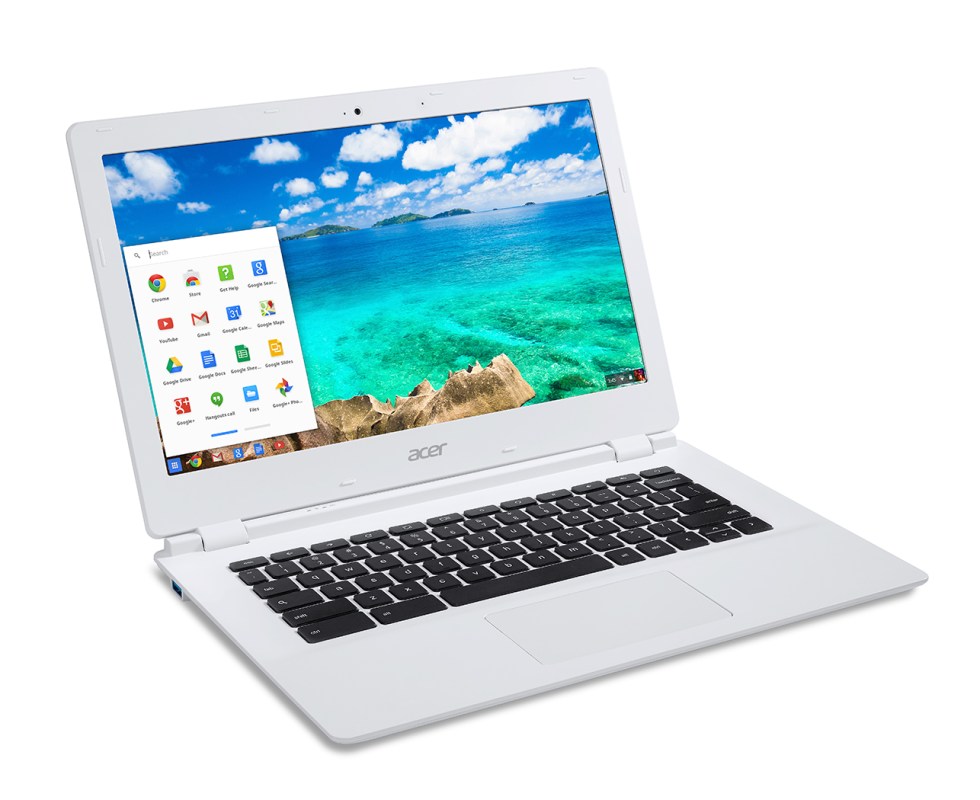
Acer Chromebook 13Acer has launched the Acer Chromebook 13, its first 13-inch Chromebook as well as the first Chromebook to use the NVIDIA Tegra K1 processor, which gives the new Chromebook a performance edge and longer battery life of up to 13 hours.

This rollout should help Acer concretise its position as the number in the Chromebook market, behind leader Samsung, which had 64.9 percent market share in 2013.

Gartner expects sales of Chromebooks to reach 5.2 million units this year, a 79 percent increase from 2013. By 2017, sales of Chromebooks are set to nearly triple to reach 14.4 million units.

Tablet growth stagnates, notebook decline eases

CanalysWorldwide PC shipment hit 123.9 million units in Q2, representing year-on-year growth of 14 percent, according to Canalys. With no sequential growth, the positive effect that tablets have had on overall PC shipments is beginning to wear off.

Tablet shipment in Asia Pacific (including China) came in 8 percent below Q1 numbers, mainly due to a fall in shipment by Apple and Samsung.

Apple continued to lead the market with a 14 percent market share, though a 10 percent increase in Mac shipments could not make up for a decline in iPad sales, resulting in the company’s overall shipments declining by 5 percent.

Chinese smartphone vendors outpace market

IDCApple and Samsung, beware! Chinese smartphone vendors are hot on your heels. According to IDC, a wide range of Chinese OEMs more than outpaced the market in Q2, with Huawei nearly doubling its shipment from a year ago, followed by Lenovo.

Huawei’s growth is spurred by 4G LTE pick up, particularly in China, as all three national carriers subsidised 4G handsets to encourage consumers to upgrade from 3G. Outside of China, large volumes of its lower-cost Y series fueled growth across most regions. The company continues to focus on broadening its global reach and the Q2 results show that the momentum is undoubtedly there.

Lenovo had a record quarter in China despite tremendous pressure from local brands. During the quarter, Lenovo saw increased success from the A788T and the 3G A388T. While its Motorola acquisition is undergoing approval, Lenovo continued to gain traction in international markets. Though less than five percent of Lenovo’s shipments were registered outside of China in Q2 2013, this share nearly tripled this Q2, with emerging markets, particularly BRIC countries, picking up the largest volumes.

Samsung keeps lead in tablet space

abi researchSamsung has retained its pole position in ABI Research’s tablet vendor Competitive Assessment. In the analysis of 23 leading tablet vendors, ABI Research ranked companies on several criteria for product implementation and vendor innovation. The Korean giant prevailed in the innovation category and finished second in the implementation strategy.

Close behind Samsung in second place is Apple. Clearly dominating in shipment volume, Apple has been a strong contender in the tablet ecosystem. Apple places number one in implementation strategy but comes in close second for innovation. The two leading tablet makers have managed to stay ahead of other tablet OEM vendors.

In third place is Lenovo, which has done a great job of expanding its tablet portfolio by marketing to a large audience range and providing unique user interfaces.

Samsung Galaxy K zoom LTE available for pre-order in Singapore

Samsung KzoomThe next incarnation of Samsung’s camera specialised smartphone is available for pre-orders in Singapore till May 31. Pre-odered Samsung Galaxy K zoom LTE will come with a redeemable accessory gift pack (worth S$148) consisting of an Autopop Protective Cover, a 3,100 mAh Battery Pack, and a 8GB microSD Card while stocks last.

The Samsung Galaxy K zoom LTE features effortless capturing ability, real optics, and a premium design, offering users the mobile solutions they need with the ability to create professional-quality visual content in a fun, easy–to-use device.

“As the only smartphone on the market that features a unique retracting lens with 10x optical zoom, and a slim design that appeals with an ergonomic grip and sleek modern look, the Galaxy K zoom LTE is ideal for the mobile user who wants the most powerful camera system in a smartphone,” said Irene Ng, Vice President, Marketing of Samsung Asia.

PC shipment up 5% but tablet growth slows in Q1

Worldwide client PC shipment rose five percent year on year to hit 123.7 million units in Q1 , according to Canalys. Growth in tablet shipments slowed to 21 percent, yet at 50.8 million units they continue to outship notebooks. Tablets accounted for 41 percent of the market while notebooks had 38 percent.

Notebooks and desktops in China declined 13 percent and six percent respectively compared with the previous year.

In the tablet market, there was strong growth in the Middle East (100 percent) and Greater China (74 percent). The US market was adversely affected by a drop in Apple iPad shipment, which fell 40 percent. This was offset somewhat by 20 percent growth in China, Apple’s second largest market. Worldwide, iPad shipments in Q1 fell 16 percent year on year to 16.4 million and accounted for 80 percent of Apple’s total PC shipments. Despite this, Apple continued to lead the global PC market. Its share fell both sequentially and year on year from 20 to 17 percent, due chiefly to the increasingly competitive tablet market.

Global tablet shipment misses target

IDCWorldwide tablet plus 2-in-1 shipments slipped to 50.4 million units in Q1, according to preliminary data from IDC. The total represents a sequential decline of 35.7 percent from the high-volume holiday quarter and just 3.9 percent growth over the same period a year ago. The slowdown was felt across operating systems and screen sizes and likely points to an even more challenging year ahead for the category.

“The rise of large-screen phones and consumers who are holding on to their existing tablets for ever longer periods of time were both contributing factors to a weaker-than-anticipated quarter for tablets and 2-in-1s,” said Tom Mainelli, IDC Program Vice President, Devices and Displays. “In addition, commercial growth has not been robust enough to offset the slowing of consumer shipments.”

Apple maintained its lead in the worldwide tablet plus 2-in-1 market, shipping 16.4 million units. That’s down from 26.0 million units in the previous quarter and well below its total of 19.5 million units in Q1 of 2013. Despite the contraction, the company saw its share of the market slip only modestly to 32.5 percent, down from the previous quarter’s share of 33.2 percent.

Samsung Experience Store opens at Westgate in Singapore

samsungSamsung has opened its largest Samsung Experience Store at Westgate in Singapore. The 6,027-square foot standalone triplex store will provide give those staying in the western part of Singapore access to Samsung’s latest range of products with infotainment and educational content as well as in-store dining options.

At the store, consumers can get hands-on experience with Samsung products and see how Samsung’s range of content and services work seamlessly together.

“The Samsung Experience Store at Westgate represents our continued commitment to providing a conducive environment for consumers to try our innovative products,” said Eugene Goh, Vice President of IT & Mobile, Samsung Electronics Singapore.

Samsung rolls out slimmer Tab

Galaxy Tab 3 LiteFancy a slimmer Samsung Galaxy Tab? Samsung has rolled out the Galaxy Tab 3 Lite (7.0”) WiFi, which  sports a slim, lightweight design with a more compact bezel that makes it comfortable to carry around in one hand. The device’s large 3,600mAh battery maximises portability so that users can enjoy up to eight hours of video playback without the need for an adapter.

Its enhanced features and services gives users a variety of ways to capture, view, listen, create, and share content with others without compromising value.

The Galaxy Tab 3 Lite (7.0”) WiFi’s 7-inch display comes with optimal resolution designed to bring users a better viewing experience. The menu bar is situated on the device’s bezel, rather than on the screen, in order to maximise the wide screen experience.

Tablets account for half of PC shipment in Q4

CanalysTablet shipment grew 65.2 percent year-on-year to reach 76.3 million units in Q4, according to Canalys. This represents nearly half (48.3 percent) of the global PC market, which increased 17.9 percent during that period. Excluding tablets, shipment declined 6.9 percent year-on-year with falls in all regions. 

Apple remained the PC market leader in Q4, shipping 30.9 million units to take a 19.5 percent share of the market. It shipped 26.0 million iPads, which accounted for 84.3 percent of its total shipment in Q4. Apple’s share of the overall tablet market increased sequentially from 27.3 percent to 34.1 percent, with the launch of the iPad Air and iPad mini with Retina display providing a much needed boost. The original iPad mini also fell in price, down to US$299 in the US, making it cheaper than ever to buy an iPad. But competition is mounting and Android tablets are falling in price, which will put pressure on Apple’s market share in 2014.

Lenovo secured an 11.8 percent share in Q4, narrowly holding onto second place. Lenovo’s PC shipments increased 25.5 percent year-on-year, driven by growth outside of its core Chinese market, where its shipment declined. Lenovo’s 11.7 percent decline in notebook shipments in China was offset by impressive growth in other regions, notably EMEA, where shipments grew 30.4 percent. Shipments in Latin America also grew strongly, following the acquisition of CCE in the first quarter of 2012.Lenovo was early to embrace Android as a tablet OS, while the likes of HP and Dell waited for Windows 8 and prioritized margin over volume. Lenovo’s strategy has paid off, not only in its home market but worldwide.

Samsung is top global semiconductor buyer

GartnerSamsung Electronics is the world’s top semiconductor buyer, and together with second placed Apple, increased their combined semiconductor demand by 17 percent in 2013, according to Gartner.
The two companies consumed US$53.7 billion of semiconductors in 2013, an increase of $7.7 billion from 2012.

“Samsung Electronics and Apple have topped the semiconductor consumption table for three years running, with their share of the design total available market (TAM) rising from 12 per cent in 2011, to 17 per cent in 2013,” said Masatsune Yamaji, Principal Research Analyst of Gartner. “This increase clearly shows how fast the presence of these two companies has expanded over the last three years and why their decisions have technology and pricing implications for the whole semiconductor industry.”

Tablets to account for half of PC market in 2014

 Source: Canalys

Tablets will almost out ship all other PC form factors combined, forming almost 50 percent of the total client PC market (desktops, notebooks, and tablets) in  2014, according to Canalys.

The worldwide client PC market grew 18 percent in Q3, despite desktop and notebook shipments continuing to decline. Tablet PC shipments accounted for 40 percent of PC shipments in Q3, less than half a million units behind global notebook shipments.

Tablet domination is set to continue, with Canalys forecasting 285 million units to ship in 2014, growing to 396 million units in 2017. Apple and Samsung are expected keep ahead of their competitors in the medium term, but there could be challenges for both vendors as competition in the tablet market continues to heat up.

Samsung Galaxy Tab 3 Kids available in Singapore

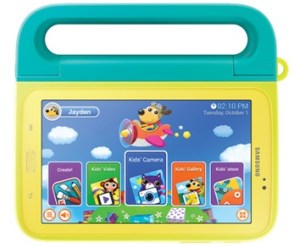
Samsung Galaxy Tab 3 KidsParents in Singapore have another possible Christmas gift to buy for their young children. The new Samsung Galaxy Tab 3 Kids is a tablet built specifically for kids with the educational tools and safety features parents want.

It comes with a slew of pre-loaded content including educational, games, entertainment and e-book apps such as Toca Hair Salon 2,  Pettson’s Inventions 2, Kids WORLD, Farm 123, and Skoolbo Core Skills.

The Samsung Galaxy Tab 3 Kids is available at S$388 at Toys”R”Us, Popular book stores, major consumer electronics and IT stores, and Samsung Experience Stores.

Samsung drives road safety campaign in Singapore

Pledge your attentionDrive without mobile distractions — that’s the message from Samsung’s “The Road Comes First” campaign targeted at Singapore road users to promote the responsible use of mobile phones on the road.

Endorsed by the Traffic Police and Singapore Road Safety Council, the campaign aims to address the increasing problem of illegal mobile phone use among drivers. The number of summons increased 46 percent, from 1,169 between January to June in 2012 to 1,705 over the same period in 2013.

A Samsung-commissioned survey found that a large majority of 83 percent of the Singapore drivers surveyed admitted to using their mobile phones, without a hands-free kit, while at the wheel in the last 12 months. They were most likely to be using GPS or map applications, checking their mobile phone screens, and texting.

Large screen smartphones gaining popularity

CanalysThe numbers are clear. Big is getting more popular. Large screen smart phones (five-inch and above) accounted for 22 percent of the quarter billion smartphones shipped in Q3. This is the highest number ever and translates to a staggering 56 million units.

Samsung is the dominant player in the large screen segment. Breaking this down further, 66 percent of the 56 million smart phones had a five-inch display, 31 percent had screens between five and six inches while just three percent had six-inch or larger screens.

According to Canalys, the smartphone market grew 44 percent year-on-year in Q3. The top two vendors, Samsung and Apple, maintained their positions, with market shares of 34 percent and 15 percent respectively. Huawei, Lenovo and LG completed the top five.

Mobile device platforms move towards more integration

abi researchSeveral trends are affecting the market for mobile device semiconductors. Two have been the shift towards multi-core application processors and the addition of x86 and MIPS to what used to be purely an ARM play. Two newer trends are the addition of heterogeneous processing functionality and 64-bit processors for mobile devices, according to ABI Research.

The trend towards more integrated platforms is the most crucial because the revenue of standalone components is folding into integrated platforms and the revenue for mobile device semiconductors lie with the higher cost components – mostly the application processor.

While the shift from standalone components to integrated platforms is drastic over the next five years in terms of shipments, this shift is even more radical in terms of revenue. From 2013 to 2018, the share of integrated platforms compared to all application processors in terms of shipments will jump from 46 percent to 79 percent while the revenue shares of the same will be higher. Smartphone application processor (integrated and standalone) revenue as a percentage of total mobile device semiconductor revenue for the major components will increase from 71 percent in 2013 to 89 percent in 2018.

ANZ mobile phone market declines

IDCThe ANZ mobile phone market has dropped by five percent quarter-over-quarter and over 20 percent year-over-year, according to IDC.

More than 2.6 million devices were shipped in Q2, a contraction that is mainly attributed to the declining feature phone segment in which shipments fell by over 45 percent compared to last year. What was shocking was the slight decline in smartphones shipments during the period.


Despite the quarter witnessing some notable product launches such as Samsung’s flagship Galaxy S4, smartphones shipments saw a marginal fall compared to the previous quarter.

Smart watches create big opportunity for flexible displays

abi researchSmart watches may well provide the biggest opportunity for flexible displays in the short term, according to ABI Research.

A number of new smart watch vendors have incorporated some form of flexible display technology to maximise the screen size of the small device. Most of the digital smart watches and other fitness and health wearable devices will incorporate a flexible display over the next 18 months due to the robust and rugged characteristics of the displays.

Furthermore, flexible displays or e-ink displays could be used as secondary displays on smartphones and media tablets. Phablets are predicted to be a key application for secondary displays — it is anticipated that more than six percent of annual phablet shipments could include the display type in 2015.

Samsung Galaxy Note 3 “region locked”

Galaxy Note 3 pinkAfter the first Samsung Galaxy Note 3 reached the hands of eager fans, one glaringky unwanted feature was spotted — the smartphone has region locked its SIM card.
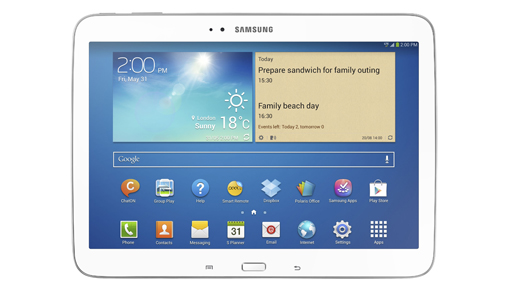
This brought about a flurry of media reports on why Samsung would do such a thing and how this was a backward move, similar to the region locking of DVDs. Concerned users began lamenting that if this was the case, then they cannot swap in a local SIM card when they are travelling to another region.

But, UK Mobile Review has managed to ease nerves by testing this feature of the Galaxy Note 3. After first using a UK SIM card with the handset, the online media was able to use a UAE SIM card later. Seems that the trick is to use a SIM card from the region from which the smartphone is first purchased to activate the phone and then it can be used with SIM cards issued anywhere else.

Samsung rolls out Galaxy Tab 3 (10.1-inch) with LTE in Singapore

Galaxy Tab 3 10.1 with LTEJust when you thought that the Galaxy line-up was packed, Samsung has unleashed yet another model — the Galaxy Tab 3 (10.1-inch) with LTE in Singapore.

Offering an expanded range of options along with previously announced 7-inch and 8-inch versions, the Galaxy Tab 3 (10.1-inch) with LTE is packed with enhanced content and intuitive design for viewing or sharing content.

Stacked with a 1.6 GHz Dual Core processor, it features a comprehensive suite of video, music, and photo software, making it ideal for mobile entertainment.

Local smartphone makers best Apple in China market

abi researchTo most people around the world, Coolpad, Lenovo and Xiaomi don’t quite ring a bell when it comes to smartphones. But, in China, these three Chinese smartphone OEMs outsold Apple in Q2, according to ABI Research.

Only Samsung managed to hold its own but snaring a 17 percent market share. Lenovo was next with 13 percent, Coolpad with 10 percent and Xiaomi edged out Apple with 6.5 percent.

“Even though these OEMs are only selling into the Chinese market, the size of the market has allowed them to achieve shipment volumes that place these OEMs in the top 12 globally. It is not hard to imagine these OEMs as global competitors within the next two years,” said Michael Morgan, Senior Analyst of ABI Research.

Samsung Galaxy Note 3 available in HK on Sep 25

Galaxy Note 3The much awaited Samsung Galaxy Note 3 will be available in Hong Kong on September 25. Coming in black and white, the suggested retail price of the 3G and 4G LTE versions are HK$5,998 andHK$6,198 respectively.

The phablet packs innovative features where users can enjoy captivating viewing experience on the 5.7-inch full HD Super AMOLDED screen that offers a stunning and divine viewing experience with a clear canvas for content creation. It also comes with an enhanced S Pen and multitasking features.

“Some people may often feel that the latest gadgets out there offer a contradicting feeling to our users because while you’re very engaged with your product, you tend to neglect the things around you. With the latest Galaxy Note 3, you will be able to enjoy a delightful mobile experience that brings passion to life,” said Yiyin Zhou, Director of Telecom Business, Samsung Electronics Hong Kong Limited.

Asian brands boost APAC smartphone shipment

IDC APEJ Q2 smartphone
Source: IDC

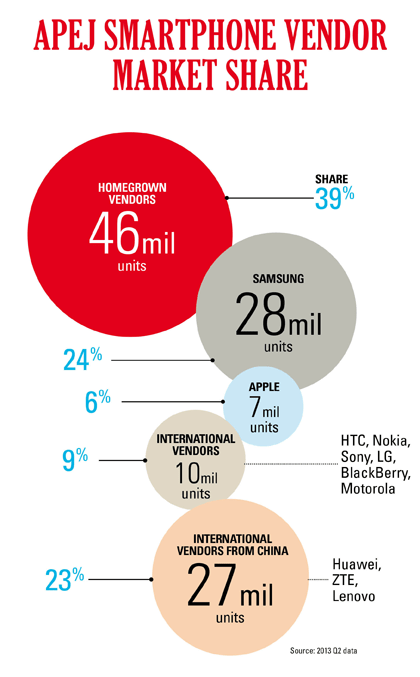
Homegrown brands are gaining more market share in the Asia-Pacific (excluding Japan) (APEJ) smartphone market. While Samsung continues to lead the smartphone pack, Apple fell out of the top five in the region for the first time. Chinese players — Lenovo, Coolpad, Huawei and ZTE — all outshipped Apple in the Q2, according to the IDC Asia/Pacific Quarterly Mobile Phone Tracker.

Aside from the top-tier international brands or Chinese brands that also ship globally such as Huawei and ZTE, there is also a rising segment of homegrown brands, which as a group have been steadily rising in shipments and prominence. This group of players comprised 38 percent of Q2 volume, up from 20 percent in the same quarter of 2012, and 7 percent in Q2 2011.
“There is clearly a market maturity story at play here, where the trends could not be more different between mature markets and emerging markets,” said Melissa Chau, Senior Research Manager with IDC AP’s Client Devices team. “Seasonally, second quarter usually shows an uptick in mature markets, but this round shipments dropped by 12 percent quarter-on-quarter, while emerging markets increased by 13 percent.

Samsung tops ABI Research’s tablet competitive assessment

abi researchKorean giant Samsung has nudged aside all competition in ABI Research’s assessment of 19 top tablets.

The  competitive assessment ranked companies on several criteria related to both product implementation and vendor innovation.

Samsung bested all other tablet vendors in the innovation category while scoring second overall in the implementation category. Clearly king of the hill when it comes to tablet shipment volumes, Apple trailed Samsung on tablet Innovation landing in second.

Tablets fail to lift flat PC market in Q2

Tablet shipment’s growth 42.9 percent iwas not enough to lift a sluggish PC market in Q2. Desktop and notebook shipments fell 7.4 percent and 13.9 percent respectively, according to Canalys, which believes that tablets will outsell notebooks by Q4.

PC shipment in the Asia Pacific region declined 0.5 percent year-on-year to just over 40 million units. The region was badly affected by slow shipment in China, which accounted for almost 45 percent of the region’s shipment and declined by about six percent.

Demand for smartphones and tablets is increasing around the world. Faced by an industry in transition, channel partners are exercising caution when planning and placing orders.

Samsung dominates almost every device price point

abi researchSamsung has a device for every price point, giving it leadership in all, bar one category — the high end where it faces Apple.

According to ABI Research’s Device Portal sales channel analysis, the balance of power remains with Samsung/Android and Apple and looks set to remain so in the foreseeable future.

“This leaves little room for the other vendors to compete, especially the other Android vendors and those using uncompetitive operating system ecosystems. Despite some carrier’s efforts to create a more balanced smartphone device vendor industry with their use of subsidy, ultimately they are obliged to fulfill consumer demand and at the moment that means Samsung/Android and Apple,” said Nick Spencer, Senior Practice Director of ABI Research.

Samsung expands ATIV lineup

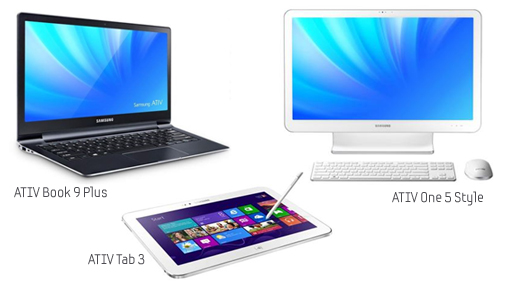
Samsung Ativ SeriesSamsung has boosted its ATIV lineup with four new Windows 8 devices — ATIV Book 9 Plus and ATIV Book 9 Lite notebooks, ATIV Tab 3 tablet and ATIV One 5 Style all-in-one desktop PC.

Also introduced is a new feature called HomeSync Lite, which transforms the PC’s hard drive into a personal cloud server. HomeSync Lite lets users to backup their personal files, photos and videos from portable devices to PCs and access them remotely via a mobile device anytime, anywhere.

The ATIV Book 9 Plus is the next generation of the ATIV Book 9, which is ultra thin and light. Its aluminium, uni-body design features several enhancements from the previous model, including a Windows 8 optimised touchscreen to give users a choice of inputs and a panel that flips 180 degrees so that users can change or share their perspective easily. The notebook will be available in mineral ash black from Q4 at major consumer electronics and IT stores and Samsung Experience Stores.

Android-based tablets outship iPads in Q2

Three in 10 PC shipped in Q2 were tablets. According to Canalys, more than 34 million tablets were shipped in Q2, a 43 percent year-on-year increase. Even more impressive is the fact that tablets now account for 31 percent of worldwide PC shipments.

The charge is led by Android-based tablets as Apple’s tablet shipments declined 14 percent in Q2 and saw its market share shaved to 43 percent. The chasing pack of Samsung, Amazon, Lenovo, and Acer each grew annually by over 200 percent, driven by increasing demand for small-screen tablets.

Canalys estimates that 68 percent of tablets shipped in Q2 had a screen size smaller than nine inches. “Consumers have been evaluating tablets and the results are now in,” said Tim Coulling, Senior Analyst at Canalys . “With touchscreens contributing to a high proportion of the build cost of a tablet, small-screen products can be priced very aggressively.”

Global printing dips but APeJ bucks trend

IDCWorldwide page volume from digital hardcopy devices has dipped to 2.98 trillion in 2012 from 3.03 trillion in 2011, a decline of 1.5 percent year over year, according to IDC.

However, in spite of the decline, the world continues to print at a good clip. Developed countries continued their negative page growth trend, driven by digital workflows, adoption of managed print services (MPS) and anemic economies. The silver lining for print volume in developed economies appears to be net new incremental pages from mobile devices.

While it may seem counter intuitive, smartphone and tablet users are generating more print volume compared to non-tablet/smartphone users.

Global mobile phone market up 6% in Q2

IDCDemand for mobile phones continue to grow. In Q2, the worldwide mobile phone market grew six percent year over year, according to the IDC Worldwide Quarterly Mobile Phone Tracker.

Vendors shipped a total of 432.1 million mobile phones in Q2 compared to 407.7 million units in the corresponding quarter of 2012. The Q2 total was also slightly higher than the 428.8 million units shipped in Q1.

The growth in the mobile phone market was partly driven by vendors from outside the Top 5 who experienced torrid shipment growth that outpaced the overall market. Several vendors, including Alcatel and Huawei, had high double- and triple-digit growth rates in Q2 for their Android-based offerings shipped to high-growth countries such as China and India. These vendors from outside the Top 5 accounted for 44.8 percent of the overall shipment volume, up from 42.2 percent in the same quarter one year ago.

Sensors and gesture recognition are major smartphone differentiators

abi researchAccelerometers, vision-based gesture recognition, gyroscopes, and NFC are predicted to be the feature set big winners in smartphones in 2013, according to ABI Research.

“Gesture recognition is soon going to become a key differentiator in high-end flagship smartphones. Samsung’s latest Galaxy S4 has already incorporated the technology within its handset and has received significant plaudits for its new innovative user experience. Today’s consumers are becoming much savvier with their smartphones and they’re looking for new interesting ways to communicate with each other and their devices,” said Joshua Flood, Senior Analyst of ABI Research.

In 2013, almost 12 percent of smartphones shipped will have vision-based gesture recognition capabilities. It is unsure if Apple will include the technology in its next generation iPhone but the company is expected to include a full array of MEMS sensors and NFC.

Smart watches poised to take off in 2014

CanalysFancy a new accessory? How about a smart watch? It looks like smart watches are going to be the next “must have” item. According to Canalys, the worldwide smart watch market will exceed five million units in 2014.

Canalys estimates that over 330,000 smart watches were shipped in 2012, led by Sony and Motorola. Kickstarter-backed Pebble Technology has joined Sony as a market leader in 2013. More than half a million units will be shipped this year. Smart watches are then set to explode by the end of 2014, growing tenfold as a new generation of devices from Apple, Google, Microsoft, Samsung, and others are launched.

Unlike earlier products, these smart watches will provide more sophisticated software and more elegant hardware. Glanceable information, integration across sensors and hooks into web services will be key features. These companion devices will not replace smart phones, but rather complement them as ‘appcessories’.

Samsung Galaxy S4 Active with LTE available for S$898 from July 13

samsung galaxy s4 active with lteYet another iteration of the Samsung Galaxy S4 will be making its debut in Singapore on Saturday. The Galaxy S4 Active with LTE is designed for active users who want to stay connected while exploring environments from the most rugged mountain trails to the roughest rivers.

Priced at S$898 without contract, the phone has qualified protection from dust and water (IP67),  keeping dust particles out and protecting against water damage for up to 30 minutes of submergence at a depth of one metre. Equipped with a water-resistant earphone jack, the GALAXY S4 ACTIVE With LTE frees you to use earphones above water when the phone is wet or in water. 

“The Galaxy S4 Active with LTE is a new addition to the Galaxy series and is purposefully designed for active users who love the outdoors,” said Irene Ng, Vice President, Marketing, Samsung Asia Pte Ltd. “Samsung has taken the innovative features of the Galaxy S4 and added breakthrough protective design elements to create a device that thrives in an active environment and is built for a lifestyle of travel and exploration.”

Samsung launches Galaxy S4 mini with LTE in Singapore

Galaxy S4 miniLike the Samsung Galaxy S4 but prefer a smaller form factor? The good news is that Samsung has launched the Samsung Galaxy S4 mini with LTE, a compact version of its flagship Galaxy S4 smartphone.

Priced at S$698 without contract, the phone will be available in two colours — white frost and black mist — from July 6.

With a 4.3-inch qHD SUPER AMOLED display, 107g lightweight and compact design, it is easy to carry and operate with one hand. Though compact, the Galaxy S4 mini with LTE boasts a 1.7GHz dual core processor that allows users to quickly and easily perform data intensive tasks.

Thailand’s PC market declines 20% in Q1

IDCSluggish demand in Thailand’s consumer market helped drive PC shipment down 20 percent in Q1, compared to the same period last year.

According to IDC’s Asia/Pacific Quarterly PC Tracker, PC shipment reached only 800,000 units in Q1.

“Channel partners reacted quickly to the slowdown by reducing PC buy-in to make room for faster-moving devices like tablets” said Jarit Sidhu, Market Analyst for Client Devices Research at IDC Thailand. 

New Samsung Galaxy S4 model comes with 10x optical zoom

Samsung Galaxy S4 ZoomSamsung Electronics has released yet another model of its flagship Galaxy S4 smartphone. The Samsung Galaxy S4 zoom is positioned as a smartphone with the capabilities of a high-end compact camera.

Packed with 10x optical zoom, 16MP CMOS sensor, optical image stabiliser (OIS), and Xenon Flash, the Galaxy S4 zoom aims to enhance the mobile photography experience.

“As communication continues to become increasingly visual in nature, people wish to capture and share their moments in the highest quality possible, but often do not have the space or inclination to carry a dedicated camera for this purpose. The GALAXY S4 zoom changes this forever, combining the industry leading functionality and connectivity of the GALAXY S4 with the high quality photographic experience you’d expect from a compact camera,” said JK Shin, President and CEO, Head of IT & Mobile Communications Division, Samsung Electronics. 

Android and Windows tablets picking up steam in ANZ

IDCThe ANZ tablets market grew a phenomenal 147 percent year-on-year in Q1, bringing the total market size up to 1.14 million units, according to IDC. This tremendous growth was due to increased demand of smaller, cheaper Android tablets, as well as Windows tablets.

“Users now have better access to a wide range of low to high-end tablets as well as different operating systems compared to last year. In 2012, an user would usually choose between an Apple iPad or a Samsung Galaxy Tab but now, a year later, brands like ASUS, Acer and Microsoft would also appear on the user’s radar,” said Suzanne Tai, Associate Market Analyst of IDC’s ANZ Infrastructure Research Group. “Whitebox tablets have picked up significantly as well, driven with heavy promotions by retailers such as Aldi, Harvey Norman, K-Mart, and Warehouse Stationary.”

“Android is growing its foothold in the marketplace, thanks to Samsung’s aggressiveness with promotions and channel strategies, as well as the influx of whitebox tablets. Additionally, Windows tablets are also gaining traction with entry of new models, pilot rollouts and implementations in commercial sector especially in education.”