

When a user gets a meeting invitation, the options are “Yes”, “No” or “Maybe”. Google has gone one up by adding “Propose a new time”, which lets users reschedule a meeting on Google Calendar.
When a user gets a meeting invitation, the options are “Yes”, “No” or “Maybe”. Google has gone one up by adding “Propose a new time”, which lets users reschedule a meeting on Google Calendar.
 Amazon Prime Day is still going strong and racking up tons of sales despite an outage that prevented some customers in North America from accessing the website and the app, and a strike by workers in Spain.
 A global line-up of artificial intelligence (AI) experts will be heading to Sydney to speak at the NVIDIA AI Conference. Researchers and developers will also get training from the NVIDIA Deep Learning Institute (DLI) during the event.
Machine learning and deep learning are two expressions of artificial intelligence (AI) that have been widely written about. But, another approach to AI called reinforcement learning is coming to the fore. One of the first applications of reinforcement learning is in training AI bots to beat humans in the highly popular game Defense of the Ancients 2 (Dota 2).
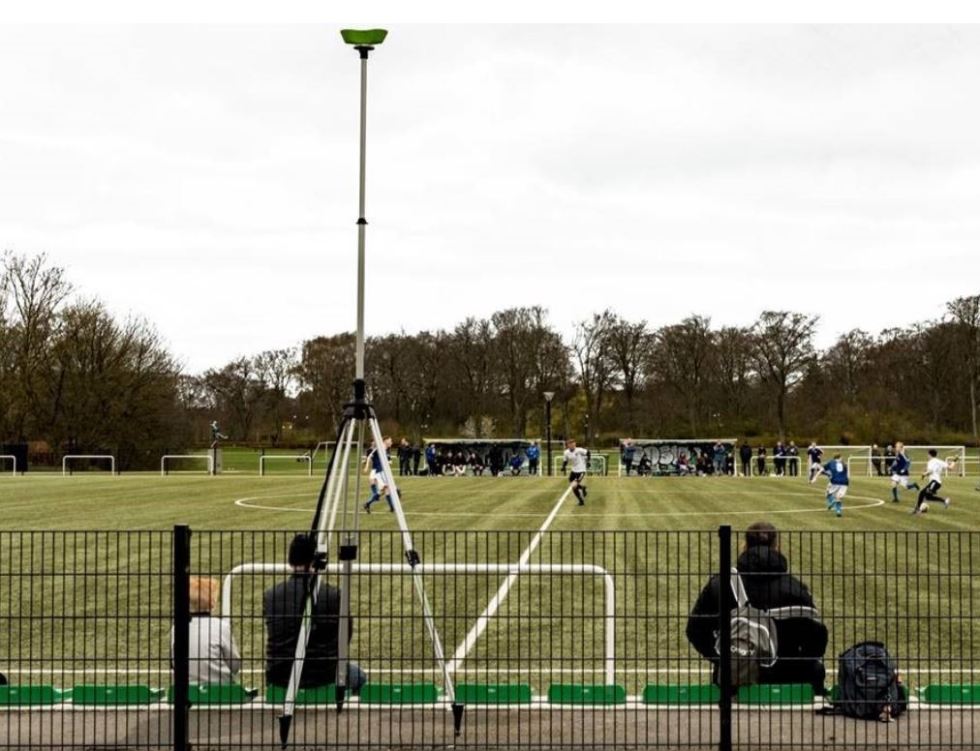 With World Cup fever in full force right now, many budding players are hoping for the day when they could be under the global spotlight. Well, a little help from artificial technology (AI) may help take them a step closer.

By Edward Lim
Computex seems to have mellowed down over the years. While the show floor used to be filled with booth girls and exhibitors literally pushing bags and tchoichke in the past, this is no longer the case.
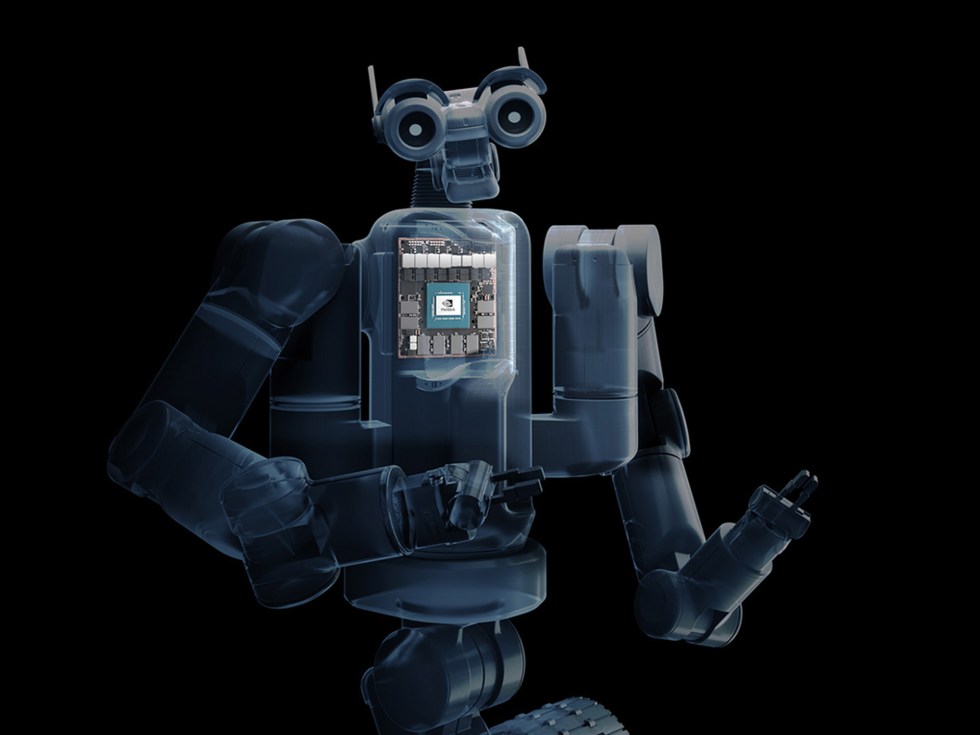
NVIDIA has announced the availability of NVIDIA Isaac, a new platform to power the next generation of autonomous machines, bringing artificial intelligence (AI) capabilities to robots for manufacturing, logistics, agriculture, construction, and many other industries.
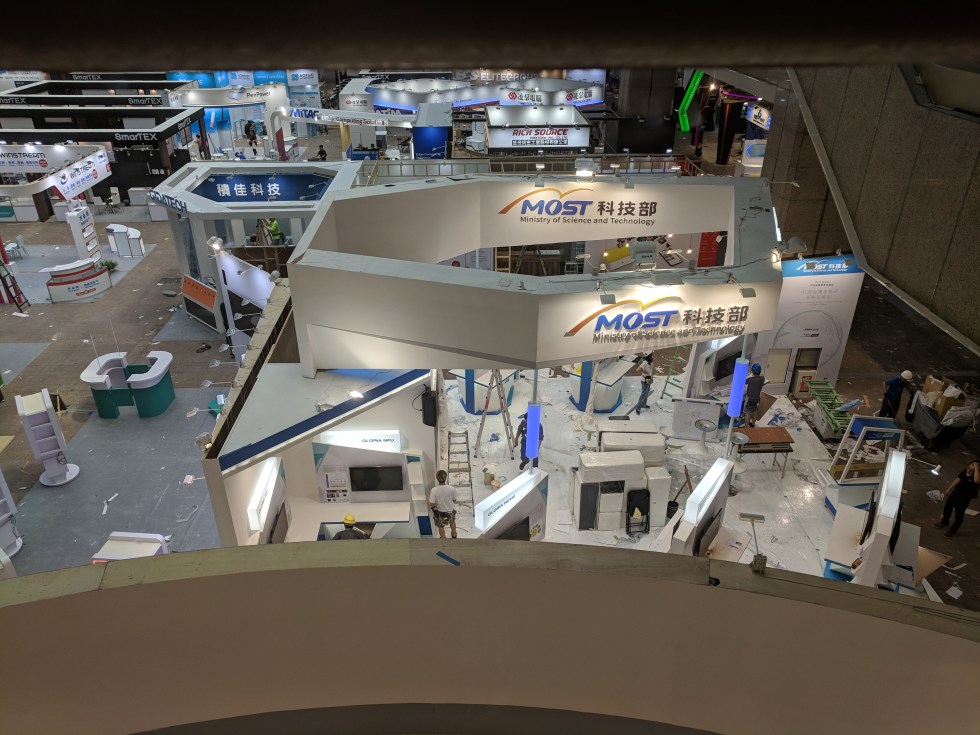
Taiwan is going big on artificial intelligence (AI) and its Ministry of Science and Technology (MOST) will be collaborating with NVIDIA on AI initiatives.
 As a prelude to Computex Taipei next week, co-organiser Taipei Computer Association (TCA) has announced 35 winners of the 17th Best Choice Award (BC Award).
 NVIDIA has introduced the NVIDIA HGX-2, the first unified computing platform for both artificial intelligence (AI) and high performance computing (HPC).
 Go-Jek will be heading to the Philippines, Singapore, Thailand, and Vietnam in the next few months.
 NVIDIA researchers have demonstrated how robots can be trained to observe and repeat human actions — a “first of its kind” capability powered by deep learning.
 Dubbed “the brains behind the bots”, NVIDIA researchers will be heading to the International Conference on Robotics and Automation (ICRA) at Brisbane Convention and Exhibition Centre in Australia from May 21 to 25.
 The Uber app will officially cease in Southeast Asia (SEA) on May 8, 2018. This follows the acquisition of its SEA business by rival Grab in March.
 Security is a major concern in airports, government buildings and major infrastructures around the world. Governments need to be able to quickly identify potential threats among the many people that enter and exit their countries daily. An effective facial recognition system is critical in safeguarding the country and critical infrastructures.
 What does a fraudulent insurance claim and eye problem have in common? Well, both can be identified, thanks to powerful NVIDIA GPUs deployed by AIDA Technologies, a Singapore-based artificial intelligence (AI) startup which began in 2016.
 With the global gaming market expected to touch US$128.5 billion in 2020, this year’s Computex will have gaming and virtual reality (VR) as a focus area, alongside artificial intelligence (AI), 5G, blockchain, Internet of Things, and innovations and startups.
 Razer has teamed up with Lazada to put its newly-launched Razer Game Store on the e-commerce platform for Southeast Asia.
 Shenzhen-based Doogee is not one for the humdrum. While most other smartphones sport mostly similar technologies, this maker has decided to go for the different feel with four new phones — the transparent Doogee TT, flip camera Mix 3, slide phone Mix 4, and flexible screen phone.
 Spotify made its debut on the New York Stock Exchange and closed the first day at US$26.5 billion, about 30 percent above analysts’ prediction.
Leading music streaming site Spotify will be listed on the New York Stock Exchange today (New York time).
 NVIDIA pulled a fast one on the media with the announcement of the GeForce Academy of Gaming over the weekend.
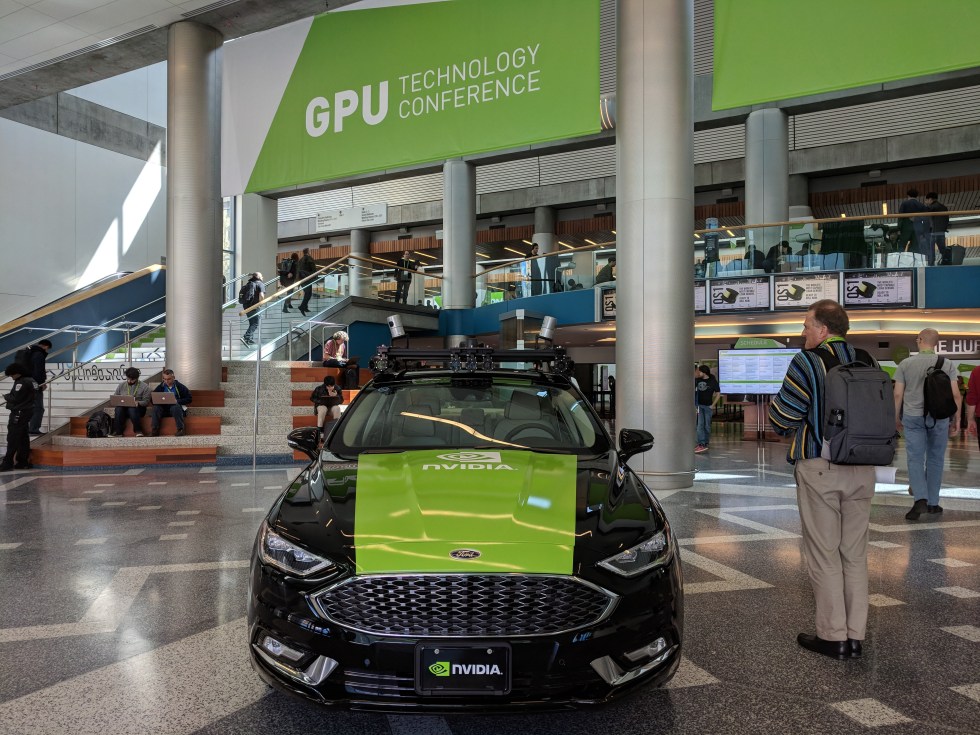 A number of self-driving cars sporting NVIDIA’s autonomous driving technologies were present at GPU Technology Conference in San Jose this week. However, none was available for a test drive — a sensible move by NVIDIA in the light of the fatal Uber self-driving car accident the week before.
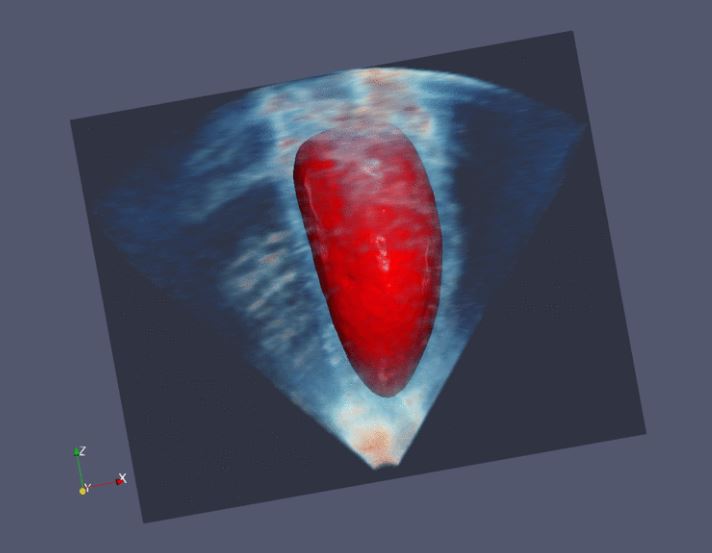 One of the most eye-catching demo during NVIDIA CEO Jensen Huang’s keynote address at GTC 2018 is Project Clara.

NVIDIA CEO Jensen Huang (above) dubbed it the “world’s biggest GPU”. And he certainly wasn’t kidding as the NVIDIA DGX-2 is a massive 350-pounder that delivers an amazing two petaflops of computational power.

The GPU Technology Conference (GTC) has hit new highs with a record of more than 8,000 participants, and filling the entire San Jose McEnery Convention Center.
 The telecommunications industry, specifically mobile communications, is converging in Barcelona this week. Even before Mobile World Congress (MWC) kicks off today, two companies have fired the first salvo with something old, something new.
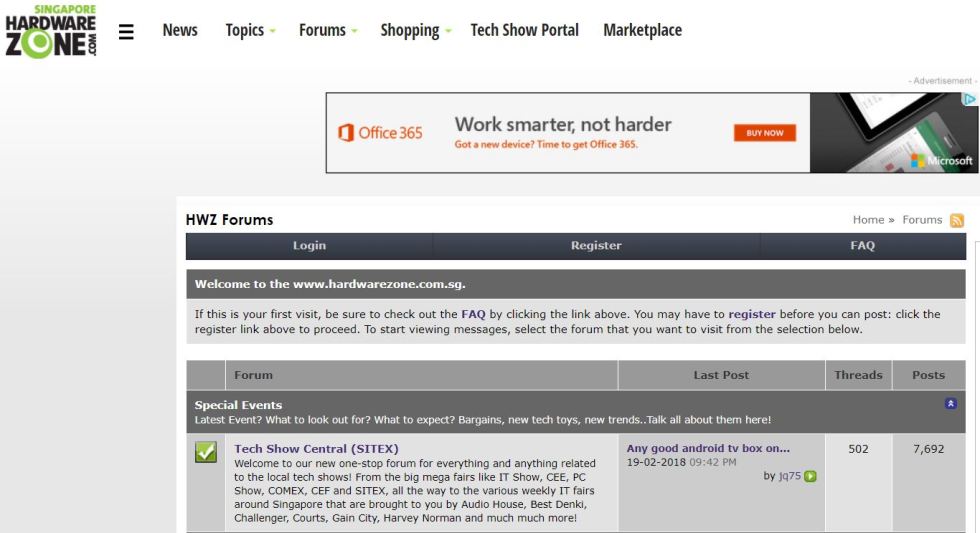 Hardwarezone (HWZ), a leading technology website and forum in Southeast Asia, was hacked with data of 685,000 registered users compromised.

Marina Bay Sands Expo and Convention Centre was a hive of activities of a different sort as more than 700 technologists from 21 countries converged for EmTech Asia on January 30 and 31.

In a week where the world’s eyes were supposed to be focusing on the exciting new gadgets and technologies coming out at CES 2018, it was news from past technologies that had the world reeling.

Keysight Technologies and Singapore University of Technology and Design (SUTD) have inked a Memorandum of Understanding (MOU) for research collaboration and opened the new Measurement Technologies Laboratory.
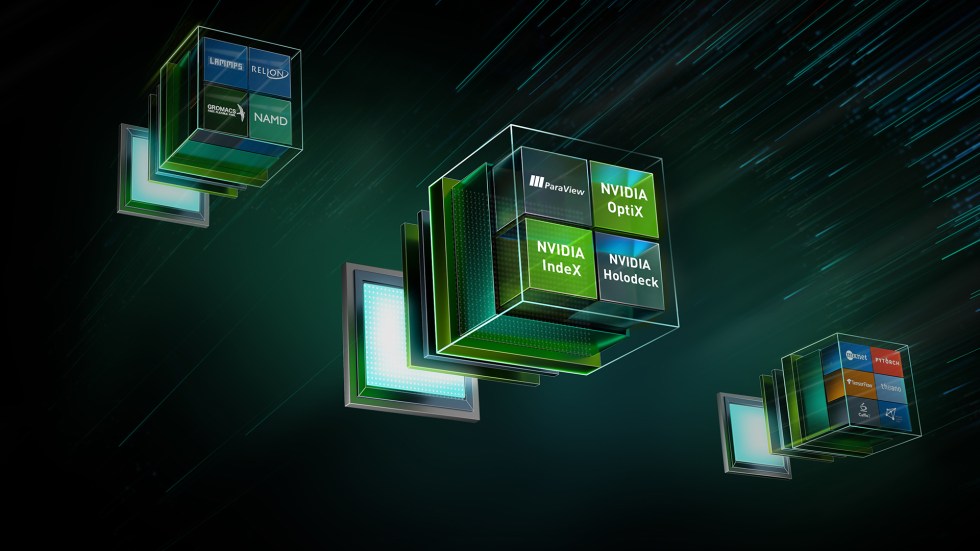
NVIDIA’s Volta architecture is leaving quite an impression. According to a NVIDIA press release issued at SC17, the Volta-based NVIDIA Tesla V100 GPU is available through every major computer maker and chosen by every major cloud to deliver artificial intelligence (AI) and high performance computing.
 Entelechy Asia turns five today. So much has changed since we launched in November 2012.
 An Asean scholar disgruntled with his grades hacked his professor’s account to bump himself from B to A-. The Singapore Management University (SMU) student was soon found out and will be spending four months in prison reflecting on his folly.
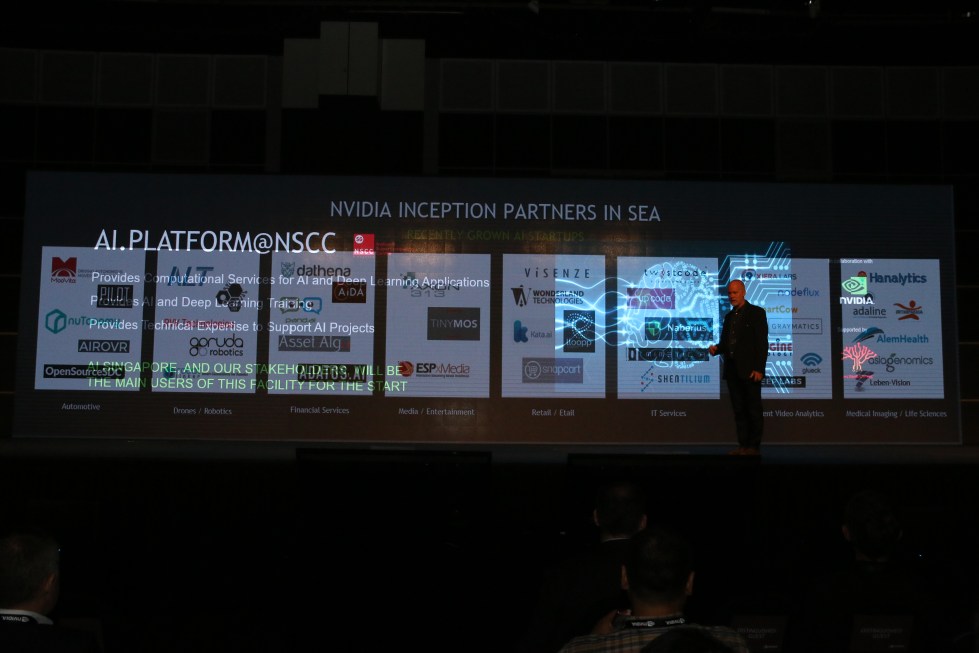
Singapore’s aim to be an artificial intelligence (AI) hub has been boosted with two initiatives — the setting up of a shared AI platform for researchers and the awarding of scholarships to develop AI talents.
At the NVIDIA AI Conference in Singapore yesterday, NVIDIA and Singapore’s National Supercomputing Centre (NSCC) agreed to establish a platform to bolster AI capabilities among its academic, research and industry stakeholders and in support of AI Singapore (AISG), a national programme set up in May to drive AI adoption, research and innovation in Singapore.
Called AI.Platform@NSCC, it will provide AI training, technical expertise and computing services to AISG, which brings together all Singapore-based research and tertiary institutions, including the National University of Singapore (NUS), Nanyang Technological University (NTU), Singapore University of Design and Technology (SUTD), Singapore Management University (SMU), as well as research institutions in the Agency for Science, Technology and Research (A*STAR).
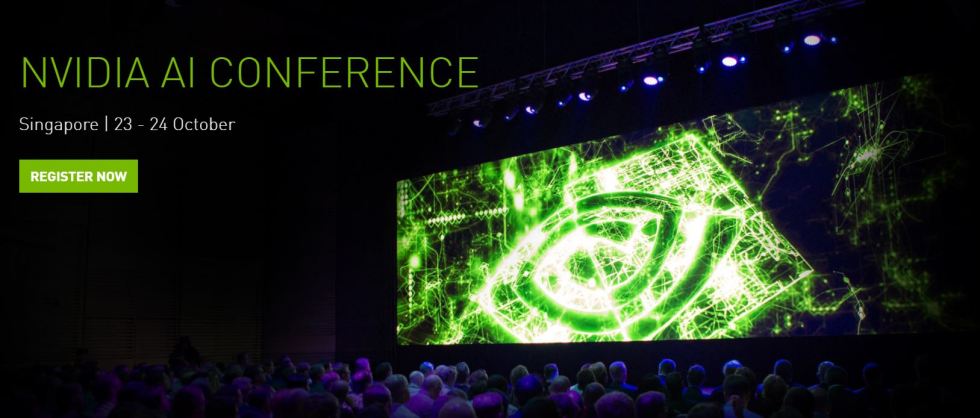 More than 1,000 participants attending the NVIDIA AI Conference in Singapore next week are in for a treat as the organisers are bringing in a tantalising line-up of speakers.
The two keynote speakers are Dr David B Kirk, NVIDIA Fellow and inventor of more than 60 patents and patent applications relating to graphics design; and Dr Wanli Min, AI scientist of Alibaba Cloud, who will touch on A Revolutionary Road to Data Intelligence.
Besides these two, there are special guest-of-honour Chng Kai Fong, Managing Director of Singapore’s Economic Development Board, and a panel discussion on AI for the Future of Singapore Economy.
 No steering wheels, pedals or mirrors. Sounds like science fiction but the fully autonomous robotaxi is on its way with the launch of a new system that NVIDIA has codenamed Pegasus.
Pegasus extends the NVIDIA Drive PX AI computing platform to handle Level 5 driverless vehicles. NVIDIA DRIVE PX Pegasus delivers over 320 trillion operations per second — more than 10 times the performance of its predecessor, NVIDIA DRIVE PX 2, announced Jensen Huang, Founder and CEO of NVIDIA at his keynote address at GTC Europe in Munich.
Robotaxis powered by NVIDIA DRIVE PX Pegasus will have interiors that feel like a living room and arrive on demand to safely whisk passengers to their destinations, bringing mobility to everyone, including the elderly and disabled.
 China’s top technology companies are betting big on the NVIDIA Volta platform.
Alibaba Cloud, Baidu, and Tencent are incorporating NVIDIA Tesla V100 GPU accelerators into their data centres and cloud-service infrastructures to accelerate AI for a broad range of enterprise and consumer applications.
At the heart of the new Volta-based systems is the NVIDIA V100 data centre GPU. Built with 21 billion transistors, it provides a 5x improvement over the preceding NVIDIA Pascal architecture P100 GPU accelerators, while delivering the equivalent performance of 100 CPUs for deep learning. This performance surpasses by 4x the improvements that Moore’s law would have predicted over the same period of time.
Inspur, Lenovo and Huawei are using the NVIDIA HGX reference architecture to offer Volta-based accelerated systems for hyperscale data centres. Using HGX as a starter “recipe,” original equipment manufacturer and original design manufacturer partners can work with NVIDIA to more quickly design and bring to market a wide range of qualified GPU-accelerated AI systems for hyperscale data centres to meet the industry’s growing demand for AI cloud computing.
 With artificial intelligence (AI) being a hot topic this year, NVIDIA is organising its first AI-focused regional conference in Singapore on October 23 and 24.
The event will be held in two parts with the first day focusing on Deep Learning Institute (DLI) workshop where participants will received hands-on training on deep learningl and the second day filled with keynote addresses, panel discussion and three tracks. It is targeted at data scientists and senior decision makers in the field of AI in both public and private sectors.
“Singapore is aiming to be the world’s first smart nation and AI is playing a critical role. NVIDIA is well positioned to help drive the government’s Smart Nation initiative with the development of solutions based on AI. Our GPUs are making headlines across the world by enabling many breakthroughs in various industries using deep learning,” said Raymond Teh, Vice President of APAC sales and marketing at NVIDIA.
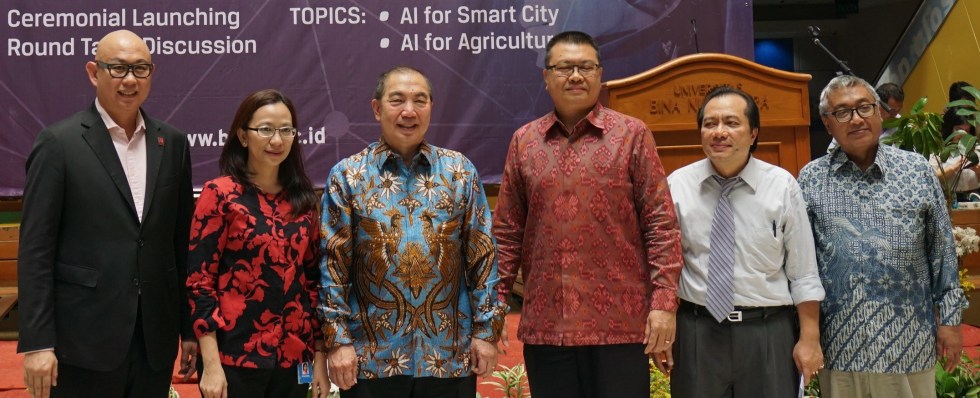
NVIDIA has teamed up with BINUS University and Kinetica to establish the first artificial intelligence (AI) research and development (R&D) centre in Indonesia.
Located at the university’s Anggrek Campus, the centre will support BINUS University’s aim to be the premier R&D hub for Al in Indonesia. Leveraging the power of NVIDIA’s GPUs, it will be a showcase of the commercial potential of GPU-accelerated deep learning applications.
“Today, we stand at the beginning of the AI computing era, ignited by a new computing model, GPU deep learning. This new model — where deep neural networks are trained to recognise patterns from massive amounts of data — has proven to be ‘unreasonably’ effective at solving some of the most complex problems in computer science. In this era, software writes itself and machines learn. Soon, hundreds of billions of devices will be infused with intelligence. AI will revolutionise every industry. NVIDIA provides the products and solutions to power this revolution,” said Raymond Teh, Vice President of APAC Sales and Marketing of NVIDIA.
 “I’m amazed at the quality of the papers presented. The project teams’ line of thinking and breakthrough concepts are refreshing,” exclaimed a leading artificial intelligence (AI) scientist at the International Conference on Machine Learning (ICML) in Sydney.
International Convention Centre Sydney was a massive hive of activities as 3,000 of the world’s top researchers, developers and students in AI gathered for ICML. The participants moved rapidly from one workshop to another and took great interest in the exhibition booths of top deep learning proponents such as NVIDIA, Google and Facebook.
With so many bright young talents. the event proved to be a good fishing ground for vendors as they held recruitment interviews at their booths, as well as posted openings on the board.
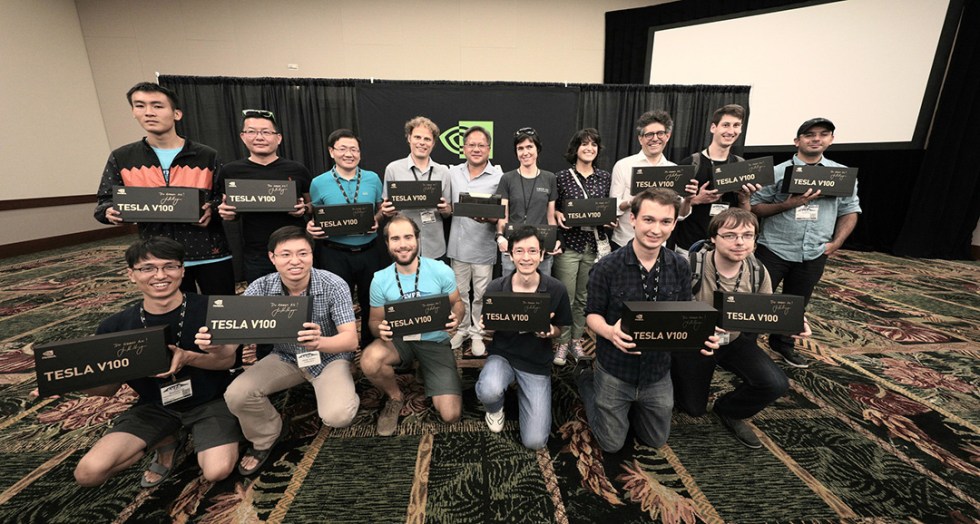
Fifteen top AI research institutions of the NVIDIA AI Labs programmes were each presented with the Volta-based NVIDIA Tesla V100 GPU accelerator.
They were participating in Computer Vision and Pattern Recognition (CVPR) conference in Honolulu.
“AI is the most powerful technology force that we have ever known. I’ve seen everything. I’ve seen the coming and going of the client-server revolution. I’ve seen the coming and going of the PC revolution. Absolutely nothing compares,” said Jensen Huang, CEO of NVIDIA.
 NVIDIA is bringing its wealth of artificial intelligence (AI) solutions and expertise to the International Conference on Machine Learning (ICML) in Sydney.
Held at Sydney International Convention Centre from August 6 to 11, the event is expected to attract up to 3,000 participants, primarily faculty, researchers and PhD students in machine learning, data science, data mining, AI, statistics, and related fields.
The NVIDIA booth (Level 2, The Gallery, Booth #4) will feature many firsts in Australia, such as demos on 4K style transfer, a deep neural network to extract a specific artistic style from a source painting, and then synthesises this information with the content of a separate video; self-driving auto using the Drive PX2 AI car computing platform; Deepstream SDK that simplifies development of high performance video analytics applications powered by deep learning; and NVIDIA Isaac, the AI-based software platform lets developers train virtual robots using detailed and highly realistic test scenarios.
 At the inaugural Audi Summit in Spain, Audi revealed that its flagship 2018 A8 features a multitude of high-tech wizardry powered by NVIDIA.
“The car of the future will make its occupants’ life easier with the help of artificial intelligence (AI),” declared Rupert Stadler, Chairman of the Board of Audi, as he introduced such A8 features as Audi AI Traffic Jam Pilot, Remote Park Pilot, Natural Voice Control and Swarm Intelligence.
The A8 is packed with NVIDIA powered systems, including revolutionary new user interfaces, a new infotainment system, a new virtual cockpit, and new rear seat entertainment options.
 NVIDIA is investing in Deep Instinct, an Israeli-based startup that uses deep learning to thwart cyber attacks.
Deep Instinct uses a GPU-based neural network and CUDA to achieve 99 percent detection rates, compared with about 80 percent detection from conventional cyber security software. Its software can automatically detect and defeat the most advanced cyber attacks.
“Deep Instinct is an emerging leader in applying GPU-powered AI through deep learning to address cybersecurity, a field ripe for disruption as enterprise customers migrate away from traditional solutions. We’re excited to work together with Deep Instinct to advance this important field,” said Jeff Herbst, Vice President of Business Development of NVIDIA.
 Volvo Cars and Autoliv are teaming up with NVIDIA to develop advanced systems and software for AI self-driving cars. The three companies will work together along with Zenuity — a newly-formed automotive software development joint venture equally owned by Volvo Cars and Autoliv — to develop next-generation self-driving car technologies.
Production vehicles built on the NVIDIA DRIVE PX car computing platform are planned for sale by 2021.
“Artificial intelligence (AI) is the essential tool for solving the incredibly demanding challenge of autonomous driving. We are building on our earlier collaboration with Volvo to create production vehicles that will make driving safer, lead to greener cities and reduce congestion on our roads,” said Jensen Huang, Founder and CEO of NVIDIA, at a keynote address at Automobil Elektronik Kongress.
 At the keynote of NVIDIA AI Forum, NVIDIA CEO and Founder Jensen Huang called “Taiwan is the home of NVIDIA’s GeForce system”.
Video gaming is a US$100 billion industry and “GeForce PC gaming is the number one platform, nearly 200 million GeForce installed base,” declared Huang.
He announced the new NVIDIA Max-Q platform which lets gaming notebook makers produce faster, slimmer and quieter machines.
The organisers of Computex are certainly very forward planning. Not only are the dates for next year’s event set but it seems that the tagline will remain the same — “Building Global Technology Ecosystems”. Also, […]
Computex, Asia’s biggest technology show and one of the largest in the world, will kick off in Taipei tomorrow and end on June 3. Spread across Taipei World Trade Centre halls in Xinyi District and […]
 Singapore will be focusing on four technology areas to build the foundation for its digital transformation. These are artificial intelligence (AI) and data science, cybersecurity, immersive media, and Internet of Things and future communications infrastructure.
At the opening of Infocomm Media Business Exchange at Marina Bay Sands Singapore Convention Centre, Minister for Communications and Information Dr Yaacob Ibrahim noted that “they are exciting fields with bright prospects in their own right, and they have great potential to transform other industries and enhance people’s lives”.
Artificial Intelligence and Data Science
The nation has established AI.SG, a national programme with funding of up to S$150 million to boost Singapore’s AI capabilities.
 The keynote address at Google I/O yesterday showed that Google is much more than just a search company. It is becoming more artificial intelligence (AI). Google is specifically using deep learning to help in many areas of everyday life.
Here are some as shared on Google’s blog post:
Google Assistant can help answer your questions and find information—but it can also help you get all kinds of useful things done. Today we’re adding a few more:
- Schedule new calendar appointments and create reminders. Starting today on Google Home, you can schedule appointments and soon you’ll also be able to add reminders. Since it’s the same Google Assistant across devices, you’ll be able to get a reminder at home or on the go.
- Make your home smarter. We now have 70+ smart home partners supporting the Google Assistant across Google Home and Android phones, including August locks, TP-Link, Honeywell, Logitech, and LG.
Motorola Solutions has unveiled highly advanced technology solutions to enhance the capabilities of nation-wide public safety networks at Critical Communications World 2017 in Hong Kong. These include mission-critical radio technologies, specialised software, mission critical broadband, command […]
Hundreds of thousands of computers in 150 countries have been hit by the WannaCry ransomware. While users are scampering around trying to fix their computers, the top of mind question is whether this could have […]
As a sign of its coming of age, the GPU Technology Conference (GTC) held annually in San Jose, California since 2009, is no longer a niche event but one that is drawing the who’s who […]

Toyota, one of the world’s largest automakers and renowned for its high standards and priority on safety, has picked NVIDIA Drive PX for its autonomous vehicles. It will use the AI car computer platform to power advanced autonomous driving systems planned for market introduction within the next few years
Engineering teams from the two companies are already developing sophisticated software that will enhance the capabilities of Toyota vehicles, enabling them to better understand the massive volume of data generated by sensors on the car, and to handle the broad spectrum of autonomous driving situations.
“Toyota has worked on autonomous driving technologies for over 20 years with the aim of reducing traffic fatalities to zero as an ultimate goal, achieving smoother traffic, and providing mobility for all. Through this collaboration, we intend to accelerate the development of autonomous driving systems that are even more safe and capable,” said Ken Koibuchi, Executive General Manager of Toyota.

Artificial intelligence (AI) is not new. In fact, it has so many false starts over the past 60 years. The term went into hibernation for a long time.
Research into AI began way back in Dartmouth College in 1956 and was constantly associated with being the next frontier in the 1980s when mainframe computers ruled and supercomputers were a ginormous investment that very few could afford.
Despite the research put in over the years, the technology never quite took off and fell flat in many instances.

NVIDIA has pulled yet another trick out of its always-filled hat of technology goodies with the launch of Volta, the world’s most powerful GPU computing architecture. At his keynote address at GTC in San Jose, NVIDIA CEO Jensen Huang dubbed it “the next level of computer projects”.
Volta is created to drive the next wave of advancement in artificial intelligence (AI) and high performance computing.
The first Volta-based processor is the NVIDIA Tesla V100 data centre GPU, which brings extraordinary speed and scalability for AI inferencing and training, as well as for accelerating HPC and graphics workloads.
By Edward Lim I am attending the GPU Technology Conference (GTC) in San Jose, California this week. It’s a massive conference with more than 7,000 participants from all around the world. After decades of covering and […]

Interest in deep learning is growing so strongly that NVIDIA expects to train 100,000 developers this year — that’s 10 times more than last year —through its Deep Learning Institute (DLI).
According to research firm IDC, 80 percent of all applications will have an artificial intelligence (AI) component by 2020.
Greg Estes, Vice President of Developer Programs at NVIDIA, noted that there is a hunger for deep learning training. He cited the example of a DLI training at India Institute of Technology (IIT) in India where people came at 7.30am to try to sign up for a fully subscribed course.
 Facebook is developing new artificial intelligent (AI) systems to help manage the vast amount of information — such as text, images and videos — generated daily so people can better understand the world and communicate more effectively, even as the volume of information increases.
It has worked with NVIDIA on Caffe2, a new AI deep learning framework that allows developers and researchers to create large-scale distributed training scenarios and build machine learning applications for edge devices.
Providing AI-powered services on mobile is a complex data processing task that must happen within the blink of an eye. Increasingly, the processing of lightning-fast AI services requires GPU-accelerated computing, such as that offered by Facebook’s Big Basin servers, as well as highly optimised deep learning software that can leverage the full capability of the accelerated hardware.
 Entelechy Asia