The Asia Tech Alliance (ATA) is a new industry body dedicated to amplifying the voice of Asia-Pacific’s (APAC) technology sector. It will also champion regional innovation, values and transformative potential. Founded with the support of […]
Google and the government of Malaysia are collaborating on two AI-focused initiatives — to equip Malaysian youth with future-ready AI skills, and enhance public service delivery with the help of cloud-native, AI-driven productivity tools. The […]
Telstra International has teamed up with Google and APTelecom to launch the central Pacific Connect initiative aimed at enhancing connectivity for the Pacific region. The initiative hopes to bridge the digital gap by providing a […]
Students love it. Teachers, maybe, depending on whether they are a user or a marker. ChatGPT has been the talk of the town since its introduction in November. The AI chatbot has transformed the way […]
StarHub is tranforming to boost the delivery, scalability and performance of its services, while reducing costs of operating the network business. Conceptualised by StarHub, the low-latency Cloud Infinity multi-cloud architecture is said to be the […]
Digital Currency Group (DCG) has received more than US$700 million from investors such as GIC, Google’s Capital G and SoftBank, bringing its value to US$10 billion. The parent company of several digital asset players itself […]
Australia’s Fusion Broadband has expanded into Equinix to increase its global footprint and offer customers enhanced performance and more advanced connectivity options. Leveraging the massive global infrastructure of Equinix, which has more than 220 data […]
If you’ve ever wished for a handshake emoji featuring two different skin tones, Google will make your dream come true in 2022. The process to be inclusive in this regard started in November 2019 when […]
Australia has passed the News Media Bargaining Code to get Facebook, Google and other tech platforms to pay Australian publishers for showing their contents in posts and searches. Under the code, Facebook and Google will […]
Facebook has taken the drastic step of blocking publishers and people in Australia from sharing or viewing Australian and international news. This ban is in response to the Australian government’s proposed new Media Bargaining law, […]
NVIDIA’s US$40 billion acquisition of Arm has gotten Google, Microsoft and Qualcomm all worked up. According to reports, the three tech companies have made their concerns known to regulators in China, the European Union, the […]
An unlikely source has helped to revive social media platform Parler, a week after its forced removal by America’s Big Tech firms. Reports suggest that its website is now hosted on Russia’s DDOS Guard. However, […]
Dealt with a killer blow, social media platform Parler has struck back at Amazon Web Services (AWS). It has filed a lawsuit against the cloud computing service provider for violating anti-trust law and breach of […]
Fortnite is set for a return to iOS, thanks to NVIDIA’s GeForce NOW game streaming service. NVIDIA and Epic Games, the maker of Fortnite, are working on bringing the game back to the iOS platform […]
Put a technology giant and luggage bag maker together and voila, here’s the Konnect-I Backpack. Simply put, the backback (or rather two with diffeent designs) is smart and adopt ambient computing to make it intuitive […]

The Apple-Epic Games plot continues to thicken. In the latest development, Apple has cancelled the game developer’s account from App Store.

Travel restrictions and curfews have been devastating Thailand’s 1.3 million small businesses. With international tourism far from being normalised, many are reeling from the effects of COVID-19 and struggling for survival.

Software giant Microsoft has stepped into the ring and taken the side of Epic Games in its fight against Apple. This makes for a more intense legal tussle between Microsoft and Epic at one corner and Apple (and possibly Google) at the other.

Source: Epic Games
A battle royale is hotting up with Apple and Google at one corner and Epic Games in the other. And all over a US$2 problem. Of course, that applies to just one transaction for 1,000 V-Bucks. Imagine the quantum when that is multiplied by millions of Fortnite users? The amount is staggering and that’s why the two giants are standing their ground against the mega game company.

Google will be investing US$10 billion in the Google for India Digitization Fund for the next five to seven years.
OpenSynergy has embarked on a year-long collaboration with Google and Qualcomm on a reference platform with a virtualised Android Automotive OS instance running on top of OpenSynergy’s COQOS Hypervisor SDK and Qualcomm’s Snapdragon SA8155 automotive System on Chip (SoC).
All advertisers on Google will have to show proof of identity and where they operate from as part of the search giant’s move towards greater transparency to users.

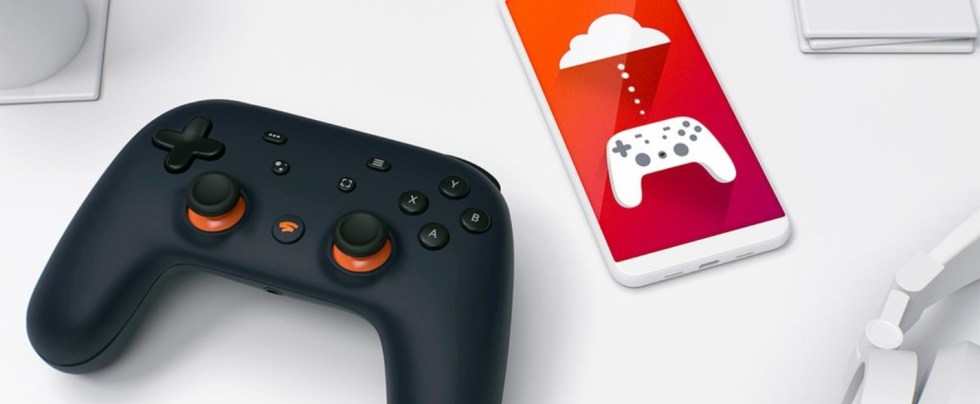
Source: GoogleMore people staying at or working from home during this COVID-19 period are turning to gaming as a source of entertainment or to get some respite. And now they can enjoy free access to Google’s paid cloud gaming platform Stadia Pro for two months.
It’s been a month of event cancellations due to COVID-19. NVIDIA has pulled the plug on the annual GPU Technology Conference (GTC) in San Jose and taking the show online. Just how much of the event will be held online is yet to be known but the definite go ahead is the keynote address by NVIDIA CEO Jensen Huang.
Netscape used to be the king of browsers in the 1990s until Microsoft came along and bundled Internet Explorer from Windows 95. This swayed many PC users to the Microsoft browser and marked the demise of Netscape.

The tiny chip uses quantum communication algorithms for better security than existing industry standards.

The Fitbit Versa 2 was launched in Septermber.The rumours have come true. After days of speculation, Google has confirmed that its is acquiring Fitbit for US$2.1 billion.
By Edward Lim
It was only a matter of time before the spat between the US and China went up another level. And this week, Google joined in the fight by pulling out support for China’s world number 2 phone maker Huawei.
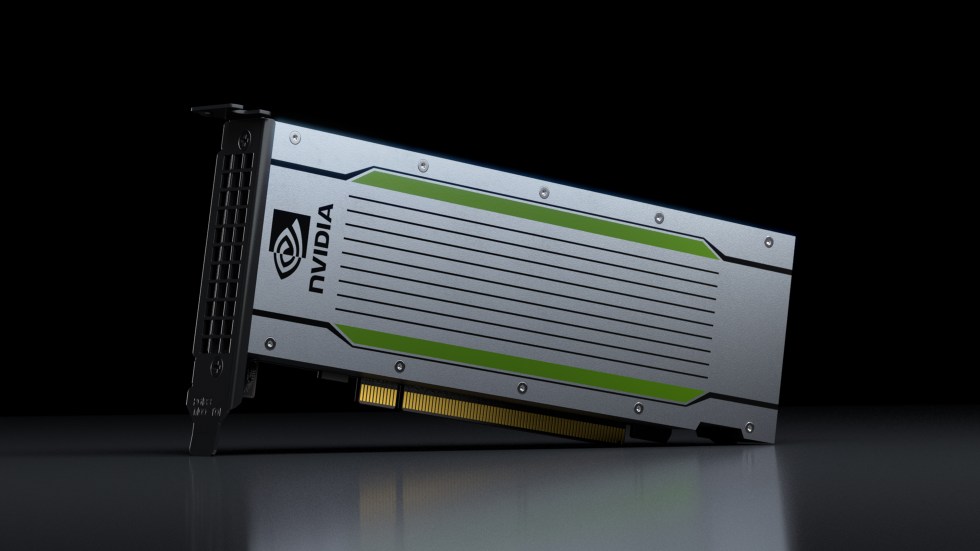
The Google Cloud Platform running on NVIDIA Tesla T4 GPUs (above) has been beta launched in Singapore, availing the power of GPU cloud computing to customers around the region.
A new player has entered the machine learning arena. While big players such as Google, Intel and NVIDIA have been slugging it out, Amazon has thrown its hat into the ring with its newly-launched Inferentia chip.
Google Plus aka Google+ will be no more — for consumers, at least. The search giant is shutting down its social media service after discovering security lapse that put the data of half a million users at risk.
By Edward Lim
It may have seemed like forever but Google just celebrated its 20th anniversary today. It’s not even an adult yet by human age but the search giant has grown massively over the past two decades.
Hot on the heels of Google’s announcement last month that it will build its third data centre in Singapore is Facebook, which declared today that it will be establishing its first Asia data centre in the country.

The rumour mills are spinning at top speed as smartphone launch season gets ready to kick off. With Samsung having announced the Note 9, and Apple expected to respond with a new iPhone next month, Google looks to be getting into the act too with the Pixel 3 slated for an October 9 introduction, according to Bloomberg.
However you look at it, the amount is massive! The European Union (EU) has slapped Google with a 4.3 billion euro fine for blocking its rivals from Android.
It happened to Microsoft in 2013 and it looks like history is repeating itself, albeit with Google being the one under the spotlight. The European Union (EU) is expected to decide on a record fine for forcing Android smartphone makers to pre-install its search and web browsing tools and use them by default unless they want to lose access to the Play Store.

Taiwan smartphone maker HTC is making a cut of the most painful kind — by slicing 20 percent of its workforce. The decision to swallow the bitter pill comes in the wake of heavy losses and strong competition.

The worldwide wearables market is adjusting as smartwatches continue to come to the forefront. In the coming years, smartwatches will encompass more features and functionalities.
China e-commerce giant JD.com has received a US$550 million investment from Google as part of a strategic partnership.
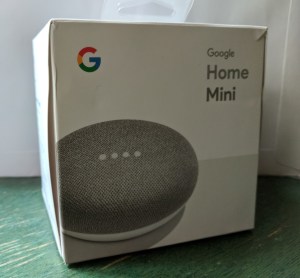
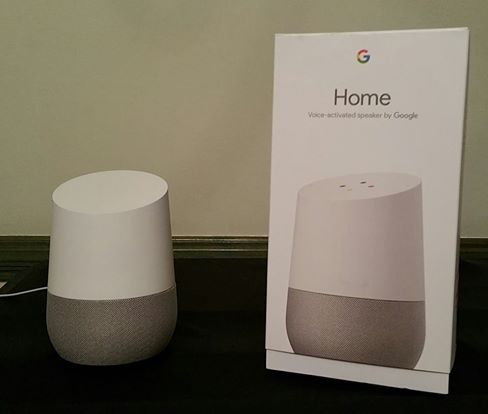
Google has ousted Amazon from the perch of the global smart speaker market. According to Canalys, Google shipped 3.2 million units with its Google Home and Google Home mini series , surpassing the 2.5 million units of the Amazon Echo series for the first time in Q1.
Most Southeast Asian capitals and major cities are notorious for its traffic congestion. In separate developments, Alibaba and Google have taken steps to be more involved in the transportation industries in Malaysia and Indonesia respectively.

Amazon and Google went head to head in the smart speaker market last year and the battle is expected to be more intense in the coming days with more players joining the fray.
Entelechy Asia turns five today. So much has changed since we launched in November 2012.
Hurray, Google has finally set up an online store for Singapore! Amid the flurry of announcements made yesterday, this is probably the most significant for those in Singapore. After all, what’s the point of reading and hearing about all the launches in recent years without being able to buy the products anywhere in the country.
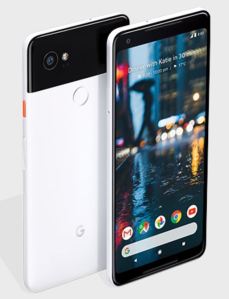
The bad news, however, is that only three products were listed on the Google Wifi, Google Chromecast and the newly-launched Google Pixel 2 XL.
Google’s latest smartphone sports front-facing stereo speakers, and front and rear cameras capable of producing amazing shots using fused image stabilisation of optical and digital zoom. Though the headphone jack is gone, Google has introduced Pixel Buds that can translate up to 40 languages on the fly.
Google is flexing its muscles in the hardware business with the acquisition of a team of hardware talents from HTC. The move marks another milestone in a decade-long relationship between the two companies. “These future […]
“I’m amazed at the quality of the papers presented. The project teams’ line of thinking and breakthrough concepts are refreshing,” exclaimed a leading artificial intelligence (AI) scientist at the International Conference on Machine Learning (ICML) in Sydney.
International Convention Centre Sydney was a massive hive of activities as 3,000 of the world’s top researchers, developers and students in AI gathered for ICML. The participants moved rapidly from one workshop to another and took great interest in the exhibition booths of top deep learning proponents such as NVIDIA, Google and Facebook.
With so many bright young talents. the event proved to be a good fishing ground for vendors as they held recruitment interviews at their booths, as well as posted openings on the board.
The cloud infrastructure services market is continuing to grow strongly, up 47 percent year on year in Q2 to reach US$14 billion, according to Canalys. Growth was driven by demand for primary cloud infrastructure services, such as on-demand computing and storage, across all customer segments and industries.
However, future growth is expected to be fueled by customers using the artificial intelligence (AI) platforms cloud service providers are building to develop new applications, processes, services, and user experiences.
Amazon Web Services (AWS) maintained its leadership position, growing 42 percent on an annual basis and accounting for more than 30 percent of total spend. But its growth rate was lower than those of its main rivals, Microsoft (up 97 percent growth) and Google (up 92 percent), but higher than fourth-placed IBM (up 23 percent). Overall, the top four cloud services providers represented 55 percent of the cloud infrastructure services market, which includes IaaS and PaaS.

The keynote address at Google I/O yesterday showed that Google is much more than just a search company. It is becoming more artificial intelligence (AI). Google is specifically using deep learning to help in many areas of everyday life.

Here are some as shared on Google’s blog post:
Google Assistant can help answer your questions and find information—but it can also help you get all kinds of useful things done. Today we’re adding a few more:
- Schedule new calendar appointments and create reminders. Starting today on Google Home, you can schedule appointments and soon you’ll also be able to add reminders. Since it’s the same Google Assistant across devices, you’ll be able to get a reminder at home or on the go.
- Make your home smarter. We now have 70+ smart home partners supporting the Google Assistant across Google Home and Android phones, including August locks, TP-Link, Honeywell, Logitech, and LG.
The battle for cloud dominance has intensified with key players all growing significantly in Q1. The worldwide cloud infrastructure services market grew 42 percent year on year to reach US$11.4 billion, according to Canalys.
Amazon’s AWS maintained its leadership, holding a stable global market share of 31 percent. It was followed by Microsoft, Google and IBM.
In terms of growth, Microsoft led with 93 percent while Google was up 74 percent, AWS 43 percent, and IBM 38 percent.

Can’t say this was unexpected as NVIDIA retorts Google’s claim that its custom ASIC Tensor Processing Unit (TPU) was up to 30 times faster than CPUs and NVIDIA’s K80 G for inferencing workloads.

NVIDIA pointed out that Google’s TPU paper has drawn a clear conclusion – without accelerated computing, the scale-out of AI is simply not practical.
The role of data centres has changed considerably in today’s economy. Instead of just serving web pages, advertising and video content, data centres are now recognising voices, detecting images in video streams and connecting users with information they need when they need it.
The year’s looking bad for tablets as worldwide demand is expected to slide 8.1-percent to just 211.3 million units, according to IDC.

The new forecast follows three consecutive quarters of declining worldwide tablet shipments in 2015. Despite the challenges facing the overall market, IDC expects detachable tablets will continue to represent a growing portion of total shipments.
“We’re witnessing a real market transition as end users shift their demand towards detachables and more broadly towards a productivity-based value proposition. The proliferation of detachable offerings from hardware vendors continues to help drive this switch. We’re starting to see the impact of competition within this space as the major platform vendors – Apple, Google and Microsoft – now have physical product offerings. With attractive price points, including the introduction of sub-US$100 detachables, and platform innovation being driven by competition, IDC is confident that the detachables segment will nearly double in size in the next year, recording more than 75 percent growth compared to 2015,” said Jean Philippe Bouchard , Research Director, Tablets, IDC.
The numbers for the tablet and 2-in-1 market for Q1 in Australia look grim — total shipment was 770,772 units, representing a massive 40 percent quarter-on-quarter decline.
According to IDC, while the seasonal slump is customary, the magnitude of this decline is steeper than expected. Shipment decline of 25 percent year-on-year further reinforced the reality of a slow-down in demand for this product category.
However, drilling down into the segments reveals some positive signs. Whilst consumer shipments declined by 27 percent year-on-year, commercial shipments increased by a modest 1.2 percent.
Apple held on to its top spot despite a 16 percent drop in PC shipment in Q1. It shipped 17.2 million units, taking a 15 percent market share while Lenovo and HP came in second and third place respectively. Samsung was next with 9.5 million units shipped with Dell just behind with 9.4 million units.
Overall, the global PC market, including tablets, declined seven percent, according to Canalys.
“The growth drivers that previously helped the market through 2014 will have little effect this year. Vendors are struggling with exchange rate fluctuations which is making financial planning more difficult and forcing price increases. These challenges, combined with a softening of demand as Windows 10 draws nearer along with Microsoft’s free upgrade plans, means PC market declines will be greater in the second quarter than they were in the first,” said Tim Coulling, Senior Analyst of Canalys.
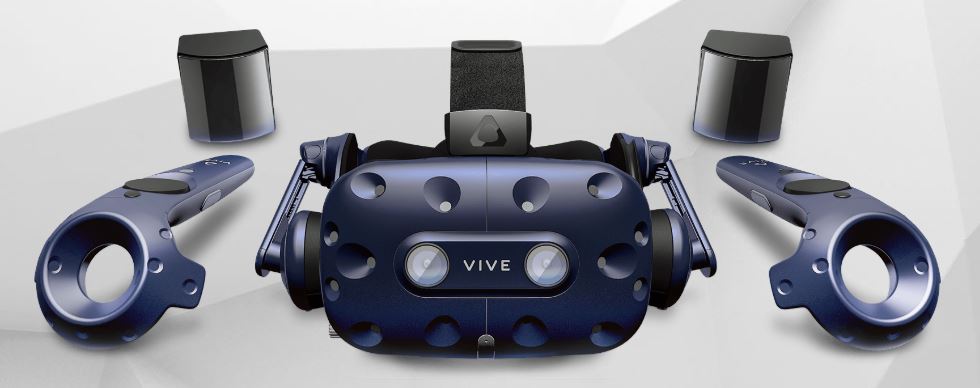
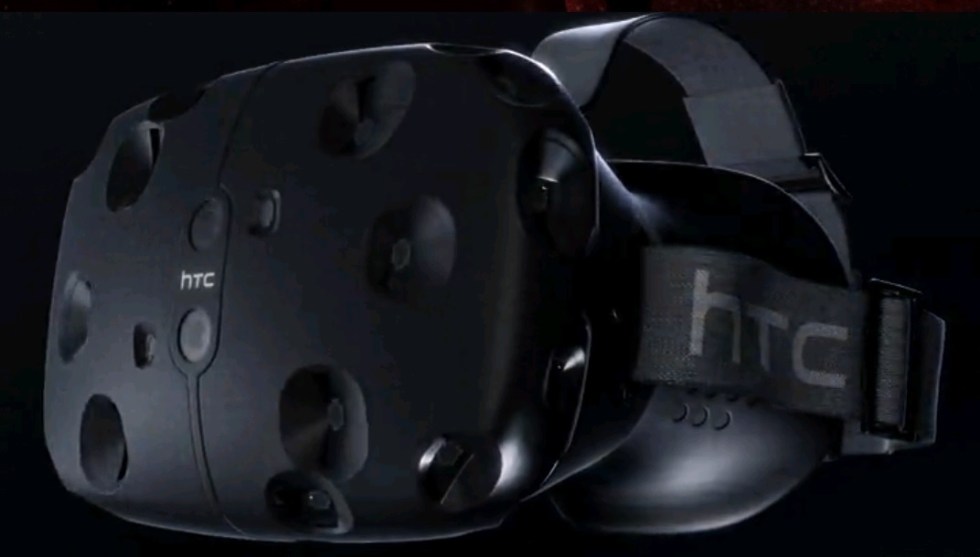
Through a strategic partnership with Valve, HTC has introduced HTC Vive, which aims to transform the way consumers interact with technology and the world around them. If you’re planning to go out and grab one, hold steady because the consumer edition will only be available at end 2015.
HTC and Valve have introduced a full room scale 360-degree solution with tracked controllers so users can get up, walk around and explore virtual space, inspect objects from every angle and truly interact with surroundings. The headset features high quality graphics, 90 frames per second video and great audio fidelity.
HTC is also introducing new wireless VR controllers that will make users feel as one with the virtual environment. The new HTC VR Controllers come in a pair and are designed to work with a wide range of VR experiences.
D
emand for smartphones are on the rise with more 301.3 million units shipped worldwide in Q2, up 25.3 percent from the 240.5 million units shipped in the corresponding quarter last year, according to IDC.
The dominant smartphone operating systems (OS), Android and iOS, saw their combined market share swell to 96.4 percent for the quarter, leaving little space for competitors.
Android was the primary driver with its vendor partners shipping a total of 255.3 million Android-based smartphones in Q2, up 33.3 percent year over year. Meanwhile, iOS saw its market share decline despite posting 12.7 percent year-over-year shipment growth. While Android and iOS both realised gains from a year ago, the rest of the market recorded losses.
Google unveiled a host of upcoming technologies running on Android at its annual Google I/O and NVIDIA’s Tegra Ki is a key part of the foray into new mobile computing areas such as gaming, TV, automotive, and […]
Once a luxury item, embedded in-car navigation systems are now increasingly becoming less expensive and are offered in mass-market cars. At the same time, more and more car navigation units are becoming connected and multi-functional as they converge with other technologies in the car.
The attachment of embedded in-dash factory installed navigation units is expected to increase from 22 percent at the end of 2013 to 38 percent by 2019, according to ABI Reseach. This represents a compounded annual growth rate of 13.6 percent.
“However, this growth will be eclipsed by the number of smartphone-based navigation devices used in the car, particularly off-board devices, where navigation is performed in the cloud as opposed to on the device,” said Gareth Owen, Principal Analyst of ABI Research, which forecasts that shipment of handset-based navigation services will reach 1.68 billion globally by 2019.
A coalition of auto and technology companies have formed a new industry alliance to bring the Android platform to a device that’s always been mobile: the car.
Audi, GM, Google, Honda, Hyundai, and NVIDIA have joined together to form the Open Automotive Alliance (OAA), a global alliance of technology and auto industry leaders committed to bringing the Android platform to cars starting in 2014. OAA is dedicated to a common platform that will drive innovation, and make technology in the car safer and more intuitive for everyone.
OAA is aimed at accelerating auto innovation with an approach that offers openness, customization and scale, key tenets that have already made Android a familiar part of millions of people’s lives. This open development model and common platform will allow automakers to more easily bring cutting-edge technology to their drivers, and create new opportunities for developers to deliver powerful experiences for drivers and passengers in a safe and scalable way.
Android’s smartphone mobile app revenues are projected to reach almost US$6.8 billion by the end of 2013, nearly doubling its revenues from the previous year, according to ABI Research.
The Android platform has some way to go before catching iOS’s smartphone revenues but the smartphone app market will be Android’s most fruitful hunting ground compared to other devices.
ABI Research estimates that Android smartphone app revenues will increase from 59.1 percent to 65.9 percent when compared to iOS smartphone app revenues over the next 12 months.
Fancy a new accessory? How about a smart watch? It looks like smart watches are going to be the next “must have” item. According to Canalys, the worldwide smart watch market will exceed five million units in 2014.
Canalys estimates that over 330,000 smart watches were shipped in 2012, led by Sony and Motorola. Kickstarter-backed Pebble Technology has joined Sony as a market leader in 2013. More than half a million units will be shipped this year. Smart watches are then set to explode by the end of 2014, growing tenfold as a new generation of devices from Apple, Google, Microsoft, Samsung, and others are launched.
Unlike earlier products, these smart watches will provide more sophisticated software and more elegant hardware. Glanceable information, integration across sensors and hooks into web services will be key features. These companion devices will not replace smart phones, but rather complement them as ‘appcessories’.