

Amazon Web Services and Slack Technologies have agreed to work together on delivering solutions for enhanced enterprise workforce collaboration.
Amazon Web Services and Slack Technologies have agreed to work together on delivering solutions for enhanced enterprise workforce collaboration.

In an industry that’s witnessing rapid innovations across the value chain, Korea credit card issuer Lotte Card is transitioning its entire enterprise system, including mission critical and core financial accounting systems, to a hybrid cloud environment in collaboration with IBM Services.

Microsoft to set up data centre in NZ. (Photo by Dan Whitfield from Pexels)Microsoft will be expanding its global data centre footprint by establishing its first data centre region in New Zealand. With the new addition, it will have 60 regions around the world with Microsoft Azure available in more than140 countries.
 Hot on the heels of its Mellanox purchase, NVIDIA has boosted its networking software capabilities following its acquisition of Cumulus Networks.

Source: OracleZoom Video Communications is banking on Oracle Cloud Infrastructure to support its dazzling growth to 300 daily meeting participants in March.

The dreams of organisations reaching a global audience via Facebook Live has just become a reality. Whether it’s an online church service or a press conference, SyncWords’ LanguageSync solution for real-time translation of English live programming to more than 40 languages is certainly an answer to prayer.
 Digital identity solution provider ForgeRock has completed a US$93.5 million Series E round of fundraising to fuel research and development, cloud, global sales, and market awareness.
 Managed solutions provider BCM One has acquired nexVortex, a provider of business cloud communication services with operations in Herndon, Virginia, and Grand Rapids, Michigan.
 Alibaba plans to pump in US$29 billion to boost its cloud infrastructure over the next three years. This comes on the back of increasing demand for cloud and data centre services as a result of the COVID-19 pandemic.
 Huawei Cloud and Tencent Games have set up a joint innovation lab on mobile cloud gaming as part of their strategic partnership.
 By Edward Lim
COVID-19 is hijacking life. From Facebook News Feed to printed newspapers, it’s everywhere. And it just seems to get worse with countries taking measures to prevent spread. Telecommuting has now become necessary for many.
 COVID-19 is leaving a trail of cancelled events in its footpath. Two IT events scheduled this week in Singapore have been canned.
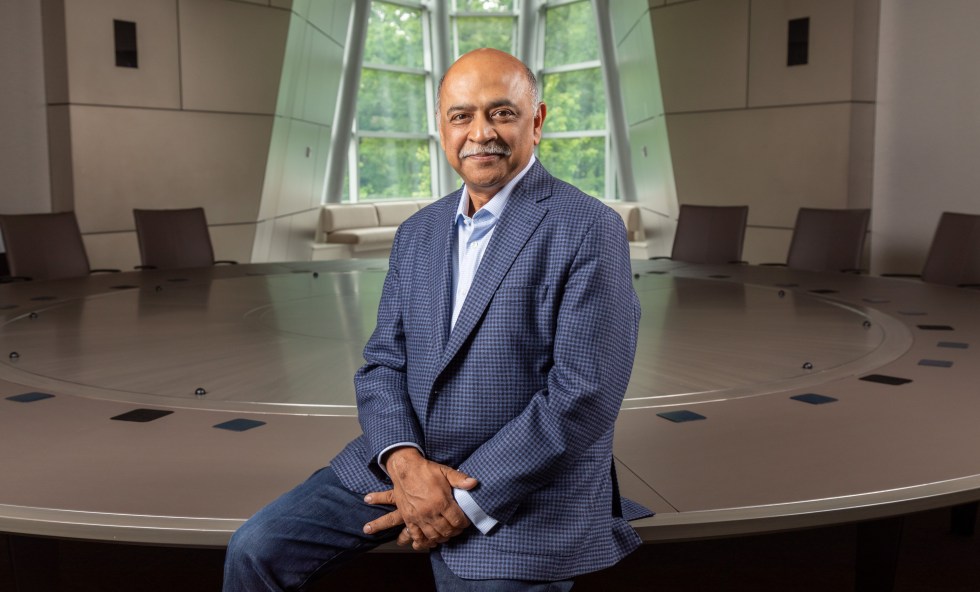 IBM has chosen Arvind Krishna to be its new Chief Executive Officer from April 6. The current Senior Vice President for Cloud and Cognitive Software will take over the reign from Virginia Rometty, who will remain as Executive Chairman of the Board and serve until her retirement at the end of the year.
 Fuji Xerox is changing its corporate name to Fujifilm Business Innovation Corp on April 1, 2021. All Fuji Xerox affiliates and sales companies in and outside Japan will also change their names respectively on that date but their new names will be announced later.
 Sweden-headquartered Snow Software has acquired Embotics will enable CIOs to understand and manage their full technology stack from software and hardware to infrastructure and applications, regardless of environment.
 Singapore’s vibrant fintech community has scored another first with Beijing-headquartered strtup ABC Technology making Singapore its international base.
 IBM has developed the world’s first financial services-ready public cloud with Bank of America (BoA) as its first collaborator. Under the arrangement, the bank will host key applications and workloads to support the requirements and privacy and safety expectations of its 66 million banking customers.
 NVIDIA has announced the NVIDIA EGX Edge Supercomputing Platform which lets organisations deliver next-generation AI, IoT and 5G-based services at scale and with low latency. Along with annoucing this at his keynote address at the opening of Mobile World Congress in Los Angeles, NVIDIA Founder and CEO Jen-Hsun Huang declared that we have entered a new era, where billions of always-on IoT sensors will be connected by 5G and processed by AI.
 Slack has strengthened its partnership with Salesforce with the release of a new Salesforce for Slack app that provides a significant update to Sales Cloud integration and integration with Service Cloud.
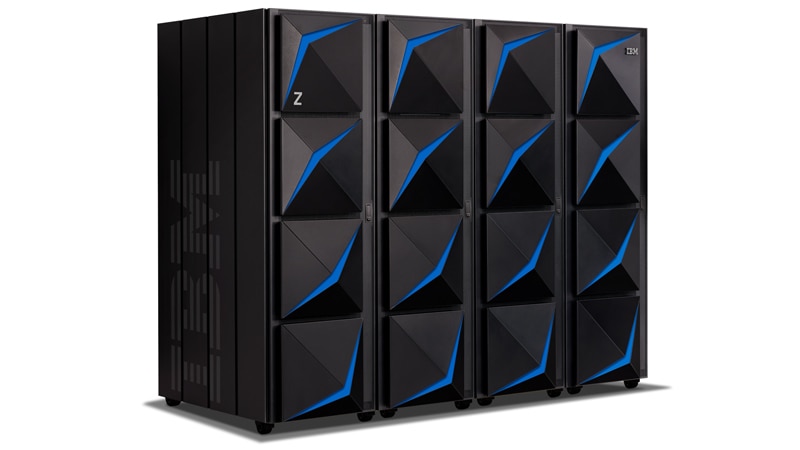 The mainframe computer is not quite going the way of the dinosaur. Even in today’s age of Intel-based servers, there’s still room and relevance for the mainframe. This explains why IBM has launched the z15, its 15th generation of the mainframe.
 Datacenters.com has launched Colocation Marketplace, claimed to be the “first platform to offer transparent co-location pricing from numerous providers to all visitors in an e-commerce platform”.
 Ahead of the VMWorld in San Francisco next week, VMware has announced two major acquisitions — Pivotal for US$2.7 billion and Carbon Black for US$1.9 billion.
 Just two months after it’s acquisition of data visualisation firm Tableau, Salesforce has gone shopping again. This time, it has bagged ClickSoftware for US$1.35 billion.

Qualcomm and Tencent Games have signed a non-binding memorandum of understanding (MoU) for a strategic cooperation on digital entertainment. This includes joint efforts to optimise future projects such as Qualcomm Snapdragon-based mobile gaming devices, game content and performance optimisations, Snapdragon Elite Gaming enhancements, cloud gaming, AR/VR, 5G gaming use case developments and additional relevant technologies.

Unsurprisingly, a Gartner report is predicting that three quarters of all databases will reside in the cloud by 2022. Only five percent of migration will remain on premises.
 Cloud services are really hot with projected growth of 17.5 percent to US$214.3 billion in 2019, according to Gartner. The momentum is expected to continue through to 2022 with the research firm projecting the market size and growth of the cloud services industry at nearly three time the growth of overall IT services.
 NVIDIA has reached a US$6.9 billion agreement to acquire Mellanox, a supplier of end-to-end Ethernet and smart interconnect solutions and services for servers and storage.
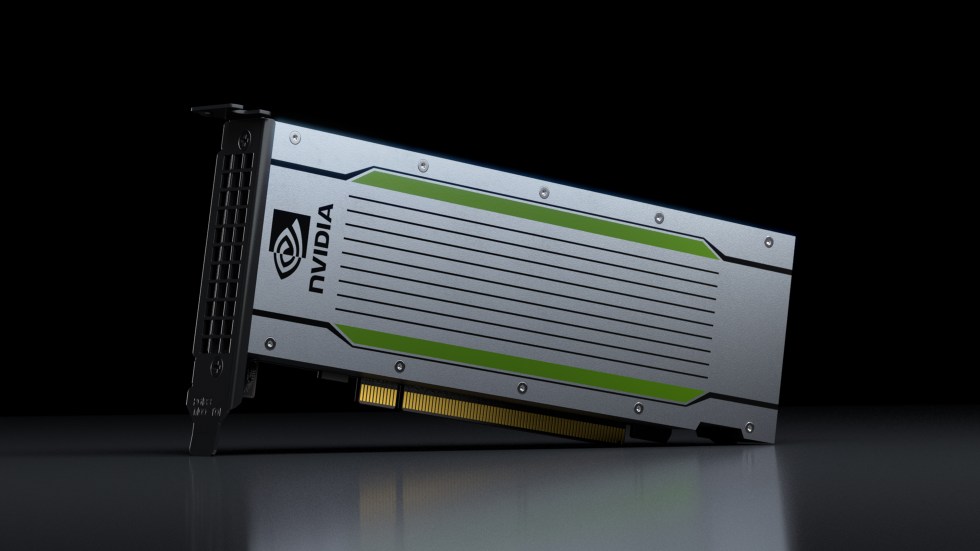 The Google Cloud Platform running on NVIDIA Tesla T4 GPUs (above) has been beta launched in Singapore, availing the power of GPU cloud computing to customers around the region.
 A new player has entered the machine learning arena. While big players such as Google, Intel and NVIDIA have been slugging it out, Amazon has thrown its hat into the ring with its newly-launched Inferentia chip.
 IBM has announced its US$34 billion acquisition of open source leader Red Hat. The move has been dubbed a “game-changer” by Ginni Rometty, IBM Chairman, President and Chief Executive Officer, who added that it changes everything about the cloud market.
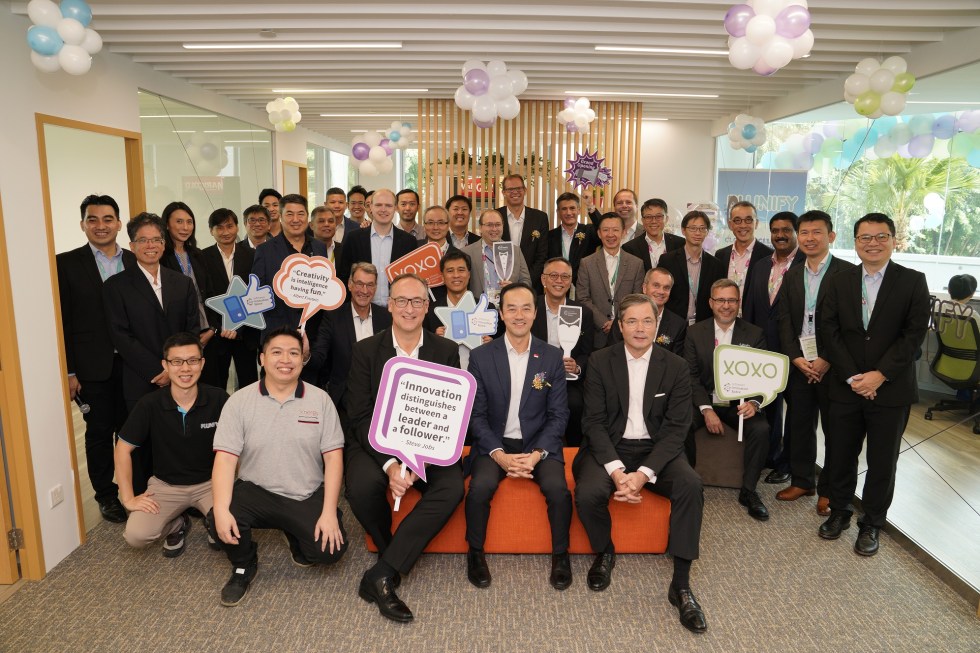
Names such as Ampotech, Plunify, SHADO, and XNERGY may not ring a bell today but with a little help from Infineon, they may well become the successes of tomorrow.
 The first NVIDIA AI Conference in Sydney on September 4 will kick off with two keynote addresses. Marc Hamilton, Vice President of Solutions Architecture and Engineering, NVIDIA, will talk about Transforming Industries With AI. Jason Humphrey (right), Head of Retail Risk, ANZ Bank, will then share on Creating the Infrastructure to Undertake Deep Learning.
 WhatsApp backup will no longer count towards Google Drive storage quota, thanks to a new agreement between the two companies.
 NetApp has introduced NetApp ONTAP AI proven architecture to simplify, accelerate and scale the data pipeline across edge, core and cloud for deep learning deployments and to help customers achieve real business impact with AI.
 China e-commerce firm Suning Tesco has opened the first pilot route for unmanned aerial vehicle (UAV) logistics and transportation in Wuhan, China. Its logistics arm Suning Logistics and Ewatt Aerospace jointly developed two UAVs for this purpose.
 IBM has scored a massive win with a five-year A$1 billion agreement with the Australia government.

Dell EMC turned in a stellar performance in Q1 by growing 51.4 percent in server revenue, enabling it to widen the gap with second-place Hewlett Packard Enterprise (HPE) which nevertheless grew an impressive 21.5 percent.
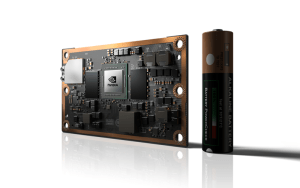
Power efficient chipsets are set to be the main driver as artificial intelligence (AI) moves makes a significant shift from the cloud to the edge, according to ABI Research.
 NVIDIA has introduced the NVIDIA HGX-2, the first unified computing platform for both artificial intelligence (AI) and high performance computing (HPC).

Information and communications technology (ICT) spending in Asia/Pacific (excluding Japan) will hit US$1.5 trillion in 2021, according to IDC.
 China’s biggest initial public offering (IPO) since 2015 will come to pass if Foxconn Industrial Internet hits its target of 27.1 billion yuan on May 24.
 The number is staggering even if the company is Amazon. Jeff Bezos has announced that Amazon Prime has more than 100 million members globally.
 Expereo and SecureOps have formed a strategic partnership to provide total network security for enterprises.

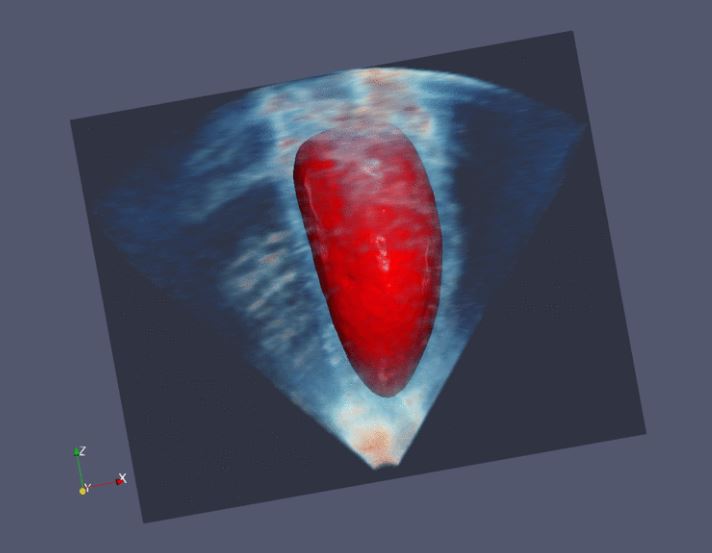 One of the most eye-catching demo during NVIDIA CEO Jensen Huang’s keynote address at GTC 2018 is Project Clara.

NVIDIA CEO Jensen Huang (above) dubbed it the “world’s biggest GPU”. And he certainly wasn’t kidding as the NVIDIA DGX-2 is a massive 350-pounder that delivers an amazing two petaflops of computational power.

The GPU Technology Conference (GTC) has hit new highs with a record of more than 8,000 participants, and filling the entire San Jose McEnery Convention Center.

Marina Bay Sands Expo and Convention Centre was a hive of activities of a different sort as more than 700 technologists from 21 countries converged for EmTech Asia on January 30 and 31.
 SAP has agreed to acquire Callidus Software for US$2.4 billion.
 For the past few years, data scientists are highly sought after to analyse data that can help organisations better understand their business, customers and trends. But, it looks like artificial intelligence-based solutions may be taking over that role in the near future.
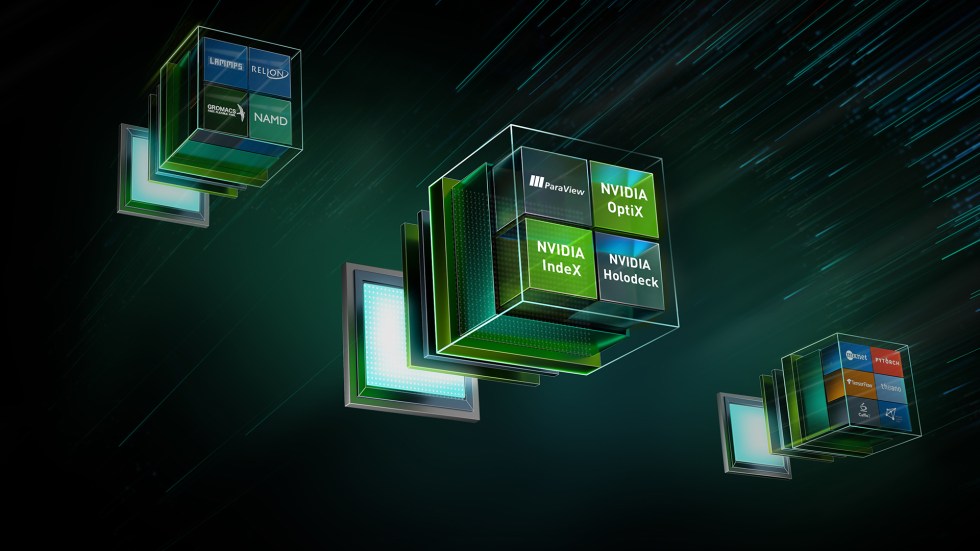
NVIDIA’s Volta architecture is leaving quite an impression. According to a NVIDIA press release issued at SC17, the Volta-based NVIDIA Tesla V100 GPU is available through every major computer maker and chosen by every major cloud to deliver artificial intelligence (AI) and high performance computing.
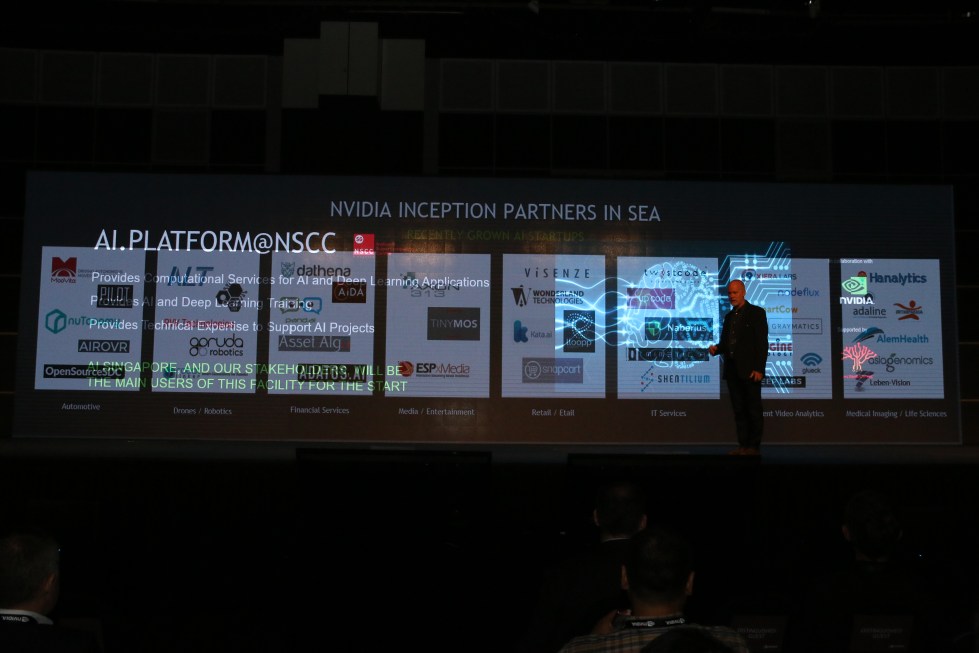
Singapore’s aim to be an artificial intelligence (AI) hub has been boosted with two initiatives — the setting up of a shared AI platform for researchers and the awarding of scholarships to develop AI talents.
At the NVIDIA AI Conference in Singapore yesterday, NVIDIA and Singapore’s National Supercomputing Centre (NSCC) agreed to establish a platform to bolster AI capabilities among its academic, research and industry stakeholders and in support of AI Singapore (AISG), a national programme set up in May to drive AI adoption, research and innovation in Singapore.
Called AI.Platform@NSCC, it will provide AI training, technical expertise and computing services to AISG, which brings together all Singapore-based research and tertiary institutions, including the National University of Singapore (NUS), Nanyang Technological University (NTU), Singapore University of Design and Technology (SUTD), Singapore Management University (SMU), as well as research institutions in the Agency for Science, Technology and Research (A*STAR).
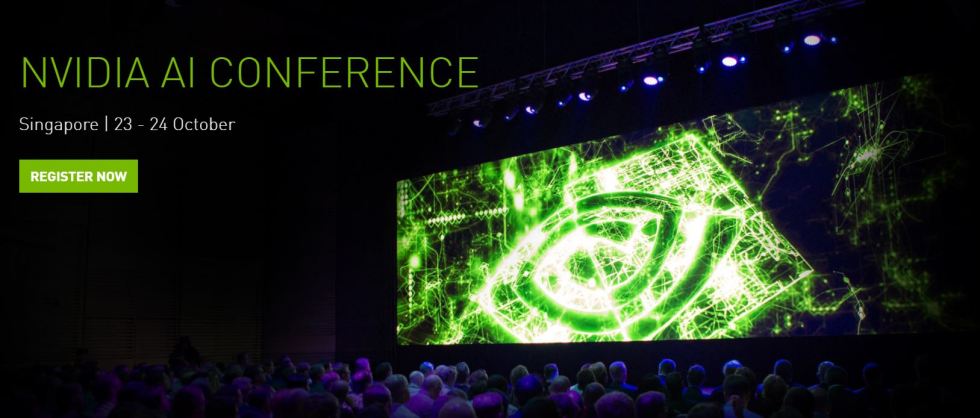 More than 1,000 participants attending the NVIDIA AI Conference in Singapore next week are in for a treat as the organisers are bringing in a tantalising line-up of speakers.
The two keynote speakers are Dr David B Kirk, NVIDIA Fellow and inventor of more than 60 patents and patent applications relating to graphics design; and Dr Wanli Min, AI scientist of Alibaba Cloud, who will touch on A Revolutionary Road to Data Intelligence.
Besides these two, there are special guest-of-honour Chng Kai Fong, Managing Director of Singapore’s Economic Development Board, and a panel discussion on AI for the Future of Singapore Economy.
The role of the CIO is changing, according to a Gartner survey of 3,160 CIO respondents in 98 countries.
The findings revealed that the CIO role is transitioning from delivery executive to business executive, from controlling cost and engineering processes, to driving revenue and exploiting data.
Ninety-five percent of CIOs expect their jobs to change or be remixed due to digitalisation. While world-class IT delivery management is a given, it will take up less and less of the CIO’s time.
 China’s top technology companies are betting big on the NVIDIA Volta platform.
Alibaba Cloud, Baidu, and Tencent are incorporating NVIDIA Tesla V100 GPU accelerators into their data centres and cloud-service infrastructures to accelerate AI for a broad range of enterprise and consumer applications.
At the heart of the new Volta-based systems is the NVIDIA V100 data centre GPU. Built with 21 billion transistors, it provides a 5x improvement over the preceding NVIDIA Pascal architecture P100 GPU accelerators, while delivering the equivalent performance of 100 CPUs for deep learning. This performance surpasses by 4x the improvements that Moore’s law would have predicted over the same period of time.
Inspur, Lenovo and Huawei are using the NVIDIA HGX reference architecture to offer Volta-based accelerated systems for hyperscale data centres. Using HGX as a starter “recipe,” original equipment manufacturer and original design manufacturer partners can work with NVIDIA to more quickly design and bring to market a wide range of qualified GPU-accelerated AI systems for hyperscale data centres to meet the industry’s growing demand for AI cloud computing.
 Google has expanded its NVIDIA GPU offerings on the Google Cloud Platform. These include:
According to a Google Cloud Platform blog, cloud GPUs can accelerate workloads including machine learning training and inference, geophysical data processing, simulation, seismic analysis, molecular modeling, genomics and many more high performance compute use cases.
 With artificial intelligence (AI) being a hot topic this year, NVIDIA is organising its first AI-focused regional conference in Singapore on October 23 and 24.
The event will be held in two parts with the first day focusing on Deep Learning Institute (DLI) workshop where participants will received hands-on training on deep learningl and the second day filled with keynote addresses, panel discussion and three tracks. It is targeted at data scientists and senior decision makers in the field of AI in both public and private sectors.
“Singapore is aiming to be the world’s first smart nation and AI is playing a critical role. NVIDIA is well positioned to help drive the government’s Smart Nation initiative with the development of solutions based on AI. Our GPUs are making headlines across the world by enabling many breakthroughs in various industries using deep learning,” said Raymond Teh, Vice President of APAC sales and marketing at NVIDIA.
 “I’m amazed at the quality of the papers presented. The project teams’ line of thinking and breakthrough concepts are refreshing,” exclaimed a leading artificial intelligence (AI) scientist at the International Conference on Machine Learning (ICML) in Sydney.
International Convention Centre Sydney was a massive hive of activities as 3,000 of the world’s top researchers, developers and students in AI gathered for ICML. The participants moved rapidly from one workshop to another and took great interest in the exhibition booths of top deep learning proponents such as NVIDIA, Google and Facebook.
With so many bright young talents. the event proved to be a good fishing ground for vendors as they held recruitment interviews at their booths, as well as posted openings on the board.
 The cloud infrastructure services market is continuing to grow strongly, up 47 percent year on year in Q2 to reach US$14 billion, according to Canalys. Growth was driven by demand for primary cloud infrastructure services, such as on-demand computing and storage, across all customer segments and industries.
However, future growth is expected to be fueled by customers using the artificial intelligence (AI) platforms cloud service providers are building to develop new applications, processes, services, and user experiences.
Amazon Web Services (AWS) maintained its leadership position, growing 42 percent on an annual basis and accounting for more than 30 percent of total spend. But its growth rate was lower than those of its main rivals, Microsoft (up 97 percent growth) and Google (up 92 percent), but higher than fourth-placed IBM (up 23 percent). Overall, the top four cloud services providers represented 55 percent of the cloud infrastructure services market, which includes IaaS and PaaS.
 NVIDIA is bringing its wealth of artificial intelligence (AI) solutions and expertise to the International Conference on Machine Learning (ICML) in Sydney.
Held at Sydney International Convention Centre from August 6 to 11, the event is expected to attract up to 3,000 participants, primarily faculty, researchers and PhD students in machine learning, data science, data mining, AI, statistics, and related fields.
The NVIDIA booth (Level 2, The Gallery, Booth #4) will feature many firsts in Australia, such as demos on 4K style transfer, a deep neural network to extract a specific artistic style from a source painting, and then synthesises this information with the content of a separate video; self-driving auto using the Drive PX2 AI car computing platform; Deepstream SDK that simplifies development of high performance video analytics applications powered by deep learning; and NVIDIA Isaac, the AI-based software platform lets developers train virtual robots using detailed and highly realistic test scenarios.
 Fujitsu has introduced its fully refreshed range of Xeon-based dual- and quad-socket Primergy servers and octo-socket Primequest business critical server systems.
These new servers are powerful and flexible, enabling enterprises to build secure, agile, multi-cloud data centres.
Featuring the new Intel Xeon scalable processors, the Fujitsu Server Primergy and Primequest business model server systems are designed for exceptional workload-specific performance and hardware-enhanced security. Built for trusted data service delivery, the new models represent significant leaps in I/O, memory, storage and network technologies.
 Entelechy Asia